. Scientific Frontline

Tuesday, October 11, 2022

It’s raining harder in the U.S.


Just like the old adage says: When it rains, it pours.

That turns out to be increasingly true for much of the United States, according to Northwestern University researchers.

In a new study, researchers compared observed rainfall from two climatologically distinct time periods and across 17 different climate regions in the U.S. They found that when it’s rained in recent decades, it’s rained more. In most regions, the intensity of the rainfall has shifted from lighter to more moderate and often heavy deluges.

When it rained east of the Rocky Mountains in recent decades, about 5% more precipitation fell. When it rained over the Pacific Coast or Rocky Mountains, however, no intensity changes were observed. Climate model simulations have previously predicted increases in precipitation intensity, particularly during extreme events, but the Northwestern study examined historically observed precipitation data across all intensities — and found a systematic shift in precipitation intensity in many parts of the country.

The study was published in the Geophysical Research Letters.

50% of Earth’s coral reefs face climate change threat by 2035

Photo credit: joakant

Under a worst-case scenario, half of coral reef ecosystems worldwide will permanently face unsuitable conditions in just over a dozen years, if climate change continues unabated. That is one of the findings from new research published on October 11, in PLOS Biology by University of Hawaiʻi at Mānoa researchers. Unsuitable conditions will likely lead to the corals dying off and other marine life will struggle to survive due to disruptions in the food chain.

“While the negative impacts of climate change on coral reefs are well known, this research shows that they are actually worse than anticipated due to a broad combination of climate change-induced stressors,” said lead author Renee O. Setter, a doctoral student in the Department of Geography and Environment in the College of Social Sciences. “It was surprising to find that so many global coral reefs would be overwhelmed by unsuitable environmental conditions so soon due to multiple stressors.”

Using an ensemble of global climate change models, the researchers compared scenarios of five environmental stressors projected from the 1950s through the year 2100. These stressors included sea surface temperature, ocean acidification, tropical storms, land use and human population. From prior studies, threshold values for the stressors that led to unsuitable environmental conditions for coral reefs were identified.

Team uses digital cameras, machine learning to predict neurological disease

From left, Richard Sowers, Rachneet Kaur and Manuel Hernandez led the development of a new approach for identifying people with multiple sclerosis or Parkinson’s disease. Their method involves videotaping the hips and lower extremities of individuals walking on a treadmill and allowing a machine-learning algorithm to differentiate gait abnormalities associated with each of these neurological conditions.
Photo credit: Fred Zwicky

In an effort to streamline the process of diagnosing patients with multiple sclerosis and Parkinson’s disease, researchers used digital cameras to capture changes in gait – a symptom of these diseases – and developed a machine-learning algorithm that can differentiate those with MS and PD from people without those neurological conditions.

Their findings are reported in the IEEE Journal of Biomedical and Health Informatics.

The goal of the research was to make the process of diagnosing these diseases more accessible, said Manuel Hernandez, a University of Illinois Urbana-Champaign professor of kinesiology and community health who led the work with graduate student Rachneet Kaur and industrial and enterprise systems engineering and mathematics professor Richard Sowers.

Currently, patients must wait – sometimes for years – to get an appointment with a neurologist to make a diagnosis, Hernandez said. And people in rural communities often must travel long distances to a facility where their condition can be assessed. To be able to gather gait information using nothing more than a digital camera and have that data assessed online could allow clinicians to do a quick screening that sends to a specialist only those deemed likely to have a neurological condition.

Ink flows to meet surging demand for national security research

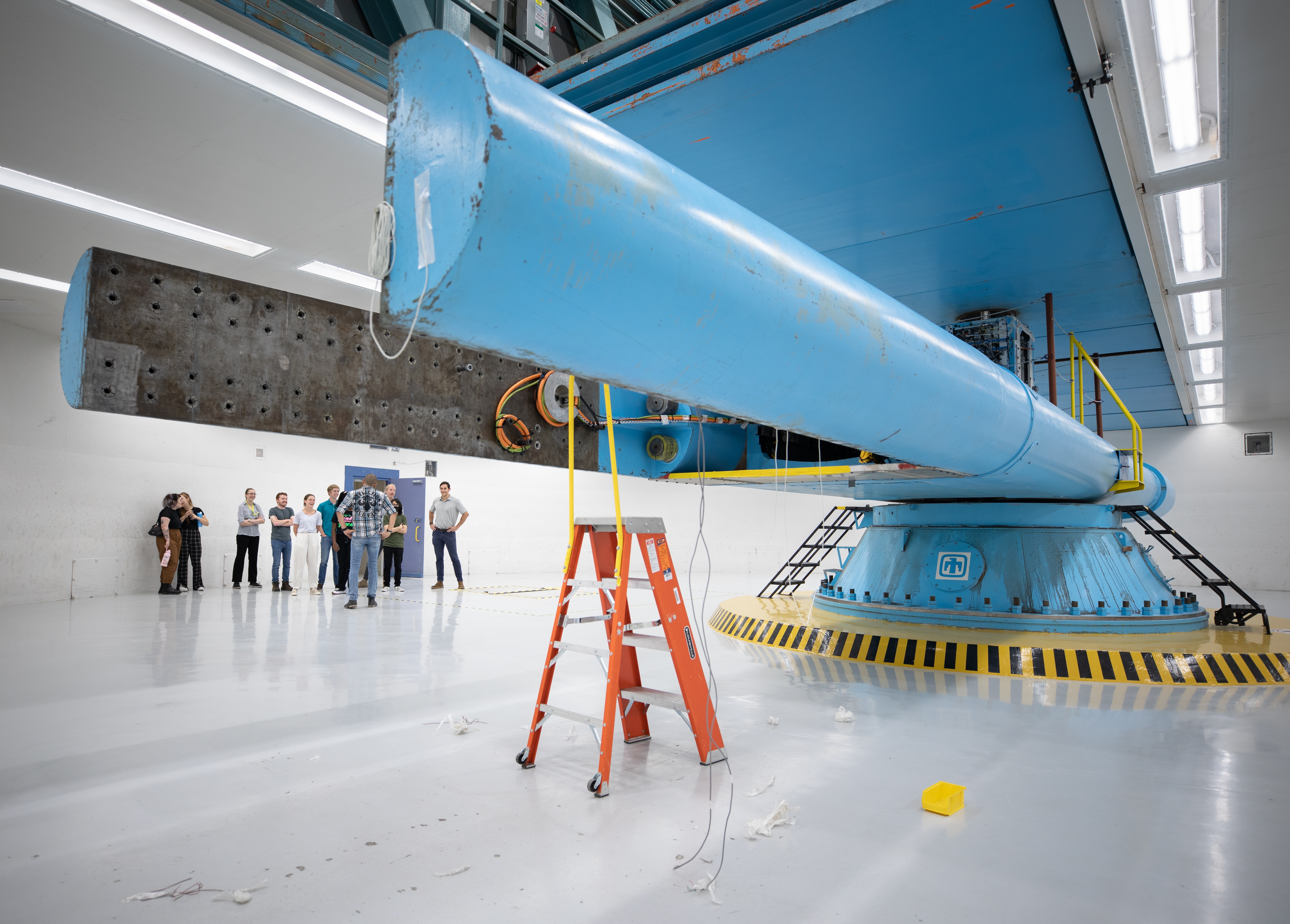
Student interns are introduced to Sandia National Laboratories’ superfuge by test operations engineer Orlando Abeyta during a tour. Several new agreements signed this year are expected to increase the numbers of students and faculty partnering with Sandia to support its growing national security workload.
Photo credit: Craig Fritz

The nation’s largest national laboratory is embarking on a major expansion of its network of academic partners to meet the surging demand for national security science and engineering.

This year, Sandia National Laboratories inked memoranda of understanding with Texas A&M University; the University of California, Berkeley; North Carolina State University and the University of Texas at El Paso. It is finalizing agreements with Arizona State University and the University of Washington. When those are signed, Sandia will have formal ties with 27 universities, including 13 minority serving institutions.

Work at Sandia, which is performed almost entirely for federal agencies, has been rising steadily. From fiscal year 2015 to fiscal year 2021, the Labs’ budget increased more than 50%, from $2.9 billion to $4.5 billion. Over the same period, the Labs increased its workforce by more than 25%, from 11,700 to 15,000.

But Sandia won’t meet its obligations just by hiring staff.

“Partnering with universities keeps Sandia science at the state of the art and enables us to do more research for our national security mission than we can on our sites alone,” said Diane Peebles, Sandia’s senior manager of academic programs.

Bristol researchers make important breakthrough in quantum computing


Researchers from the University of Bristol, quantum start-up, Phasecraft and Google Quantum AI have revealed properties of electronic systems that could be used for the development of more efficient batteries and solar cells.

The findings, published in Nature Communications today, describes how the team has taken an important first step towards using quantum computers to determine low-energy properties of strongly-correlated electronic systems that cannot be solved by classical computers. They did this by developing the first truly scalable algorithm for observing ground-state properties of the Fermi-Hubbard model on a quantum computer. The Fermi-Hubbard model is a way of discovering crucial insights into electronic and magnetic properties of materials.

Modeling quantum systems of this form has significant practical implications, including the design of new materials that could be used in the development of more effective solar cells and batteries, or even high-temperature superconductors. However, doing so remains beyond the capacity of the world’s most powerful supercomputers. The Fermi-Hubbard model is widely recognized as an excellent benchmark for near-term quantum computers because it is the simplest materials system that includes non-trivial correlations beyond what is captured by classical methods. Approximately producing the lowest-energy (ground) state of the Fermi-Hubbard model enables the user to calculate key physical properties of the model.

In the past, researchers have only succeeded in solving small, highly simplified Fermi-Hubbard instances on a quantum computer. This research shows that much more ambitious results are possible. Leveraging a new, highly efficient algorithm and better error-mitigation techniques, they successfully ran an experiment that is four times larger – and consists of 10 times more quantum gates – than anything previously recorded.

Broccoli gas: a better way to find life in space

Photo credit: Engin Akyurt

Broccoli, along with other plants and microorganisms, emit gases to help them expel toxins. Scientists believe these gases could provide compelling evidence of life on other planets.

These types of gases are made when organisms add a carbon and three hydrogen atoms to an undesirable chemical element. This process, called methylation, can turn potential toxins into gases that float safely away into the atmosphere. If these gases were to be detected in the atmosphere of another planet using telescopes, they would be suggestive of life somewhere on that planet.

“Methylation is so widespread on Earth, we expect life anywhere else to perform it,” said Michaela Leung, UCR planetary scientist. “Most cells have mechanisms for expelling harmful substances.”

One methylated gas, methyl bromide, has several advantages over other gases traditionally targeted in the search for life outside our solar system. Leung led a study, newly published in the Astrophysical Journal, that explored and quantified these advantages.

For one, methyl bromide remains in the atmosphere for a shorter time than traditional biosignature gases.

Scientists develop a new kind of printable, wearable insect repellent

This is what the ring looks like that could help repel insects.
Photo credit: Uni Halle / Fanfan Du

A new type of insect-repellent delivery device has been developed by scientists from the Martin Luther University Halle-Wittenberg (MLU). With the help of a 3D printer, the active ingredient is first "encapsulated" and formed into the desired shape, such as a ring, which can then be worn and releases an agent designed to repel mosquitoes for a long time. The team has presented its work in the "International Journal of Pharmaceutics".

The researchers have developed their prototypes using "IR3535", an insect repellent developed by MERCK. "Mosquito sprays containing IR3535 are very gentle on the skin and have been used all over the world for many years. That’s why we’ve been using the agent for our experiments", says Professor René Androsch from the MLU. It is usually applied as a spray or lotion and offers several hours of protection. However, Androsch and his team are looking for ways to release the agent over a much longer period, such as by encapsulating it in a wearable ring or bracelet.

Improvements in hearing loss screening programs in children are needed

Allison Mackey, PhD student at KI.
Photo credit: Ulf Sirborn

Screening programs for hearing loss in children need to be better at collecting data and measuring outcomes to improve quality, for example to improve the proportion of follow-ups. This shows a new dissertation from Karolinska Institutet.  One in 500 infants has permanent hearing loss, which can affect their development of the spoken language. The spoken language creates the conditions for reading, social communication and education.

A delay in language development can have consequences for life, and it is therefore important that infants and children with hearing impairments get the right effort as early as possible, says Allison Mackey, who recently completed his doctoral dissertation under the supervision of Inger Uhlén at Department of Clinical Science, Intervention and Technology, Karolinska Institutet.

Lack of data collection

The dissertation evaluated, among other things, how well the hearing screening programs performed as well as the strategies used to improve their results.

Among other things, we conducted an international survey on the status of screening programs in both high- and middle-income countries in Europe, as part of a large multicenter project. It showed that most high-income countries perform hearing screening on all newborn babies, while only a few middle-income countries have similar programs. We also found that most countries lacked available data showing the results of the screening programs, says Allison Mackey.

Monday, October 10, 2022

Digging deep


The unassuming Pacific mole crab, Emerita analoga, is about to make some waves. UC Berkeley researchers have debuted a unique robot inspired by this burrowing crustacean that may someday help evaluate the soil of agricultural sites, collect marine data and study soil and rock conditions at construction sites.

In a study published today in Frontiers in Robotics & AI, Hannah Stuart, assistant professor of mechanical engineering, and her team demonstrated one of the first legged robots that can self-burrow vertically. This digging robot, called EMBUR (EMerita BUrrowing Robot), uses a novel leg design to achieve downward motion that emulates the way Pacific mole crabs bury themselves in beach sand.

Mole crabs make burrowing look easy, but, according to Laura Treers, the study’s lead author and a Ph.D. student in mechanical engineering in Stuart’s Embodied Dexterity research group, it is difficult to move downward through granular media, like sand and soil. The deeper an animal digs, the harder the grains push back, impeding excavation.

To overcome this challenge and create a vertical-legged burrower, the researchers designed the legs of the robot to have an anisotropic force response, which means that they experience much greater force in one direction than another. Like a swimmer, the soft fabric legs of this robot expand for large forces during the power stroke, but fold and retract during the return stroke.

Designing a plant cuticle in the lab could yield many benefits

Yandeau-Nelson inside her lab
Photos credit Christopher Gannon | Iowa State University

Scientists are working to bioengineer a common defense mechanism that most plants develop naturally to protect against drought, insects and other environmental stresses.

The goal is to identify the genetic structure of a plant cuticle and create a roadmap for breeding plants with designer cuticles that can respond to changing climates. The cuticle is a thin, waxy layer that provides a physical barrier between the plant and its environment. The work also has potential biorenewable applications for developing value-added chemicals with industrial functions.

Marna Yandeau-Nelson, an associate professor of genetics, development and cell biology at Iowa State University, is leading the cross-disciplinary team that includes researchers from Iowa State, the University of Delaware and University of Nebraska-Lincoln. The project, which is funded by a $2.65-million National Science Foundation grant, includes a unique partnership with Iowa State’s Science Bound program to provide research opportunities for underrepresented students.

“If we understand what genes are required for certain compositions and what compositions of the cuticle protect against different stresses, then we have the ability for applied breeding for the production of designer cuticles with important protective functions,” Yandeau-Nelson said.

Claims AI can boost workplace diversity are ‘spurious and dangerous’, researchers argue

Co-author Dr Eleanor Drage testing the 'personality machine' built by Cambridge undergraduates.
  Credit: Eleanor Drage

Recent years have seen the emergence of AI tools marketed as an answer to lack of diversity in the workforce, from use of chatbots and CV scrapers to line up prospective candidates, through to analysis software for video interviews.

Those behind the technology claim it cancels out human biases against gender and ethnicity during recruitment, instead using algorithms that read vocabulary, speech patterns and even facial micro-expressions to assess huge pools of job applicants for the right personality type and “culture fit”.

However, in a new report published in Philosophy and Technology, researchers from Cambridge’s Centre for Gender Studies argue these claims make some uses of AI in hiring little better than an “automated pseudoscience” reminiscent of physiognomy or phrenology: the discredited beliefs that personality can be deduced from facial features or skull shape.

They say it is a dangerous example of “techno solutionism”: turning to technology to provide quick fixes for deep-rooted discrimination issues that require investment and changes to company culture.

Sikorsky Continues Progress on RAIDER X® Helicopter for U.S. Army

RAIDER X is 92% complete at Sikorsky’s Development Flight Center in West Palm Beach, Florida. The design is based on Sikorsky’s X2 technology, which provides unmatched potential and growth.
 Photo courtesy Sikorsky, a Lockheed Martin company.

Sikorsky, a Lockheed Martin company is completing early tests toward a safe flight test program for the RAIDER X® competitive prototype it is building for the U.S. Army’s Future Attack Reconnaissance Aircraft (FARA) program.

“The RAIDER X prototype, which is 92% complete, draws on Lockheed Martin’s broad expertise in developing innovative weapons systems using the latest digital design and manufacturing techniques. These advancements will enable the Army to not only lower the acquisition cost, but also enable rapid, affordable upgrades to stay ahead of the evolving threat,” said Jay Macklin, director, Sikorsky Future Vertical Lift business development.

There are hundreds of additively manufactured parts installed on RAIDER X, including flight-critical parts. The 3D printing process has been so successful that first articles are 95% compliant, saving the team hundreds of hours compared to previous processes.

Mathematical Formula Tackles Complex Moral Decision-Making in AI

Photo credit: Andy Kelly.

An interdisciplinary team of researchers has developed a blueprint for creating algorithms that more effectively incorporate ethical guidelines into artificial intelligence (AI) decision-making programs. The project was focused specifically on technologies in which humans interact with AI programs, such as virtual assistants or “carebots” used in healthcare settings.

“Technologies like carebots are supposed to help ensure the safety and comfort of hospital patients, older adults and other people who require health monitoring or physical assistance,” says Veljko Dubljević, corresponding author of a paper on the work and an associate professor in the Science, Technology & Society program at North Carolina State University. “In practical terms, this means these technologies will be placed in situations where they need to make ethical judgments.

“For example, let’s say that a carebot is in a setting where two people require medical assistance. One patient is unconscious but requires urgent care, while the second patient is in less urgent need but demands that the carebot treat him first. How does the carebot decide which patient is assisted first? Should the carebot even treat a patient who is unconscious and therefore unable to consent to receiving the treatment?

“Previous efforts to incorporate ethical decision-making into AI programs have been limited in scope and focused on utilitarian reasoning, which neglects the complexity of human moral decision-making,” Dubljević says. “Our work addresses this and, while I used carebots as an example, is applicable to a wide range of human-AI teaming technologies.”

Taking a biochemical snapshot of sea turtle health

Green Sea Turtle 
Photo credit: Randall Ruiz

New Griffith research is using biochemical profiles from the blood of sea turtles as a tool to monitor the health of populations in the wild.

Published in Comparative Biochemistry and Physiology, the researchers used metabolomics, which measures the by-products of physiological processes, to determine if environmental conditions or the way in which they were captured can affect their health.

“As iconic but threatened species, there is considerable interest in adapting cutting-edge analytical techniques to evaluate the health of wild populations of sea turtles,” said Dr Steve Melvin a Research Fellow at the Australian Rivers Institute.

“Nuclear magnetic resonance spectroscopy is a powerful technique that can provide a metabolic fingerprint of the physiological processes taking place in an animal. It gives a direct indication of an organism’s health and how external conditions influence an animal’s physiological response.

“Being non-lethal, metabolomics provides an attractive method for comparing populations of threatened species like sea turtles, and to understand how the environment they are living in impacts their health. However, few studies have used this method to evaluate wild populations of sea turtles.”

Male/female plumage differences in thrushes promote species recognition

A study of thrushes offers new insight into the differences in the appearance of plumage between male and female birds. Plumage of the American robin, top left and center, differs in subtle ways between female birds, left, and male birds, center. European blackbirds, top and lower right, differ dramatically between males, top, and females, bottom, while male and female song thrushes, bottom left, have no obvious differences between the sexes.
Resized Image using AI by SFLORG     
Photo credits: Female American robin: public domain photo via Pixabay; male American robin: photo by Mdf, CC BY-SA 3.0; female Eurasian blackbird: photo by Charles Sharp, CC BY-SA 4.0, sharpphotography.co.uk; male Eurasian blackbird: photo by Zeynel Cebeci, CC BY-SA 4.0; male and female song thrushes: photo by Tomas Grim.

In 1868, the naturalist Charles Darwin wrote that differences in plumage coloration between male and female birds of the same species were likely the result of sexual selection: Female birds – he used the peahen and peacock as an example – seemed to prefer the showiest males. A new study of thrushes offers evidence that another dynamic is at play, and helps explain why this phenomenon, called sexual dichromatism, is not universal among birds, its authors say.

They report their findings in the Journal of Evolutionary Biology.

“There are a number of ideas about why there can be differences in the ornamentation and appearance of plumage between male and female birds,” said Alec Luro, who led the research with ornithologist Mark Hauber, a University of Illinois Urbana-Champaign professor of evolution, ecology and behavior. Luro, now a research data analyst at Maine Medical Center, was a doctoral student in Hauber’s laboratory when they conducted the study. “A key question is why males and females look different in some species and similar in others,” Luro said.

Featured Article

What Is: Abyssopelagic Zone

A master of abyssopelagic survival, the anglerfish overcomes absolute darkness and sparse food supplies with a specialized, light-producing ...

Top Viewed Articles