. Scientific Frontline: Search results for Conservation
Showing posts sorted by relevance for query Conservation. Sort by date Show all posts

Wednesday, March 8, 2023

Berkeley researchers present plan for freshwater conservation

Study authors say freshwater conservation priorities should include connectivity, watershed disturbance, flow alteration, water quality, and biodiversity.
(A) Briones Dam reduces connectivity in Bear Creek, California.
(B) Wildfire in Hopland, California, creates widespread watershed disturbance.
(C) poor water quality in Porter Creek, California, kills fish and reduces recreational opportunities.
(D) freshwater ecosystems support biodiversity in Klamath Lake, Oregon.
Photo Credits: (A) L Andrews, (B) P Parker Shames, (C) G Rossi, (D) J Shames

The 30x30 initiative is a global effort to set aside 30% of land and sea area for conservation by 2030, a move scientists hope will reverse biodiversity loss and mitigate the effects of climate change. Now adopted by state and national governments around the world, 30x30 creates an unprecedented opportunity to advance global conservation.

When it comes to the water side of 30x30, most programs focus primarily on conservation of oceans, but a new study by researchers at the University of California, Berkeley argues that freshwater ecosystems must not be neglected. Published today in the journal Frontiers in Ecology and the Environment, the paper urges policy makers to explicitly include freshwater ecosystems like rivers, lakes, and wetlands in 30x30 plans, and outlines how their conservation will be critical to achieving the initiative’s broader goals. 

Sunday, February 8, 2026

What Is: Conservation

The Architecture of Co-Extinction.
This conceptual model illustrates the cascading failure of biophysical systems, from trophic peaks to the microscopic foundations of the soil, demonstrating why the defense of a single species is the defense of an entire functional web.
Image Credit: Scientific Frontline

Scientific Frontline: Extended "At a Glance" Summary

The Core Concept: Conservation is the active, mission-oriented defense of the biophysical systems—including species, genetic sequences, and hydrological cycles—that sustain life on Earth. Far from a passive preservation of wilderness, it is a "crisis discipline" functioning as the applied science of preventing the structural collapse of the biological tapestry.

Key Distinction/Mechanism: While ecology is the study of relationships between organisms and their environment, conservation is the interventionist practice of maintaining those relationships against anthropogenic disruption. It operates on a "non-equilibrium paradigm," rejecting the old idea of nature as a static, self-balancing painting in favor of viewing ecosystems as dynamic, chaotic engines where the loss of a single component can trigger cascading failures.

Major Frameworks/Components:

  • Trophic Cascades: The "top-down" regulation of ecosystems where the presence of apex predators (like wolves) alters prey behavior and physical geography (e.g., river hydrology).
  • Co-Extinction: The phenomenon where the extinction of a host species triggers the "hidden extinction" of dependent affiliates, such as specialized parasites or pollinators.
  • The Landscape of Fear: A mechanism where predators force prey to avoid vulnerable areas, allowing riparian vegetation to recover and stabilize stream banks.
  • Biofiltration: The use of biological agents, from freshwater mussels to wetland root zones, to filter pollutants and cycle nutrients like nitrogen.
  • Rewilding: A strategy of active restoration involving the reintroduction of keystone species (e.g., beavers) to jumpstart stalled ecosystem processes.

Branch of Science: Conservation Biology, Ecology, Environmental Science, and Restoration Ecology.

Future Application:

  • Industrial Biofiltration: Engineering biofilters and bioscrubbers that utilize microorganisms to metabolize industrial toxins from air and wastewater streams.
  • Urban Phytoremediation: Strategic afforestation in megacities (e.g., Beijing's "Million Mu" project) to physically intercept particulate matter and metabolize gaseous pollutants.
  • Corridor Design: Creating continental-scale wildlife corridors (like "Yellowstone to Yukon") to facilitate species migration in response to climate change.

Why It Matters: Conservation preserves the literal machinery of the planet. It prevents the "domino effect" of biodiversity loss, where the removal of a single species compromises global carbon sequestration, soil stability, and water filtration, demonstrating that the defense of a single species is ultimately the defense of the entire functional web.

Sunday, November 16, 2025

Conservation: In-Depth Description

Photo Credit: Tomáš Malík

Conservation is the scientific discipline and practice dedicated to the protection, management, and restoration of Earth's biological diversity—including species, their habitats, and ecosystems—to prevent their decline, extinction, and degradation, while ensuring the sustainable use of natural resources. The primary goals of conservation are to maintain the planet's ecological health, preserve evolutionary processes, and secure the vital ecosystem services upon which all life, including humanity, depends.

Monday, November 15, 2021

Larger conservation areas didn’t protect animals in central Africa


Efforts to protect threatened and endangered species in central Africa might be more successful if they focused on a smaller geographic area, new research suggests.

The study, which examined multi-species population counts in the seven main savanna national parks of central Africa, found that broader conservation efforts often led to decreased populations, likely because the lands were too large to manage effectively with the financial resources available.

Mark Moritz
“In a lot of Africa, there has been a lot of space set aside for wildlife,” said Mark Moritz, co-author on the study and an anthropology professor at The Ohio State University. “And what we’ve found is setting aside so much land is not sufficient in and of itself, and a lot of these protected areas are protected on paper only.”

The researchers’ analysis found that to effectively protect animals in those areas, significantly more funding would also be needed.

Their study was published Friday, Nov. 12 in the journal Conservation Biology.

The study evaluated population counts in four countries in central Africa, in regions where 25% of the land had already been set aside for conservation.

“The governments in these countries are overstretched, trying to do more than they are able to do,” said Paul Scholte, lead author of the study, visiting professor at ERAIFT-UNESCO in the Democratic Republic of Congo, and program director at Governance and Sustainable Management of Natural Resources in Comoé and Taï, two national parks in the Ivory Coast.

Thursday, June 2, 2022

Scientists Show that at Least 44 Percent of Earth’s Land Requires Conservation to Safeguard Biodiversity and Ecosystem Services

Credit Max Melesi on behalf of Koobi Carbon

New research published in the June 3, 2022 journal Science reveals that 44 percent of Earth’s land area – some 64 million square kilometers (24.7 million square miles) requires conservation to safeguard biodiversity.

The team, led by Dr James R. Allan from the University of Amsterdam, used advanced geospatial algorithms to map the optimal areas for conserving terrestrial species and ecosystems across the world. They further used spatially explicit land-use scenarios to quantify how much of this land is at risk from human activities by 2030.

“Our study is the current best estimate of how much land we must conserve to stop the biodiversity crisis - it is essentially a conservation plan for the planet,” said lead author James Allan. “We must act fast, our models show that over 1.3 million square kilometers of this important land – an area larger than South Africa – is likely to have its habitat cleared for human uses by 2030, which would be devastating for wildlife.”

The work has important policy implications since governments are currently negotiating a post-2020 global biodiversity framework under the Convention on Biological Diversity, with new goals and targets for biodiversity which will hopefully come into effect later this year. This will set the conservation agenda for at least the next decade, and governments will have to report progress against these targets on a regular basis.

Sunday, January 25, 2026

Aging Zoo Animals Threaten Long-Term Species Conservation Goals of Modern Zoos

The analysis of Meireles and colleagues shows that reproduction, as shown here in the endangered Grévy's zebra (Equus grevyi), is on the decrease across zoo mammal populations
Photo Credit: Tim Benz/Zoo Zürich

Scientific Frontline: "At a Glance" Summary

  • Main Discovery: A comprehensive analysis reveals that zoo mammal populations in North America and Europe are undergoing a significant demographic shift toward aging structures, transitioning from resilient "pyramid" shapes to fragile "diamond" shapes, which directly threatens their long-term viability and the ex-situ conservation mandates of modern zoos.
  • Methodology: Researchers analyzed demographic data from 774 mammal populations across European (413) and North American (361) zoos between 1970 and 2023 using the global Species360 database, utilizing a novel automated classification method developed by Goethe University Frankfurt to compare population pyramid shapes and reproductive trends over time.
  • Key Data: The study found that 63% of European and 40% of North American populations currently exhibit aging trends, while the proportion of actively reproducing females has plummeted by 68% in Europe and 49% in North America; furthermore, 14% of North American and 3% of European populations recorded in 1970 have since vanished entirely.
  • Significance: This "graying" of zoo populations creates a demographic bottleneck where finite space is occupied by non-breeding geriatric individuals, drastically reducing the birth of new generations and compromising the ability of zoos to function as genetic reservoirs or "arks" capable of restocking wild populations.
  • Future Application: To reverse these trends, zoo management strategies must likely pivot from prioritizing individual animal longevity to ensuring population-level sustainability, which may necessitate controversial interventions such as increased breeding combined with the humane culling of surplus or post-reproductive individuals to restore healthy demographic structures.
  • Branch of Science: Conservation Biology and Population Demography
  • Additional Detail: The demographic shift is largely attributed to the success of modern veterinary care extending individual lifespans, which, when combined with space limitations and reproductive restrictions (contraception/separation), has inadvertently stalled the generational turnover required for sustainable populations.

Tuesday, August 23, 2022

Researchers complete first comprehensive threat assessment of all U.S. trees

 Saplings of Endangered Q. Oglethorpensis at The Morton Arboretum
Credit: The Morton Arboretum

For the first time, researchers have completed threat assessments for all 881 native tree species in the contiguous United States, resulting in a comprehensive checklist and synthesis that will serve as a critical baseline to guide future tree conservation efforts.

The new assessment of U.S. trees reveals that 11-16% of tree species in the contiguous 48 U.S. states are threatened with extinction, with the most common threat being invasive and problematic pests and diseases. According to Abby Meyer, executive director of Botanic Gardens Conservation International-U.S. (BGCI-US), a partner on the project, “These results lay the groundwork for U.S. tree and ecosystem conservation efforts that will contribute to achieving critical international conservation goals, including the United Nations Decade for Ecosystem Restoration and the Global Tree Assessment.”

Murphy Westwood, Ph.D., vice president of science and conservation at The Morton Arboretum and senior author of the report, noted that much of the world’s biodiversity depends on trees, which offer food and habitat for countless plant, animal and fungal species while providing invaluable benefits to humans. “Understanding the current state of trees within the U.S. is imperative to protecting those species, their habitats and the countless communities they support,” she said.

Tuesday, November 23, 2021

Islands are biodiversity hotspots yet, paradoxically, are also extinction hotspots

Photo by Tom Fisk from Pexels

Scientific Frontline: "At a Glance" Summary

  • Main Discovery: Island conservation efforts are systematically failing due to 33 distinct barriers, primarily occurring at the organizational level, which prevent nations from meeting critical biodiversity targets despite islands being global extinction epicenters.
  • Methodology: Researchers conducted in-depth, semi-structured interviews with 32 conservation practitioners working across the Western Indian Ocean (specifically Seychelles, Mauritius, Comoros, and Madagascar) to identify and categorize obstacles to effective ecosystem management.
  • Key Data: The study classified 55% of the identified barriers as organizational issues, with the most frequent causes being limited staff capacity (23.5%), lack of government coordination (21.6%), and insufficient financial resources (21.6%).
  • Significance: This research highlights a "fragmentation of efforts" where a lack of data sharing and collaboration exacerbates the vulnerability of island ecosystems, which house 20% of global biodiversity but account for 75% of known extinctions.
  • Future Application: Proposed solutions include restructuring funding models to extend beyond standard 2-3 year cycles, creating dedicated data management positions, and establishing formal networks for inter-island collaboration to share successful strategies.
  • Branch of Science: Conservation Science and Environmental Management
  • Additional Detail: The study emphasizes that economic and social wellbeing in these regions is highly dependent on biodiversity, making the identified "implementation gap" a critical socio-economic risk as well as an ecological one.

Thursday, September 18, 2025

Wolf protection downgrade highlights need for adaptive conservation frameworks

The protected category means greater flexibility in managing wolf populations
Photo Credit: Marcel Langthim

Scientific Frontline: "At a Glance" Summary

  • Main Discovery: The European Parliament's decision to downgrade wolf status from "strictly protected" to "protected" exposes the rigidity of current conservation frameworks and demands a transition to adaptive management systems suited for recovered species.
  • Methodology: A collaborative study by the University of York and Stockholm Resilience Centre analyzed the policy shift and recommended a four-pillar approach—clear targets, adaptive tools, fair cost redistribution, and enhanced dialogue—published in Conservation Letters.
  • Key Data: Wolf populations in Europe surged by 58% over a single decade, marking a significant recovery alongside increases in brown bear, lynx, and wolverine numbers.
  • Significance: This legislative change sets a historic precedent for downlisting species in the EU, shifting focus from extinction prevention to managing coexistence and potential conflicts in human-dominated landscapes.
  • Future Application: The proposed framework calls for standardized "favorable conservation status" metrics, zoning strategies to manage conflict areas, and improved cross-border monitoring systems involving local stakeholders.
  • Branch of Science: Conservation Science and Environmental Policy
  • Additional Detail: Experts warn that successful coexistence depends on "social legitimacy," requiring that conservation burdens are not disproportionately placed on rural communities and that management is coordinated across national borders.

Thursday, February 10, 2022

Notches on lions’ teeth reveal poaching in Zambia’s conservation areas

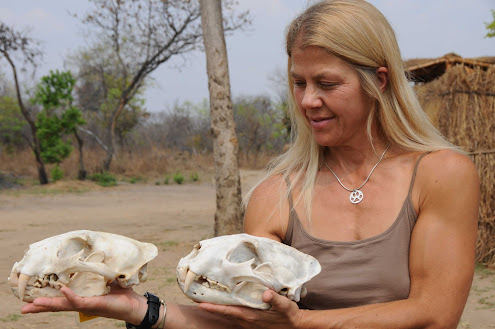
UCLA biologist Paula White displays two leopard skulls.
Credit: Paula White

In a hunting camp in Zambia more than a decade ago, UCLA biologist Paula White puzzled over the heavy skull of a trophy-hunted lion. Zambia permits limited hunting in certain areas to help fund its national conservation program, and White had gained permission to examine the trophy skulls and hides to evaluate how hunting was affecting conservation efforts.

This particular skull had a pronounced horizontal V-shaped notch on one of the canine teeth — a marking White had never seen before from natural wear. Over the next few months, she began noticing similar notches on other lions’ teeth.

It wasn’t until three years later, when she visited lions bred in captivity and saw them gnawing on a wire fence, that it clicked: The tooth notches in wild lions resulted from the animals chewing their way out of wire snares — noose-like traps set by poachers. The sheer number of notched teeth she’d seen suggested that such traps, illegal in conservation areas, were injuring far more lions than experts had estimated.

“It was an odd mix of thrilling to figure out the cause of the notches and horrifying to realize that so many animals had been entangled in a snare at some point in their lives,” said White, director of the Zambia Lion Project and a senior research fellow with the Center for Tropical Research at UCLA’s Institute of the Environment and Sustainability.

Saturday, January 24, 2026

Conservation may not be enough to sustain water supplies, researchers find

The Colorado River wends through Marble Canyon, Arizona, north of Phoenix — one of three western U.S. cities in a study published in the journal Water Resources Research. The cities are connected by the Colorado River.
Photo Credit: Laura Durning/U.S. Geological Survey. All Rights Reserved.

Scientific Frontline: "At a Glance" Summary

  • Main Discovery: Prescriptive water conservation policies in major U.S. cities are insufficient as a standalone solution to sustain reservoir levels under severe climate change scenarios.
  • Methodology: Researchers developed a computational model integrating hydrological data, climate simulations, municipal water consumption records, and resident survey data reflecting conservation attitudes across Denver, Las Vegas, and Phoenix.
  • Key Data: Implementation of robust conservation policies in Denver resulted in a median reservoir level 17% higher than baseline scenarios, whereas Phoenix and Las Vegas showed significantly smaller improvements, failing to offset climate-induced drawdowns.
  • Significance: Demand-side management fails to maintain water availability when climate change triggers extreme or prolonged dry conditions, particularly in the drought-prone Colorado River Basin where use outpaces supply by 1 million acre-feet annually.
  • Future Application: Policymakers must move beyond customer demand reduction and integrate diversified interstate water management strategies to mitigate the impacts of diminished snowpack and rising temperatures.
  • Branch of Science: Hydrology, Environmental Engineering, and Climate Science.
  • Additional Detail: The study highlights that the effectiveness of water policy is heavily dependent on regional public attitudes; if a significant portion of the population ignores mandates, even aggressive conservation protocols fail to yield lasting change.

Monday, January 31, 2022

Understanding coral reef connectivity important to focus conservation efforts

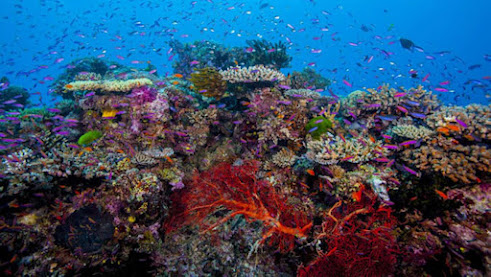
Coral reef in Fiji.
Photo credit: Joao Paulo Krajewski

Scientific Frontline: "At a Glance" Summary

  • Main Discovery: Larval connectivity between coral reefs significantly influences their biodiversity and biomass, with "sink" reefs (which receive larvae) showing greater resilience and biomass compared to "source" reefs.
  • Methodology: Researchers utilized ocean biophysical models to simulate fish larval dispersal across coral reefs globally, combining ocean current movement data with biological characteristics of four distinct fish groups.
  • Key Data: Reefs functioning as larval "sinks" contain approximately twice as much biomass as larval "sources," and 70% of reefs identified as functionally important for biodiversity and fisheries currently lack protection.
  • Significance: The study provides the first global-scale simulation of coral reef larval connectivity, revealing that a reef's role as a source, sink, or corridor is a critical determinant of its ability to support fisheries and maintain biodiversity.
  • Future Application: These findings offer a science-based framework for strategically positioning future Marine Protected Areas (MPAs) and Other Effective area-based Conservation Measures (OECMs) to maximize conservation outcomes by 2030.
  • Branch of Science: Marine Ecology and Conservation Biology
  • Additional Detail: While "sink" reefs are potential "sweet spots" for local subsistence fisheries due to high biomass, they still require managed fishing restrictions to maintain their ecological function.

Thursday, March 28, 2024

New rapid method to predict effects of conservation actions on complex ecosystems

From left: Dr Matthew Adams, Sarah Vollert, Professor Drovandi
Photo Credit: Courtesy of Queensland University of Technology

A new way to analyze the effects of conservation actions on complex ecosystems has cut the modelling time from 108 days to six hours, QUT statisticians have found:

  • Some conservation efforts backfire, eg eradicating feral cats could lead to rabbit explosion
  • Modeling predicts the cascading effects through species in a complex ecosystem, but is computationally slow
  • New method cuts prediction time from 3.5 months to six hours

PhD researcher Sarah Vollert, from the School of Mathematical Sciences and the QUT Centre for Data Sciences, said it was impossible to predict exactly how conservation actions would affect each species.

“Though well-intentioned, conservation actions have the potential to backfire,” Ms. Vollert said.

“For example, if decision-makers decide to eradicate feral cats, it could lead to explosive populations of their prey species, like rabbits.

“Uncontrolled rabbit populations could then have devastating effects on the vegetation, destroying the habitat native species need to survive.

Tuesday, March 28, 2023

Turtle and crocodile species with unique characteristics are more likely to go extinct

A Mugger Crocodile (Crocodylus palustris). In Pakistan, this species is still illegally hunted for its skin.
Image Credit: Bishnu Sarangi

New research led by the University of Oxford has revealed that the most endangered turtle and crocodile species are those that are most unique. Their loss could have widespread impacts on the ecosystems they live in since they carry out critical processes important for many other species. The results have been published in Nature Communications.

"When it comes to the conservation of turtles and crocodiles, we are dealing with a critical scenario. Furthermore, our actions are affecting unevenly more so those species that are characterized by unique life strategies. Once they are gone, these life strategies will be gone too, with no other species being able to provide a back-up." 
Professor Rob Salguero-Gómez, Department of Biology, University of Oxford

Turtles and crocodiles are two of the world's most endangered animal groups, with approximately half of the species globally threatened (International Union for Conservation of Nature, IUCN). Greater understanding of which species are most threatened and why is urgently needed to inform conservation efforts to save them.

In a new study led by researchers at the Department of Biology, University of Oxford, an international team examined the greatest risks to wild populations of turtles and crocodiles worldwide. The results demonstrate that the most endangered turtles and crocodile species are those that have evolved unique life strategies. These species typically carry out highly specific roles within their ecosystems that are unlikely to be taken up by other species if they disappear.

Saturday, April 16, 2022

Nationwide maps of bird species can help protect biodiversity

Researchers mapped the number of bird species found across the contiguous U.S. Blue areas host fewer bird species than green or yellow areas do. 
Images by Kathleen Carroll and Anna Pidgeon

New, highly detailed and rigorous maps of bird biodiversity could help protect rare or threatened species.

Researchers at the University of Wisconsin–Madison developed the maps at a fine-enough resolution to help conservation managers focus their efforts where they are most likely to help birds — in individual counties or forests, rather than across whole states or regions.

The maps span the contiguous U.S. and predict the diversity of birds that live in a given area, related by traits such as nesting on the ground or being endangered. Those predictions are based on both detailed observations of birds and environmental factors that affect bird ranges, such as the degree of forest cover or temperature in an area.

Thursday, January 30, 2025

Conservation paradox: Invasive species are often threatened in their native range

The wild rabbit is endangered in its native Europe. In other parts of the world, such as Australia, this species has been introduced and has large populations.
Photo Credit: ©Alexis Lours

Non-native animals are a threat to biodiversity, yet many are themselves threatened with extinction in their areas of origin

Non-native species introduced by humans are among the main causes of global species decline – they were partly responsible for 60 percent of the species that have become extinct worldwide in recent decades. In Central Europe, non-native mammals include species such as the Norway rat, the mouflon and the mink. Now a study led by biologists from the University of Vienna and La Sapienza University in Rome shows that some of these species introduced by humans are themselves endangered in their native range. The study has been published in the current issue of the journal Conservation Letters.

The globalization of the earth is contributing to the introduction of many animal and plant species into new parts of the world. Invasive species can displace native species through competition or transmit new diseases. At the same time, however, some of these non-native species are threatened with extinction in their native ranges. This creates a conservation paradox – because the question now is, should non-native occurrences of species that are endangered in their native range be protected or controlled? However, it was previously unknown how many non-native mammal species this paradox actually applies to. In the new study, the scientists have now quantified this in order to come one step closer to an answer to this paradox.

Monday, February 12, 2024

Genetic analysis and archaeological insight combine to reveal the ancient origins of the fallow deer

Fallow deer
Photo Credit: Nick Fewings

Scientific Frontline: "At a Glance" Summary

  • Main Discovery: Genetic and archaeological analysis reveals that fallow deer were first introduced to Britain by the Romans rather than the Normans, with their subsequent global spread driven by British colonial expansion and cultural symbolism.
  • Methodology: Researchers combined zooarchaeological records with the DNA sequencing of several hundred ancient and modern specimens to reconstruct an evolutionary history spanning 10,000 years.
  • Key Data: The study successfully sequenced a 130,000-year-old sample and identified two distinct European lineages: a Balkan group spread during the Roman Empire and an Anatolian group introduced to Britain around 1000 AD.
  • Significance: These findings challenge standard conservation classifications by demonstrating that modern deer populations are artifacts of human history, rendering terms like "wild," "domestic," or "invasive" inadequate for management decisions.
  • Future Application: Conservation policies must be revised to incorporate biocultural heritage rather than relying solely on native status, particularly for populations like those in Barbuda where the deer is the national animal yet lacks legal protection.
  • Branch of Science: Bioarchaeology and Molecular Ecology
  • Additional Detail: The earliest evidence of fallow deer outside the Mediterranean was identified at a Roman palace in Fishbourne, West Sussex, confirming their presence centuries before the Norman Conquest.

Wednesday, May 11, 2022

International project aims to understand and protect endangered sea turtles

A hawksbill sea turtle (Eretmochelys imbricata)
Credit: Kate Charles, Ocean Spirits Inc

A partnership of organizations and universities in the UK and Grenada has launched a new project looking into the challenges and threats facing two endangered marine species.

Marine conservationists in the two countries will be working to understand more about hawksbill sea turtles (Eretmochelys imbricata) and green sea turtles (Chelonia mydas).

This will include using a variety of field techniques to fully appreciate their behaviors and habitats, and ultimately, the partners hope to develop a series of measures that can be used to support the sustainable conservation of the species now and in the future.

The research is being funded by the Oscar Montgomery Environmental Foundation (OMEF), a charity launched in 2020 as a legacy to a young man who was passionate about the marine environment.

He died, aged just 17, and the charity set up in his memory aims to support, advocate and raise awareness of environmental issues, largely marine, and support projects and research which work to conserve and enhance the global environment.

Tuesday, November 25, 2025

The seamounts of Cape Verde: a biodiversity hotspot and a priority for marine conservation in the central-eastern Atlantic

Image Credit: Projecte Luso/iMirabilis2/iAtlantic

Scientific Frontline: "At a Glance" Summary

  • Main Discovery: Scientists have identified sandy seafloors as a significant and previously overlooked source of methane, a potent greenhouse gas, challenging the long-held assumption that these oxygen-rich environments were biologically inactive regarding methanogenesis.
  • Methodology: Researchers conducted extensive fieldwork in coastal zones of Denmark and Australia, utilizing biogeochemical sensors to monitor oxygen fluctuations and genetic sequencing to identify methanogenic archaea within permeable sandy sediments.
  • Key Data: Atmospheric methane concentrations have surged by 150% since the mid-1700s, and the study reveals that even "clean" sand can host vibrant microbial communities that activate methane production within hours once oxygen levels drop during calm sea conditions.
  • Significance: The discovery identifies a "hidden" feedback loop where coastal warming and increased organic runoff from dying seagrasses can trigger rapid methane release, potentially accelerating global climate change beyond current predictive models.
  • Future Application: These findings necessitate the integration of coastal sandy shelf data into global carbon budget assessments and provide a new framework for managing marine protected areas to mitigate methane "hotspots" caused by sediment stagnation.
  • Branch of Science: Biogeochemistry and Marine Ecology.
  • Additional Detail: The study found that methanogenic microbes in sand exhibit a unique "flexible lifestyle," remaining dormant in oxygenated water but feasting on the metabolites of marine plants as soon as local conditions turn anaerobic.

Wednesday, November 30, 2022

Tropical wildlife follow the same daily patterns worldwide

An elephant faces a camera trap in one of millions of photos analyzed for a new study led by a Rice University visiting student. The study found striking similarities in how rainforest animals across the world spend their days.
Resized Image using AI by SFLORG
Photo Credit: Courtesy of Lydia Beaudrot/Conservation International

How do animals in the wild use their time? A researcher at Rice University is part of a new study that shows what motivates the daily ramble of tropical populations.

The study by an international team that includes Rice bioscientist Lydia Beaudrot and is led by Andrea Vallejo-Vargas, a graduate student at the Norwegian University of Life Sciences and currently a visiting scholar at Rice, found that communities of mammals across the wet tropics divide their days in similar ways, all generally geared toward finding their next meal. (Or avoiding being the next meal.)

Using millions of images from camera trap networks in 16 protected forests around the world, they examined the relationship of mammal activities to body sizes and feeding routines to find common characteristics among diverse populations.

Their open-access study in Nature Communications confirms that despite their diversity, similar patterns dominate the days of wildlife in Africa, Asia and the Americas.

The study showed that the activity of herbivores and insectivores was largely influenced by temperature in the environment (in study-speak, “thermoregulatory constraints”). For instance, large African herbivores are seven times more likely to be nocturnal than smaller herbivores.

Featured Article

Temperature of some cities could rise faster than expected under 2°C warming

Cities are often warmer than rural areas due to a phenomenon known as the urban heat island, which can be influenced by various factors, suc...

Top Viewed Articles