. Scientific Frontline: Search results for mRNA
Showing posts sorted by relevance for query mRNA. Sort by date Show all posts

Friday, March 22, 2024

Messenger RNAs with multiple “tails” could lead to more effective therapeutics

Graphic showing scientists adding "tails" to mRNA molecules
Illustration Credit: Catherine Boush, Broad Communications

Scientific Frontline: "At a Glance" Summary

  • Main Discovery: Researchers from the Broad Institute and MIT engineered a novel mRNA structure containing multiple poly(A) "tails" that significantly enhances molecular stability and translation efficiency.
  • Methodology: The team chemically synthesized branched mRNA topologies and assessed their performance in human cells and murine models, including integration with CRISPR-Cas9 systems for gene editing.
  • Key Data: The multi-tailed mRNA increased protein activity in cells by 5 to 20 times and sustained protein production in mice for 14 days, lasting two to three times longer than unmodified molecules.
  • Significance: This innovation addresses the limitation of rapid mRNA degradation, allowing for sustained therapeutic effects at lower doses which minimizes the risk of toxic side effects.
  • Future Application: Potential uses include long-lasting treatments for diseases requiring gene editing or protein replacement, such as therapeutic interventions for high cholesterol.
  • Branch of Science: Biotechnology and Bioengineering
  • Additional Detail: The study demonstrates that cellular translation machinery readily accepts synthetic, non-natural mRNA shapes, validating the potential for extensive chemical topological engineering.

Thursday, February 5, 2026

What Is: mRNA

The Genetic Messenger
Messenger RNA (mRNA) serves as the vital intermediary in the "central dogma" of molecular biology, bridging the gap between stable genomic DNA and the production of functional proteins. Acting as a transient transcript, mRNA carries specific genetic instructions from the cell nucleus to the ribosome, where the code is translated into precise amino acid sequences. By providing a temporary, programmable blueprint for cellular machinery, mRNA enables the dynamic regulation of life’s essential processes and stands as a cornerstone of modern biotechnological innovation.

Scientific Frontline: Extended "At a Glance" Summary

The Core Concept: Messenger RNA (mRNA) acts as a transient biological intermediary that conveys specific genetic instructions from cellular DNA to ribosomes, serving as a programmable blueprint for the synthesis of functional proteins.

Key Distinction/Mechanism: Unlike traditional pharmaceuticals that deliver the "hardware" (such as small molecule inhibitors or recombinant proteins), mRNA therapeutics deliver the "software" (genetic code), instructing the patient's own cells to manufacture the therapeutic agent. This process is inherently transient; the molecule degrades naturally without integrating into the host genome, eliminating the risk of insertional mutagenesis associated with DNA-based gene therapies.

Thursday, November 10, 2022

Efficient mRNA delivery by branched lipids

A cross-section of an LNP-RNA. The mRNA (red) is encapsulated by lipids (blue spheres with tails.
 Image Credit: Yusuke Sato

Scientific Frontline: "At a Glance" Summary

  • Main Discovery: A novel branched ionizable lipid, CL4F 8-6, significantly improves the storage stability and intracellular delivery efficiency of mRNA encapsulated in lipid nanoparticles (LNPs).
  • Methodology: Researchers synthesized a systematic library of 32 branched ionizable lipids defined by symmetry and carbon number, then screened them to identify correlations between lipid structure, microviscosity, and in vivo performance.
  • Key Data: The optimized lipid formulation achieved a 77% suppression of a target gene in mice following a single dose.
  • Significance: This research establishes a positive correlation between lipid symmetry/microviscosity and LNP stability, overcoming previous barriers in systematic lipid analysis and enhancing gene editing potential.
  • Future Application: Development of more stable and effective mRNA vaccines and gene-editing therapies with targeted organ selectivity.
  • Branch of Science: Pharmaceutical Sciences and Nanotechnology
  • Additional Detail: The study identified that the length of the branched lipid chains directly influences which organs, specifically the liver or spleen, express the delivered proteins.

Tuesday, December 28, 2021

Optimization of mRNA containing nanoparticles

Dr. Aurel Radulescu at the KWS-2 instrument of the Juelich Center for Neutron Science (JCNS) in the research neutron source Heinz Maier-Leibnitz (FRM II) of the Technical University of Munich
Image: Bernhard Ludewig / TUM / FRM II

The research neutron source Hein Maier-Leibnitz (FRM II) at the Technical University of Munich (TUM) is playing an important role in the investigation of mRNA nanoparticles similar to the ones used in the Covid-19 vaccines from vendors BioNTech and Pfizer. Researchers at the Heinz Maier-Leibnitz Zentrum (MLZ) used the high neutron flux available in Garching to characterize various formulations for the mRNA vaccine and thus to lay the groundwork for improving the vaccine's efficacy.

The idea of using messenger RNA (mRNA) as an active ingredient is a brilliant one: The molecule contains the specific blueprint for proteins which are then synthesize by the cell. This makes it generally possible to provide a very wide spectrum of different therapeutically effective proteins.

In the case of the Covid-19 vaccine, these are the proteins of the characteristic spikes on the surface of the Corona virus which are used for vaccination. The proteins are presented on the surface of immune cells; then the human immune system triggers defenses against these foreign proteins and thus against the Corona virus. The mRNA itself is completely broken down after only a few hours, a fact which is advantageous to the safety of these vaccines.

The mRNA has to be packaged appropriately in order to keep it from being broken down on the way to the cell by the ubiquitous enzymes of the human body. This is done using nanoparticles which can consist of a mixture of lipids or polymers.

Wednesday, September 15, 2021

A rare Tibetan worm may hold key to long-acting COVID vaccines


Caterpillars with emerging Ophiocordyceps sinensis
Credit: William Rafti Institute
A molecule isolated from the world’s most valuable parasite, the caterpillar fungus (Ophiocordyceps sinensis), may provide clues to better and more stable mRNA vaccines, according to research being done in Australia.

The molecule was first isolated from cordyceps fungi in the 1950s. These fungi infect ghost moth larvae, to make 'summer grass' prized in Tibetan and Chinese medicines for its benefits as a tonic and as a treatment for sexual dysfunction.

Associate Professor Traude Beilharz, from the Biomedicine Discovery Institute at Monash University in Melbourne, and her team have been studying the cordycepin molecule because of its ability to trick cells into increasing nucleotides and making mRNA with longer 3'UTRs. According to Associate Professor Beilharz, understanding how 3' UTRs work is really important to improving the stability and function of vaccines. Their research was recently published in the eLife journal.

The lab is now using what they have learned about 3'UTRs from that study to create a screening

Associate Professor Traude Beilharz

platform to identify optimal 3'UTRs for new mRNA vaccines. These 3’UTRs are crucial in stimulating immunity and may reduce the need for booster shots to maintain this immunity. Rachael Turner, first author of the study, has nearly completed her PhD thesis. Next she will apply her expertise in 3’ UTR function toward improving future mRNA vaccines.

The caterpillar fungus, Ophiocordyceps sinensis, is the world’s most valuable parasite. It’s a relative of the tropical fungus that turns ants into zombies, but unlike its infamous cousin, it is found only on the Tibetan plateau, where it infects the larvae of ghost moths. It has long been part of traditional Chinese medicine, and demand for it has risen so sharply in recent decades that in Beijing it is now worth three times its weight in gold. In Bhutan, one of the countries where the fungus is harvested, it accounts for a significant slice of the gross domestic product.

The development of mRNA vaccines, largely due to COVID-19, has been rapid. In addition, the development of mRNA vaccines against cancer has also developed at pace. According to Associate Professor Beilharz, “mRNA vaccines are a promising technology as the production process is simple, safety profiles are better than those of DNA vaccines, and mRNA-encoded antigens are readily expressed in cells, which stimulate immunity against the virus.”

However, mRNA vaccines also possess some inherent limitations. While side effects such as allergy, renal failure, heart failure, and infarction remain a risk, the vaccine mRNA may also be degraded quickly after administration, leading to the need for boosters.

The best types of mRNA vaccines are those that only encode the target antigen (in the case of COVID vaccines, the spike protein) and contain 5' and 3' untranslated regions (UTRs), which provide comprehensive stimulation of the adaptive and innate immunity. “Studying the cordyceps fungi molecule and how it can be used to understand the function of 3’UTRs is a key step in making better vaccines against infectious diseases like COVID-19 and also cancers,” Associate Professor Beilharz said.

Monash is home to Australia's largest network of RNA and mRNA researchers. Keep up to date with our work on life-saving vaccines and therapeutic treatments on the Monash RNA webpage.

Source/Credit: Monash University

scn091521_01

Thursday, March 30, 2023

A key mechanism that controls human heart development discovered

A human cardiac organoid (Cardioid), one of the models the researchers used to reconstruct human cardiac development in 3D. Cardiac mesoderm stage human Cardioid visualizing Phalloidin (grey) and β-catenin (Magenta).
Image Credit: Deniz Bartsch

Writing in ‘Science Advances’ researchers of the University of Cologne describe a key mechanism that controls the decision-making process that allows human embryonic stem cells to make the heart. These discoveries enable better insights into how the human heart forms in an embryo and what can go wrong during heart formation, causing cardiac disease or, in the worst case, embryo termination.

In humans, a specialized mRNA translation circuit predetermines the competence for heart formation at an early stage of embryonic development, a research team at the Center for Molecular Medicine Cologne (CMMC) and the University of Cologne’s Cluster of Excellence in Aging Research CECAD led by Junior Professor Dr Leo Kurian has discovered. While it is well known that cardiac development is prioritized at the early stages of embryogenesis, the regulatory program that controls the prioritization of the development of the heart remained unclear until now. Kurian and his team investigated how the prioritization of heart development is regulated at the molecular level. They found that the protein RBPMS (RNA-binding protein with multiple splicing) is responsible for the decision to make the heart by programming mRNA translation to approve future cardiac fate choice. The study is published under the title ‘mRNA translational specialization by RBPMS presets the competence for cardiac commitment’ in Science Advances.

Tuesday, February 8, 2022

Nasal Spray Booster Keeps COVID-19 at Bay

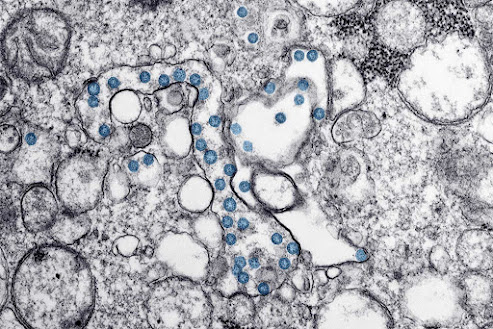
A nasal spray coronavirus vaccine booster helps protect mice from SARS-CoV-2. In this electron microscopy image, viral particles are shown as blue circles.
Credit: CDC/ Hannah A Bullock; Azaibi Tamin

A new coronavirus vaccine guards one body part especially vulnerable to infection: the nose.

Dosing mice with a nasal spray booster recruited an army of immune defenders to both the nasal cavity, where coronaviruses typically enter the body, and the lungs, scientists report in a preprint posted on bioRxiv.org.

Made only of coronavirus spike protein, the vaccine is part of a one-two punch that could one day protect people from infection. Dubbed “Prime and Spike,” the strategy relies on an mRNA coronavirus vaccine injection that primes the immune system to recognize SARS-CoV-2, followed by a nasal spray vaccine that shores up defenses at the mucus membranes.

Such a strategy might offer a way to counter the waning effectiveness of current mRNA coronavirus vaccines, says study author Akiko Iwasaki, a Howard Hughes Medical Institute Investigator at Yale University.

Until now, scientists had not tested nasal vaccines on animals that already had some pre-existing immunity, says Jacco Boon, a virologist at Washington University School of Medicine in St. Louis who was not involved with the new work. “This paper is telling us that the intranasal booster induces a really good immune response in the nose and the lungs,” he says. “It’s a clever strategy, and I hope they test it in people.”

Friday, January 16, 2026

Purdue mRNA therapy delivery system proves to be shelf-stable, storable

The Proceedings of the National Academy of Sciences has published research about a Purdue University virus-mimicking platform technology that targets bladder cancer cells with mRNA therapies. The LENN platform scientists include, from left, Christina Ferreira, Saloni Darji, Bennett Elzey, Joydeep Rakshit, Feng Qu and David Thompson.
Photo Credit: Purdue University /Ali Harmeson

Scientific Frontline: "At a Glance" Summary

  • Main Discovery: The LENN (Layer-by-layer Elastin-like Polypeptide Nucleic Acid Nanoparticle) platform successfully delivers mRNA therapies to bladder cancer cells while retaining full biological activity after being freeze-dried into a shelf-stable powder.
  • Methodology: Researchers engineered a virus-mimicking dual-layer nanoparticle to condense and protect nucleic acids, then subjected the formulation to lyophilization (freeze-drying) and storage at -20°C to validate its stability and rehydration properties.
  • Key Data: The lyophilized samples maintained complete structural integrity and functionality after three days of storage, successfully targeting upregulated receptors on tumor cells without triggering an immune response.
  • Significance: This technology overcomes the severe cold-chain limitations of current lipid nanoparticle systems—which often require storage below -45°C—by providing a biomanufacturable, storable powder form that facilitates easier global distribution.
  • Future Application: The team is upscaling the system for preclinical evaluation and initiating efficacy and safety studies in mouse models of bladder cancer.
  • Branch of Science: Nanomedicine, Pharmaceutical Chemistry, and Oncology.
  • Additional Detail: Multiple reaction monitoring (MRM) profiling confirmed that the system utilizes natural entry pathways and avoids immune detection, potentially solving the "redosing" clearance issues associated with traditional viral vectors.

Friday, February 7, 2025

Spliceosome: How Cells Avoid Errors When Manufacturing mRNA

Quality control during splicing: When an error in the precursor mRNA is detected, the spliceosome is blocked, the recruited control factors interrupt the “normal” cycle, and a molecular short circuit causes the spliceosome to disassemble.
Image Credit: © K. Wild, K. Soni, I. Sinning

Scientific Frontline: "At a Glance" Summary

  • Main Discovery: Researchers successfully visualized a "blocked" spliceosome at high resolution for the first time, revealing the specific mechanism by which cells detect and discard errors during the mRNA splicing process.
  • Methodology: The team utilized cryo-electron microscopy to examine defective spliceosomes purified from the fission yeast Schizosaccharomyces pombe, employing molecular markers to isolate the specific complexes stalled by quality control factors.
  • Key Data: The study produced the first atomic-level representation of a discarded spliceosome, demonstrating that a "molecular short circuit" occurs upon error detection to trigger the immediate disassembly of the faulty complex.
  • Significance: Elucidating this quality control mechanism is critical for medical science, as splicing errors are a primary cause of hereditary genetic disorders and are strongly associated with neurodevelopmental conditions and cancer.
  • Future Application: These detailed structural models provide a foundational blueprint for analyzing molecular malfunctions in splicing-related diseases, which may facilitate the development of targeted therapies for conditions caused by aberrant gene expression.
  • Branch of Science: Biochemistry and Molecular Biology.
  • Additional Detail: The proteins responsible for this quality control process are conserved from fission yeast to humans, indicating that this error-correction mechanism has remained evolutionarily stable and fundamental to eukaryotic life

Wednesday, February 14, 2024

Scientists help discover new treatment for many cancers

UniSA/CCB Professor Greg Goodall, part of the team that made the landmark discovery.
Photo Credit: Courtesy of University of South Australia 

Scientific Frontline: "At a Glance" Summary

  • Main Discovery: Researchers identified the specific molecular mechanism responsible for actively transporting circular RNAs (circRNAs) from the cell nucleus to the cytoplasm.
  • Methodology: The study mapped the export pathway and revealed that circRNAs utilize a transport mechanism resembling that of proteins, distinct from the export routes used by other forms of RNA.
  • Key Data: Circular RNA possesses a closed-loop genetic structure that renders it inherently more stable and durable in the body compared to linear mRNA, which degrades rapidly.
  • Significance: Understanding this transport pathway overcomes a major limitation of current RNA technology, validating circRNA as a robust platform for more effective genetic medicines.
  • Future Application: These findings enable the development of a next generation of RNA therapeutics and vaccines with increased potency and longevity for treating cancer and other diseases.
  • Branch of Science: Molecular Biology, Oncology, and Pharmacology.
  • Additional Detail: The discovery confirms that circRNAs are not cellular byproducts but are actively transported to the cytoplasm to perform critical biological functions.

Wednesday, December 20, 2023

Discovery: plants use “trojan horse” to fight mold invasions

Photo Credit: Gábor Adonyi

UC Riverside scientists have discovered a stealth molecular weapon that plants use to attack the cells of invading gray mold. 

If you’ve ever seen a fuzzy piece of fruit in your fridge, you’ve seen gray mold. It is an aggressive fungus that infects more than 1,400 different plant species: almost all fruits, vegetables, and many flowers. It is the second most damaging fungus for food crops in the world, causing billions in annual crop losses.

A new paper in the journal Cell Host & Microbe describes how plants send tiny, innocuous-seeming lipid “bubbles” filled with RNA across enemy lines, into the cells of the aggressive mold. Once inside, different types of RNA come out to suppress the infectious cells that sucked them in.

“Plants are not just sitting there doing nothing. They are trying to protect themselves from the mold, and now we have a better idea how they’re doing that,” said Hailing Jin, Microbiology & Plant Pathology Department professor at UCR and lead author of the new paper.

Previously, Jin’s team discovered that plants are using the bubbles, technically called extracellular vesicles, to send small RNA molecules able to silence genes that make the mold virulent. Now, the team has learned these bubbles can also contain messenger RNA, or mRNA, molecules that attack important cellular processes, including the functions of organelles in mold cells. 

Tuesday, January 14, 2025

Tracking delivery: new technology for nanocarriers

Lipid nanoparticles visualized using SCP-Nano technology at the cellular level in lung tissue.
Image Credit: © Ali Ertürk / Helmholtz Munich

How can we ensure that life-saving drugs or genetic therapies reach their intended target cells without causing harmful side effects? Researchers at Helmholtz Munich, LMU and Technical University Munich (TUM) have taken an important step to answer this question. They have developed a method that, for the first time, enables the precise detection of nanocarriers – tiny transport vehicles – throughout the entire mouse body at a single-cell level. This innovation, called “Single-Cell Profiling of Nanocarriers” or short “SCP-Nano”, combines advanced imaging with artificial intelligence to provide unparalleled insights into the functionality of nanotechnology-based therapies. The results, published in Nature Biotechnology, pave the way for safer and more effective treatments, including mRNA vaccines and gene therapies.

Nanocarriers will play a central role in the next wave of life-saving medicines. They enable the targeted delivery of drugs, genes, or proteins to cells within patients. With SCP-Nano, researchers can analyze the distribution of extremely low doses of nanocarriers throughout the entire mouse body, visualizing each cell that has taken them up. SCP-Nano combines optical tissue clearing, light-sheet microscopy imaging, and deep-learning algorithms. First, whole mouse bodies are made transparent. After the three-dimensional imaging of whole mouse bodies, nanocarriers within the transparent tissues can then be identified down to the single-cell level. By integrating AI-based analysis, researchers can quantify which cells and tissues are interacting with the nanocarriers and precisely where this occurs.

Thursday, December 25, 2025

Restoring the healthy form of a protein could revive blood vessel growth in premature infants’ lungs

A blood vessel organoid.
Video Credit: Yunpei Zhang and Enbo Zhu, Mingxia Gu Lab

A UCLA-led research team has discovered a molecular switch that determines whether tiny blood vessels in premature infants’ lungs can regenerate after injury. A failure of this repair process is a hallmark of bronchopulmonary dysplasia, or BPD, a serious lung disease that affects babies born very early. It arises from a combination of premature birth, inflammation or infection, and exposure to the high levels of oxygen and breathing support that are necessary to keep these infants alive during a critical period of lung development.

The researchers found that in BPD, the blood vessel cells in the lungs begin producing a shortened, nonfunctional isoform — a version of a protein — called NTRK2, which has been extensively studied in the nervous system but not in the pulmonary vasculature. When this shortened isoform dominates, the lung cannot rebuild the delicate network of tiny blood vessels needed for healthy breathing.

Friday, October 13, 2023

Calorie restriction in humans builds strong muscle and stimulates healthy aging genes

NIH study suggests a small reduction in daily calories is beneficial for wellness.
Photo Credit: rawpixel

Reducing overall calorie intake may rejuvenate your muscles and activate biological pathways important for good health, according to researchers at the National Institutes of Health and their colleagues. Decreasing calories without depriving the body of essential vitamins and minerals, known as calorie restriction, has long been known to delay the progression of age-related diseases in animal models. This new study, published in Aging Cell, suggests the same biological mechanisms may also apply to humans.

Researchers analyzed data from participants in the Comprehensive Assessment of Long-Term Effects of Reducing Intake of Energy (CALERIE), a study supported by the National Institute on Aging (NIA) that examined whether moderate calorie restriction conveys the same health benefits seen in animal studies. They found that during a two-year span, the goal for participants was to reduce their daily caloric intake by 25%, but the highest the group was able to reach was a 12% reduction. Even so, this slight reduction in calories was enough to activate most of the biological pathways that are important in healthy aging.

Monday, October 18, 2021

J&J coronavirus vaccine produces low antibody response

Photo by Frank Merino from Pexels
In a head-to-head comparison of the three widely used coronavirus vaccines in the United States, the Johnson & Johnson vaccine yielded a strikingly lower antibody response in a Stanford School of Medicine-led study published in the Journal of the American Society of Nephrology.

The study, which analyzed early vaccine immune response in 2,099 dialysis patients, found that 33% of those vaccinated with Johnson & Johnson did not develop coronavirus antibodies, compared with 4% of those who received the Pfizer-BioNTech vaccine and 2% who received the Moderna vaccine. The study is one of the first to compare immune response associated with antibody levels using the same blood test for all three vaccines.

“We weren’t expecting this large a difference between vaccines,” said Shuchi Anand, MD, assistant professor of nephrology and a lead author of the study. “Since part of the rationale for boosters is waning antibody response, our study strongly argues for the need for booster shots for Johnson & Johnson, particularly in the immunocompromised population.”

Less protection

Pablo Garcia, MD, a postdoctoral scholar in nephrology and co-lead author of the study, agreed that people vaccinated with the J&J vaccine are probably less protected from the coronavirus and will “most likely need a booster shot.”

The researchers, who set out to analyze antibody response in the early post-vaccination period, collaborated with a nonprofit dialysis provider that treats kidney patients undergoing dialysis in California, Tennessee, Texas and New Jersey. The tests were conducted between 28 and 60 days after each patient had been fully vaccinated.

Wednesday, March 15, 2023

A new control switch could make RNA therapies easier to program

MIT researchers demonstrated that their RNA sensor could accurately identify cells expressing a mutated version of the p53 gene, which drives cancer development.
Image Credits: iStock, edited by MIT News
(CC BY-NC-ND 3.0)

Using an RNA sensor, MIT engineers have designed a new way to trigger cells to turn on a synthetic gene. Their approach could make it possible to create targeted therapies for cancer and other diseases, by ensuring that synthetic genes are activated only in specific cells.

The researchers demonstrated that their sensor could accurately identify cells expressing a mutated version of the p53 gene, which drives cancer development, and turn on a gene encoding a fluorescent protein only within those cells. In future work, they plan to develop sensors that would trigger production of cell-killing proteins in cancer cells, while sparing healthy cells.

“There’s growing interest in reducing off-target effects for therapeutics,” says James Collins, the Termeer Professor of Medical Engineering and Science in MIT’s Institute for Medical Engineering and Science (IMES) and Department of Biological Engineering. “With this system, we could target very specific disease cells and tissues, which opens up the possibility of identifying cancer cells and then delivering highly potent therapeutics.”

This approach could also be used to develop treatments for other diseases, including viral or bacterial infections, the researchers say.

Thursday, September 9, 2021

Newly developed software unveils relationships between RNA modifications and cancers

Researchers from CSI Singapore have developed a software called ModTect that identifies relationships between RNA modifications and the development of diseases as well as survival outcomes
 In a research breakthrough, a team of researchers from the Cancer Science Institute of Singapore (CSI Singapore) at the National University of Singapore has developed a software that can help reveal the relationships between RNA modifications and the development of diseases and disorders.

Led by Professor Daniel Tenen and Dr Henry Yang, the scientists devised ModTect – a new computational software that can identify RNA modifications using pre-existing sequencing data from clinical cohort studies. With ModTect, the team carried out their own novel pan-cancer study covering 33 different cancer types. They found associations between these RNA modifications and the different survival outcomes of cancer patients.

“This work is one of few studies demonstrating the association of mRNA modification with cancer development. We show that the epitranscriptome was dysregulated in patients across multiple cancer types and was additionally associated with cancer progression and survival outcomes,” explained Dr Henry Yang, Research Associate Professor from CSI Singapore.

"In the past decade, the ability to sequence the Human Genome has transformed the study of normal processes and diseases such as cancer. We anticipate that studies like this one, eventually leading to complete sequencing of RNA and detecting modifications directly in RNA, will also have a major impact on the characterization of disease and lead to novel therapeutic approaches," commented Prof Tenen, Senior Principal Investigator from CSI Singapore.

What are RNA modifications?

While most people are familiar with DNA, RNA plays just as much of a vital role in the human body’s cellular functions. Unlike DNA, which has the double-helix structure that most people are familiar with, RNA is a family of single-stranded molecules that perform various essential biological roles.

For example, messenger RNA (mRNA) conveys genetic information that directs the production of different proteins. Imagine DNA as an expansive library filled with books that carry instructions on how to make different proteins. Each letter in the sequences of words that make up the books’ contents are called nucleotides, which are small molecules that are used to store genetic information. To make sure these instructions are followed, mRNA makes copies of the books and carries them from a cell’s nucleus, where DNA is stored, to the ribosomes. These ribosomes are the “factories” where proteins are synthesized. Without RNA, the valuable genetic instructions stored in our cells would never be used.

Additional types of RNA perform other important functions. Some help catalyze biochemical reactions, just like enzymes, while others regulate gene expression.

Small chemical modifications to RNA can sometimes occur and alter the function and stability of the molecules. The study of these modifications and their effects is called ‘epitranscriptomics’. Research in the past has suggested a link between the development of diseases like Alzheimer’s disease and cancer with certain RNA modifications. However, despite multiple attempts to study these associations in deeper detail, the study of epitranscriptomes has proven to be difficult until this breakthrough by scientists from CSI Singapore.

In large patient cohorts, collecting and processing patient samples is challenging. Detecting RNA modifications often involves technically complex processes, such as treating the samples with chemicals that are difficult to access. These techniques often also require the use of large quantities of sample that are hard to obtain for rarer conditions. Because of this, scientists have been limited in their capacity to establish relationships between specific RNA modifications and various human diseases.

Software makes epitranscriptomics easier

The software that the CSI Singapore team created uses RNA sequences available from other large clinical cohort studies. To detect modifications in these RNA sequences, ModTect looks for mismatch signals and deletion signals. Mismatch signals arise when the experimental enzymes scientists use to turn RNA back into DNA incorporates random nucleotides during sequencing. Deletion signals, on the other hand, are when the enzymes sometimes skip a portion of the sequence. Together, these signals are referred to as misincorporation signals.

Unlike other models, ModTect does not require a database of misincorporation signal profiles corresponding to different types of RNA modifications to identify or classify them. ModTect can even identify new signal profiles that drastically differ from what has been previously recorded.

By applying the software to around 11,000 cancer patient RNA-sequencing datasets, the CSI Singapore team was able to embark on a novel study that investigated the associations between RNA modifications and clinical outcomes in patients. ModTect was able to utilize these large datasets and process them with robust statistical filtering. It unveiled that some types of epitranscriptome were associated with cancer progression and survival outcomes in patients. This finding highlighted the potential use of RNA modifications as biomarkers – molecules that can be used to test for diseases.

Unravelling the mystery of sequence differences that escape detection

As explored before, the transmission of genetic information from DNA in a cell’s nucleus to RNA molecules that carry it to a cell’s ribosomes is a critical process. However, this transmission process is not perfect and leads to differences in RNA-DNA sequences. The sites of these mismatches have been widely documented. However, it is unclear whether these observations are caused by modifications in mRNA and why these sites have escaped detection by Sanger sequencing (one of the most popular methods of DNA sequencing).

The group at CSI Singapore uncovered a potential explanation as to why these RNA modification signals have eluded detection over the years. They explained how some epitranscriptomes impede the use of standard reverse transcriptase (RT), the enzyme that is used to convert RNA into DNA. This enzyme is used by scientists in genome sequencing and its use is one of the most critical steps for experimental success. Hence, RNAs that had these impeding modifications were under-represented in Sanger sequencing techniques.

To combat this, the team used newly developed RT enzymes that have been known for their ability to bypass the effects of these modification sites. This allowed them to observe epitranscriptomes that were originally undetectable with Sanger sequencing.

The discipline of epitranscriptomics is still an emerging and rapidly developing field with around 170 RNA modifications being detected so far. By harnessing ModTect, Prof Tenen and his team were able to provide novel insights into the relationships between human diseases – like cancer – and such RNA modifications. The software will be publicly available on Github for other scientists to use.

The team is hopeful that their contribution will help further research that establishes any potential causal or mechanistic relationships between RNA modifications and tumor formation.

Source/Credit: National University of Singapore

scn090921_01

Wednesday, June 14, 2023

Scientists Discover Small RNA That Regulates Bacterial Infection

Pseudomonas aeruginosa clumps grown in synthetic cystic fibrosis sputum.
Image Credit: Courtesy of Georgia Institute of Technology

People with weakened immune systems are at constant risk of infection. Pseudomonas aeruginosa, a common environmental bacterium, can colonize different body parts, such as the lungs, leading to persistent, chronic infections that can last a lifetime – a common occurrence in people with cystic fibrosis.

But the bacteria can sometimes change their behavior and enter the bloodstream, causing chronic localized infections to become acute and potentially fatal. Despite decades of studying the transition in lab environments, how and why the switch happens in humans has remained unknown.

However, researchers at the Georgia Institute of Technology have identified the major mechanism behind the transition between chronic and acute P. aeruginosa infections. Marvin Whiteley – professor in the School of Biological Sciences and Bennie H. and Nelson D. Abell Chair in Molecular and Cellular Biology – and Pengbo Cao, a postdoctoral researcher in Whiteley’s lab, discovered a gene that drives the switch. By measuring bacterial gene expression in human tissue samples, the researchers identified a biomarker for the transition.

Their research findings, published in Nature, can inform the development of future treatments for life-threatening acute infections.

Tuesday, December 6, 2022

Why synonymous mutations are not always silent

New modeling shows how synonymous mutations that change the DNA sequence of a gene, but not the sequence of the encoded protein can impact protein production and function by changing the rate of protein synthesis. Top: illustration of a new class of protein misfolding called a non-covalent lasso entanglement that can result from changes to the rate of protein synthesis caused by synonymous mutations. Bottom: structure of a protein showing its native state and misfolded state with non-covalent lasso entanglement.
Illustration Credit: Yang Jiang | Pennsylvania State University

New modeling shows how synonymous mutations — those that change the DNA sequence of a gene but not the sequence of the encoded protein — can still impact protein production and function. A team of researchers led by Penn State chemists modeled how genetic changes that alter the speed of protein synthesis, but not the sequence of amino acids that comprise the protein, can lead to misfolding that changes the protein’s activity level, and then corroborated their models experimentally. The results demonstrate the importance of kinetics — the rate of protein synthesis — in addition to sequence for determining protein structure and function and could have implications in fields such as biopharmaceutics for fine tuning the activity of synthesized proteins.

Proteins are composed of long strings of amino acids that then fold up into three-dimensional functional structures. Each amino acid is encoded by a triplet of letters in the DNA alphabet of A, T, C and G called a codon, but there is redundancy built in to the system such that more than one codon can correspond to the same amino acid. Therefore, a mutation that changes the DNA sequence of a gene won’t necessarily change the sequence of the encoded protein if the mutation results in a "synonymous codon." To make a protein, DNA in the nucleus of a cell is first transcribed into a messenger RNA (mRNA). The mRNA is then transported out of the nucleus where it is translated into a nascent protein by a cellular organelle called a ribosome. After translation the protein is folded into its final functional form.

Friday, November 12, 2021

Evidence found of COVID Antibodies in Breast Milk of Vaccinated Mothers

Immunity from both prior infection and vaccination produces antibody response in breast milk

A study published in JAMA Pediatrics co-authored by researchers at the University of Rochester Medical Center and New York University has found evidence that mothers with two types of immunity from COVID – disease-acquired (those who have contracted COVID and recovered) and mRNA vaccination-acquired – produced breast milk with active SARS-CoV-2 antibodies.

The study, titled “Comparison of human milk antibody induction, persistence, and neutralizing capacity in response to SARS-CoV-2 infection versus mRNA vaccination” was funded by The National Institute of Allergy and Infectious Diseases (NIAID) with in-kind support from Medela LLC. Samples were collected from 77 mothers - 47 in the infected group, 30 in the vaccine group – to determine the level of antibodies in breast milk over time. Mothers who had disease-acquired immunity produced high levels of Immunoglobulin A (IgA) antibodies against the virus in breast milk, while vaccine-acquired immunity produced robust Immunoglobulin G (IgG) antibodies.

Samples of breast milk were infected with live SARS-CoV-2 virus, and both types of antibodies provided neutralization against SARS-CoV-2, the first time such evidence has been discovered for IgA and IgG antibodies, according to study co-author Bridget Young, Ph.D., assistant professor in the Division of Pediatric Allergy and Immunology at URMC.

“It’s one thing to measure antibody concentrations, but it’s another to say that antibodies are functional and can neutralize the SARS-CoV-2 virus,” said Young, “One of the exciting findings in this work is that breast milk from both mothers with COVID-19 infection, and from mothers receiving mRNA vaccination contained these active antibodies that were able to neutralize the virus.”

Featured Article

Temperature of some cities could rise faster than expected under 2°C warming

Cities are often warmer than rural areas due to a phenomenon known as the urban heat island, which can be influenced by various factors, suc...

Top Viewed Articles