. Scientific Frontline: Search results for Plasticity
Showing posts sorted by relevance for query Plasticity. Sort by date Show all posts

Thursday, December 25, 2025

What Is: Biological Plasticity

Image Credit: Scientific Frontline

The Paradigm of the Reactive Genome 

The history of biological thought has long been dominated by a tension between the deterministic rigidity of the genotype and the fluid adaptability of the phenotype. For much of the 20th century, the Modern Synthesis emphasized the primacy of genetic mutation and natural selection, often relegating environmental influence to a mere background filter against which genes were selected. In this view, the organism was a fixed readout of a genetic program, stable and unwavering until a random mutation altered the code. However, a profound paradigm shift has occurred, repositioning the organism not as a static entity but as a dynamic system capable of producing distinct, often dramatically different phenotypes from a single genotype in response to environmental variation. This capacity, known as biological or phenotypic plasticity, is now recognized as a fundamental property of life, permeating every level of biological organization—from the epigenetic modification of chromatin in a stem cell nucleus to the behavioral phase transitions of swarming locusts, and ultimately to the structural rewiring of the mammalian cortex following injury. 

Monday, April 8, 2024

Fueling nerve cell function and plasticity

The picture shows neurons (magenta) born in the adult mouse hippocampus. Nuclei are stained cyan. The extending dendrites are important sites where mechanisms of plasticity and competition for survival take place.
Photo Credit: Courtesy of ©Bergami Lab / University of Cologne

New finding from scientists at the University of Cologne discloses how mitochondria control tissue rejuvenation and synaptic plasticity in the adult mouse brain

Nerve cells (neurons) are amongst the most complex cell types in our body. They achieve this complexity during development by extending ramified branches called dendrites and axons and establishing thousands of synapses to form intricate networks. The production of most neurons is confined to embryonic development, yet few brain regions are exceptionally endowed with neurogenesis throughout adulthood. It is unclear how neurons born in these regions successfully mature and remain competitive to exert their functions within a fully formed organ. However, understanding these processes holds great potential for brain repair approaches during disease.

A team of researchers led by Professor Dr Matteo Bergami at the University of Cologne’s CECAD Cluster of Excellence in Aging Research addressed this question in mouse models, using a combination of imaging, viral tracing and electrophysiological techniques. They found that, as new neurons mature, their mitochondria (the cells’ power houses) along dendrites undergo a boost in fusion dynamics to acquire more elongated shapes. This process is key in sustaining the plasticity of new synapses and refining pre-existing brain circuits in response to complex experiences. The study ‘Enhanced mitochondrial fusion during a critical period of synaptic plasticity in adult-born neurons’ has been published in the journal Neuron.

Saturday, January 28, 2023

Ancestral variation guides future environmental adaptations

A sea campion in its natural habitat on the coast.
Photo Credit: Bangor University

The humble sea campion flower can show us how species adapt.

The speed of environmental change is very challenging for wild organisms. When exposed to a new environment individual plants and animals can potentially adjust their biology to better cope with new pressures they are exposed to - this is known as phenotypic plasticity.

Plasticity is likely to be important in the early stages of colonizing new places or when exposed to toxic substances in the environment. New research published in Nature Ecology & Evolution, shows that early plasticity can influence the ability to subsequently evolve genetic adaptations to conquer new habitats.

Thursday, March 21, 2024

Neighboring synapses shape learning and memory

A mathematical model reveals how interactions between neighboring contact sites of nerve cells influence learning.
Image Credit: University of Basel, Biozentrum

A researcher at the University of Basel, in collaboration with a colleague in Austria, has developed a new model that provides a holistic view on how our brain manages to learn quickly and forms stable, long-lasting memories. Their study sheds light on the crucial role of interactions among neighboring contact sites of nerve cells for brain plasticity – the brain’s ability to adapt to new experiences.

In 1949, the Canadian psychologist Donald O. Hebb described that connections between neurons become stronger when the neurons are active at the same time and that strengthened connections facilitate signal transmission. The ability of our brain to modify the connections between neurons is fundamental for learning and memory.

 “It has long been assumed that these adaptations occur mostly on a one-on-one basis at specific synapses, the contact sites between two neurons”, explains Dr. Everton Agnes from the Biozentrum, University of Basel. “Interestingly, synapses that undergo changes also affect multiple neighboring synapses.” As these complex synaptic interactions are difficult to investigate experimentally, Agnes and his colleague Prof. Tim Vogels from the Institute of Science and Technology Austria have built a theoretical model to disentangle this phenomenon, also known as co-dependency. Their work has recently been published in Nature Neuroscience.

Thursday, February 2, 2023

Algae bio hacks itself in adapting to climate change

Phytoplankton - the foundation of the oceanic food chain.
Photo Credit: NOAA

Clear evidence that marine phytoplankton are much more resilient to future climate change than previously thought is the focus of a study published in Science Advances by an international team of scientists, including University of Hawaiʻi at Mānoa oceanography professor David Karl.

“Knowing how marine algae will respond to global warming and to associated decline of nutrients in upper ocean waters is crucial for understanding the long-term habitability of our planet,” said Karl.

Combining data from the long-term Hawaiʻi Ocean Time-series program at UH Mānoa with new climate model simulations conducted on one of South Korea’s fastest supercomputers, the scientists revealed that a mechanism, known as nutrient uptake plasticity, allows marine algae to adapt and cope with nutrient-poor ocean conditions that are expected to occur over the next decades in response to global warming of the upper ocean.

Wednesday, February 1, 2023

A new tool for examining processes in the cerebellum

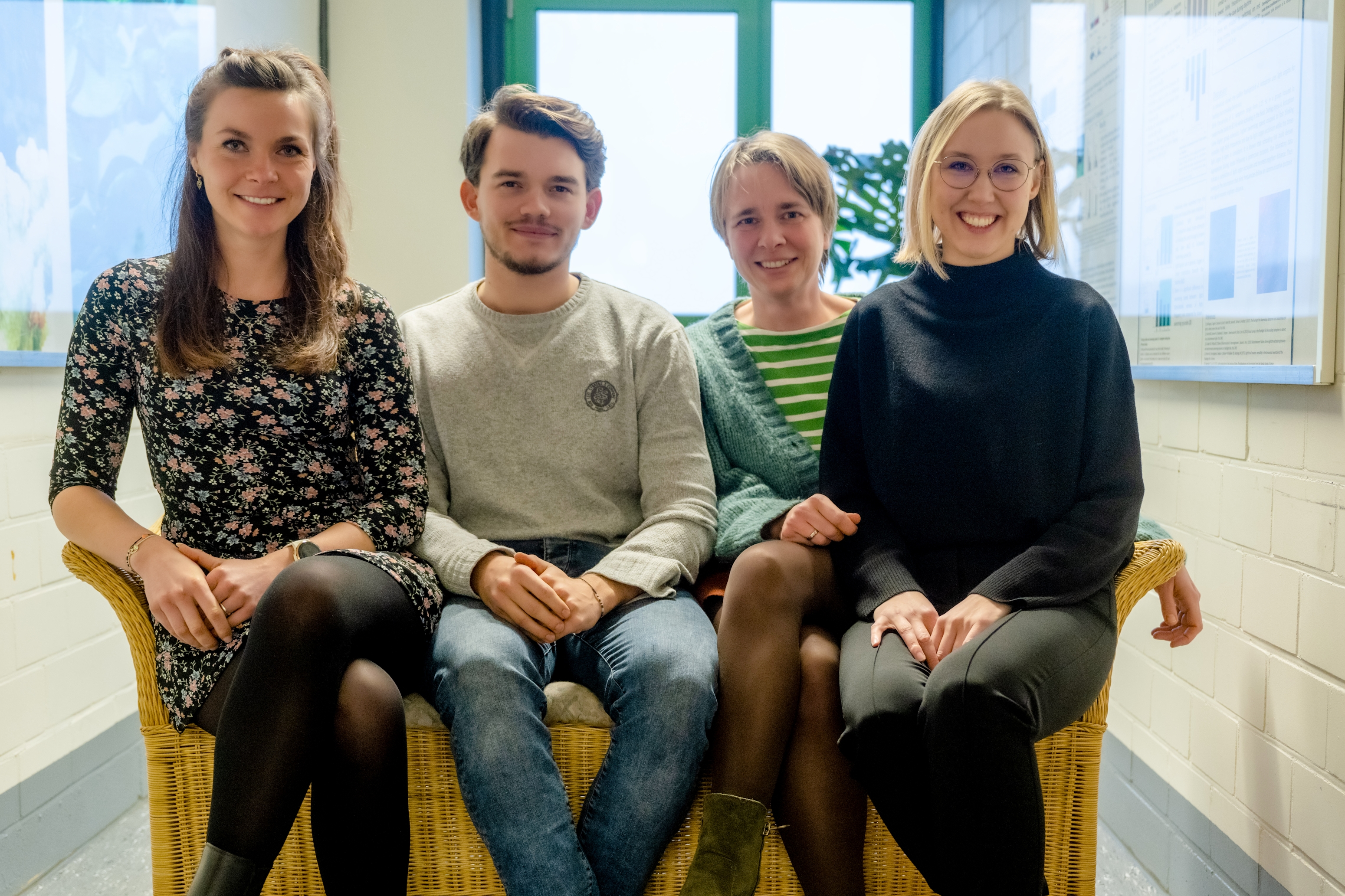
The Bochum research team: Bianca Preissing, Lennard Rohr, Ida Siveke and Tatjana Surdin (from left)
Photo Credit: © RUB, Marquard

Light can start a signal cascade in the cerebellum. This also illuminates processes that play an important role in cerebellar diseases.

Processes in the cerebellum are involved in various diseases that affect motor learning. A new tool developed by a Bochum working group helps to investigate this better: a light-activated protein that is coupled with part of an exciting receptor. Thanks to this optogenetic tool, light can activate a signaling pathway in the nerve cells of the cerebellum and observe its effects. So, the group around Dr. Ida Siveke from the working group of Prof. Dr. Stefan Herlitze at the Ruhr University Bochum show that the signal path is involved in cerebellar-controlled motor learning. The researchers report in the iSience journal.

Wednesday, December 13, 2023

What Happens in the Brain While Daydreaming?

The findings provide a clue that daydreams may play a role in brain plasticity
Image Credit: Scientific Frontline 

You are sitting quietly, and suddenly your brain tunes out the world and wanders to something else entirely — perhaps a recent experience, or an old memory. You just had a daydream.

Yet despite the ubiquity of this experience, what is happening in the brain while daydreaming is a question that has largely eluded neuroscientists.

Now, a study in mice, published Dec. 13 in Nature, has brought a team led by researchers at Harvard Medical School one step closer to figuring it out.

The researchers tracked the activity of neurons in the visual cortex of the brains of mice while the animals remained in a quiet waking state. They found that occasionally these neurons fired in a pattern similar to one that occurred when a mouse looked at an actual image, suggesting that the mouse was thinking — or daydreaming — about the image. Moreover, the patterns of activity during a mouse’s first few daydreams of the day predicted how the brain’s response to the image would change over time.

The research provides tantalizing, if preliminary, evidence that daydreams can shape the brain’s future response to what it sees. This causal relationship needs to be confirmed in further research, the team cautioned, but the results offer an intriguing clue that daydreams during quiet waking may play a role in brain plasticity — the brain’s ability to remodel itself in response to new experiences.

Monday, May 1, 2023

Scientists discover anatomical changes in the brains of the newly sighted

MIT neuroscientists discovered anatomical changes that occur in the white matter pathways linking visual-processing areas of the brain in children who have congenital cataracts surgically removed. This image shows the late-visual pathways in the brain.
Illustration Credit: Courtesy of the researchers, edited by MIT News

For many decades, neuroscientists believed there was a “critical period” in which the brain could learn to make sense of visual input, and that this window closed around the age of 6 or 7.

Recent work from MIT Professor Pawan Sinha has shown that the picture is more nuanced than that. In many studies of children in India who had surgery to remove congenital cataracts beyond the age of 7, he has found that older children can learn visual tasks such as recognizing faces, distinguishing objects from a background, and discerning motion.

In a new study, Sinha and his colleagues have now discovered anatomical changes that occur in the brains of these patients after their sight is restored. These changes, seen in the structure and organization of the brain’s white matter, appear to underlie some of the visual improvements that the researchers also observed in these patients.

The findings further support the idea that the window of brain plasticity, for at least some visual tasks, extends much further than previously thought.

Monday, May 23, 2022

The drug gabapentin may boost functional recovery after a stroke

These 3D images of mouse brain vasculature show normal conditions, top, and after an ischemic stroke, which occurs when a blood vessel clot blocks blood flow in the brain.
Credit: Andrea Tedeschi

The drug gabapentin, currently prescribed to control seizures and reduce nerve pain, may enhance recovery of movement after a stroke by helping neurons on the undamaged side of the brain take up the signaling work of lost cells, new research in mice suggests.

The experiments mimicked ischemic stroke in humans, which occurs when a clot blocks blood flow and neurons die in the affected brain region.

Results showed that daily gabapentin treatment for six weeks after a stroke restored fine motor functions in the animals’ upper extremities. Functional recovery also continued after treatment was stopped, the researchers found.

The Ohio State University team previously found that gabapentin blocks the activity of a protein that, when expressed at elevated levels after an injury to the brain or spinal cord, hinders re-growth of axons, the long, slender extensions of nerve cell bodies that transmit messages.

Monday, June 27, 2022

Supernumerary virtual robotic arms can feel like part of our body

VR supernumerary robotic system. In this diagram of the system, the dotted lines represent wireless connections and solid lines represent wired connections.
Credit: 2022 Ken Arai.

Research teams at the University of Tokyo, Keio University and Toyohashi University of Technology in Japan have developed a virtual robotic limb system which can be operated by users’ feet in a virtual environment as extra, or supernumerary, limbs. After training, users reported feeling like the virtual robotic arms had become part of their own body. This study focused on the perceptual changes of the participants, understanding of which can contribute to designing real physical robotic supernumerary limb systems that people can use naturally and freely just like our own bodies.

What would you do with an extra arm, or if like Spider-Man’s nemesis Doctor Octopus, you could have an extra four? Research into extra, or supernumerary, robotic limbs look at how we might adapt, mentally and physically, to having additional limbs added to our bodies.

Doctoral student Ken Arai from the Research Center for Advanced Science and Technology (RCAST) at the University of Tokyo became interested in this research as a way to explore the limits of human “plasticity” — in other words, our brain’s ability to alter and adapt to external and internal changes. One example of plasticity is the way that we can learn to use new tools and sometimes even come to see them as extensions of ourselves, referred to as “tool embodiment,” whether it’s an artist’s paintbrush or hairdresser’s scissors.

Thursday, December 25, 2025

The Quest for the Synthetic Synapse

Spike Timing" difference (Biology vs. Silicon)
Image Credit: Scientific Frontline

The modern AI revolution is built on a paradox: it is incredibly smart, but thermodynamically reckless. A large language model requires megawatts of power to function, whereas the human brain—which allows you to drive a car, debate philosophy, and regulate a heartbeat simultaneously—runs on roughly 20 watts, the equivalent of a dim lightbulb.

To close this gap, science is moving away from the "Von Neumann" architecture (where memory and processing are separate) toward Neuromorphic Computing—chips that mimic the physical structure of the brain. This report analyzes how close we are to building a "synthetic synapse."

Tuesday, April 2, 2024

Ultrasound therapy shows promise as a treatment for Alzheimer’s disease

Professor Jürgen Götz with an ultrasound machine.
Photo Credit: Courtesy of University of Queensland

University of Queensland researchers have found targeting amyloid plaque in the brain is not essential for ultrasound to deliver cognitive improvement in neurodegenerative disorders.

Dr Gerhard Leinenga and Professor Jürgen Götz from UQ’s Queensland Brain Institute (QBI) said the finding challenges the conventional notion in Alzheimer’s disease research that targeting and clearing amyloid plaque is essential to improve cognition.

“Amyloid plaques are clumps of protein that can build up in the brain and block communication between brain cells, leading to memory loss and other symptoms of Alzheimer’s disease,” Dr Leinenga said.

“Previous studies have focused on opening the blood-brain barrier with microbubbles, which activate the cell type in the brain called microglia which clears the amyloid plaque. 

“But we used scanning ultrasound alone on mouse models and observed significant memory enhancement.”

Monday, February 10, 2025

Titanium-Based Prosthesis Alloy Scientists Have Tested Deformation

The co-authors of the development, as well as specialists from the UrFU Department of Heat Treatment and Metal Physics.
Photo Credit: Rodion Narudinov

Scientists from Ural Federal University, Institute of Strength Physics and Materials Science of the SB RAS and National Research Tomsk Polytechnic University have tested new titanium-based alloys, which have several advantages over traditional medical ones. Two types of titanium alloys — TNZ (including niobium and zirconium) and multi-element TNZTS (with niobium, zirconium, tantalum and tin) — were subjected to uniaxial pressing and multi-pass rolling. As a result of exposure, ultrafine-grained structures were formed in the alloys, which significantly increased the strength and hardness of the material. The results of the research were published in the Materials Letters Journal

Crystal structure of titan (α-phase) that formed after tests trial improved the strength characteristics of the TNZ-alloy, but at the same time reduced its plasticity and Young’s modulus, important characteristics of materials for prostheses. In case of elastic deformations of the bone—implant system, the load on the tissue depends on the ratio of the Young's modulus of the implant material and bone tissue. The lower this ratio, the lower the probability of necrosis and destruction of bone by implant pressure. Mechanical and biocompatibility increase the prospects for the introduction of materials developed by scientists in medicine, aerospace and defense industries.

Tuesday, February 14, 2023

Researchers identify new molecular mechanism key to planarian regeneration

These flatworms are capable of regenerating any part of their bodies, even their heads.
Photo Credit: Teresa Adell.

Planaria are freshwater flatworms that have become a key model for studying regeneration and stem cells, as they can regenerate any part of the body, even the head. But how does the animal know what part of its body is missing and what kind of tissue it needs to regenerate? Researchers from the Department of Genetics, Microbiology and Statistics of the University of Barcelona and the Institute of Biomedicine of the UB (IBUB) have studied the regeneration process of these animals and have identified how the modulation of the intercellular signaling pathway Wnt modifies chromatin, the set of genetic material that cells own in the cell nucleus. A few hours after an amputation, this mechanism lets the wound stem cells know the fate of the new tissue.

The study, published in the journal Nature Communications, involves researchers from the Andalusian Centre for Developmental Biology (CABD), the Pablo de Olavide University in Seville and the University of East Anglia (Norwich, England).

Wednesday, February 28, 2024

Pancreatic cancer lives on mucus

A cross-section of a mouse’s early-stage pancreatic tumor. CSHL scientists discovered that early pancreatic cancer cells depend on the regulators of mucus production to survive and grow. Green, purple, yellow, cyan, and white denote areas where mucus production is high.
Image Credit: Cold Spring Harbor Laboratory

Knowing exactly what’s inside a tumor can maximize our ability to fight cancer. But that knowledge doesn’t come easy. Tumors are clusters of constantly changing cancer cells. Some become common cancer variants. Others morph into deadlier, drug-resistant varieties. No one truly understands what governs this chaotic behavior.

Now, Cold Spring Harbor Laboratory (CSHL) Professor David Tuveson and his team have uncovered a mechanism involved in pancreatic cancer transformation—mucus. During the disease’s early stage, pancreatic cancer cells produce mucus. Additionally, these cells depend on the body’s regulators of mucus production. This new knowledge could help set the stage for future diagnostic or therapeutic strategies.

The unpredictable, shifting nature of tumors makes it challenging to pinpoint the right treatments for patients. “We need to better understand this concept of cell plasticity and design therapy that takes this into consideration,” says Claudia Tonelli, a research investigator in the Tuveson lab, who led the study.

Tuesday, September 27, 2022

Trees get overheated in a warmer rainforest

Maria Wittemann has been conducting field studies in Rwanda with colleagues from the University of Rwanda.
Photo credit: Myriam Mujawamariya

The ability of rainforests to store carbon can decrease in pace with climate change. This is due to photosynthesis rates in the leaves of rainforest species falling at higher temperatures and the trees’ natural cooling systems failing during droughts. Increased heat threatens especially the species that store most carbon. This has been shown in a new thesis from the University of Gothenburg.

Some species of trees are able to handle rising heat in the tropics by sucking up large quantities of water to their leaves and transpiring through wide-opened pores in their leaves. These are mainly fast-growing trees that establish themselves early as a rainforest grows up. The same cannot be said for the trees that make up the canopy of rainforests in old growth forests. They grow slower, but get bigger and taller, and their leaves do not have the same ability to cool themselves via transpiration.

Water powers the ‘air conditioning’

“The tropics have not experienced Ice Ages and have thus had a relatively stable climate historically as well as seasonally. With climate change, it has started to get warmer and then we have seen that some species of trees are showing increased mortality rates, but we have not really known why before,” says Maria Wittemann, who wrote the thesis.

Monday, October 27, 2025

Researchers decipher a mechanism that determines the complexity of the glucocorticoid receptor

Above, from left to right, Pilar Montanyà-Vallugera, José Luis Torbado-Gardeazábal, Inés Montoya-Novoa and Montse Abella-Monleón. Below, from left to right, Alba Jiménez-Panizo, Pablo Fuentes-Prior, Eva Estébanez-Perpiñá and Andrea Alegre-Martí.
Photo Credit: Courtesy of University of Barcelona

Drugs to treat inflammatory and autoimmune diseases — such as asthma, psoriasis, rheumatoid arthritis or Chrousos syndrome — act mainly through the glucocorticoid receptor (GR). This essential protein regulates vital processes in various tissues, so understanding its structure and function at the molecular level is essential for designing more effective and safer drugs. Now, a study published in the journal Nucleic Acids Research (NAR) has revealed the mechanism of multimerization — the association of different molecules to form complex structures — of the glucocorticoid receptor, a process critical to its physiological function.

Deciphering how the GR forms oligomers — through the binding of several subunits — opens a crucial avenue for developing more selective drugs. These new drugs could modulate this association and thus minimize serious adverse effects, such as immunosuppression or bone loss.

Saturday, March 26, 2022

Red-backed salamanders possess only limited ability to adjust to warming climate

To stay cool and not burn energy, salamanders have evolved strategies such as burrowing under rocks and logs. But if they are hiding to stay cool for much longer periods, they are not foraging and eating, and at the end of a long summer their condition deteriorates.
Credit: David Munoz

If average temperatures rise as projected in eastern North America in coming decades, at least one widespread amphibian species likely will be unable to adjust, and its range may shift northward, according to a new study led by Penn State scientists.

In a novel experiment, researchers devised a method to measure the metabolic rate of red-backed salamanders from different regions exposed to warmer temperatures — analyzing how much more energy the small, hardy woodland amphibians would expend to survive in the forests they now inhabit from Quebec south to North Carolina, and west to Missouri and Minnesota.

To stay cool and not burn energy, salamanders have evolved strategies such as burrowing under rocks and logs, explained study co-author David Miller, associate professor of wildlife population ecology. But if they are hiding to stay cool for much longer periods, they are not foraging and eating, and at the end of a long summer their condition deteriorates.

Friday, May 20, 2022

Neuromorphic Memory Device Simulates Neurons and Synapses​

A neuromorphic memory device consisting of bottom volatile and top nonvolatile memory layers emulating neuronal and synaptic properties, respectively
Credit: KAIST

Researchers have reported a nano-sized neuromorphic memory device that emulates neurons and synapses simultaneously in a unit cell, another step toward completing the goal of neuromorphic computing designed to rigorously mimic the human brain with semiconductor devices.

Neuromorphic computing aims to realize artificial intelligence (AI) by mimicking the mechanisms of neurons and synapses that make up the human brain. Inspired by the cognitive functions of the human brain that current computers cannot provide, neuromorphic devices have been widely investigated. However, current Complementary Metal-Oxide Semiconductor (CMOS)-based neuromorphic circuits simply connect artificial neurons and synapses without synergistic interactions, and the concomitant implementation of neurons and synapses still remains a challenge. To address these issues, a research team led by Professor Keon Jae Lee from the Department of Materials Science and Engineering implemented the biological working mechanisms of humans by introducing the neuron-synapse interactions in a single memory cell, rather than the conventional approach of electrically connecting artificial neuronal and synaptic devices.

Friday, March 8, 2024

Nanosurgical tool could be key to cancer breakthrough

Electron microscopy image of the nanopipette.
Photo Credit: Dr Alexander Kulak

A nanosurgical tool - about 500 times thinner than a human hair - could give insights into cancer treatment resistance that no other technology has been able to do, according to a new study.

The high-tech double-barrel nanopipette, developed by University of Leeds scientists, and applied to the global medical challenge of cancer, has - for the first time - enabled researchers to see how individual living cancer cells react to treatment and change over time – providing vital understanding that could help doctors develop more effective cancer medication.  

The tool has two nanoscopic needles, meaning it can simultaneously inject and extract a sample from the same cell, expanding its potential uses. And the platform’s high level of semi-automation has sped up the process dramatically, enabling scientists to extract data from many more individual cells, with far greater accuracy and efficiency than previously possible, the study shows. 

Currently, techniques for studying single cells usually destroy them, meaning a cell can be studied either before treatment, or after.  

This device can take a “biopsy” of a living cell repeatedly during exposure to cancer treatment, sampling tiny extracts of its contents without killing it, enabling scientists to observe its reaction over time. 

During the study, the multi-disciplinary team, featuring biologists and engineers, tested cancer cells’ resistance to chemotherapy and radiotherapy using glioblastoma (GBM) - the deadliest form of brain tumor - as a test case, because of its ability to adapt to treatment and survive. 

Featured Article

What Is: The Phanerozoic Eon

Defining the Eon of Complex Life Image Credit: Scientific Frontline / AI generated The Phanerozoic Eon constitutes the current and most biol...

Top Viewed Articles