. Scientific Frontline

Thursday, January 13, 2022

‘Slushy’ magma ocean led to formation of the Moon’s crust

Magma ocean and first rocky crust on the Moon 
Credit: NASA/Goddard Space Flight Center
The scientists, from the University of Cambridge and the Ecole normale supérieure de Lyon, have proposed a new model of crystallization, where crystals remained suspended in liquid magma over hundreds of millions of years as the lunar ‘slush’ froze and solidified. The results are reported in the journal Geophysical Research Letters.

Over fifty years ago, Apollo 11 astronauts collected samples from the lunar Highlands. These large, pale regions of the Moon – visible to the naked eye – are made up of relatively light rocks called anorthosites. Anorthosites formed early in the history of the Moon, between 4.3 and 4.5 billion years ago.

Similar anorthosites, formed through the crystallization of magma, can be found in fossilized magma chambers on Earth. Producing the large volumes of anorthosite found on the Moon, however, would have required a huge global magma ocean.

"Cooling of the early magma ocean drove such vigorous convection that crystals remained suspended as a slurry, like the crystals in a slushy machine." 
Jerome Neufeld

Scientists believe that the Moon formed when two protoplanets, or embryonic worlds, collided. The larger of these two protoplanets became the Earth, and the smaller became the Moon. One of the outcomes of this collision was that the Moon was very hot – so hot that its entire mantle was molten magma, or a magma ocean.

Tuesday, January 11, 2022

Taking on decarbonization in the ag sector

Biofuels, such as those derived from the switchgrass being harvested in this field in Vonore, Tennessee, are just one of the technology-based solutions that ORNL summit participants identified recently as key to decarbonizing the agriculture sector.
Credit: Erin G. Webb, ORNL/U.S. Dept. of Energy.

Energy and sustainability experts from Oak Ridge National Laboratory, industry, universities and the federal government recently identified key focus areas to meet the challenge of successfully decarbonizing the agriculture sector, as well as scientific resources that the U.S. Department of Energy’s national laboratories can bring to the table.

The challenge is significant. Agriculture is responsible for emitting 10% of the nation’s greenhouse gases, some 629 million metric tons of carbon dioxide-equivalent emissions per year, according to the U.S. Environmental Protection Agency. Key sources for those emissions are agricultural soil and livestock waste management, crop cultivation and fuel combustion largely related to farm equipment.

The ORNL Virtual Summit on Decarbonizing the Agriculture Sector featured three topic areas in breakout sessions in which the challenges and potential technology- and practice-based solutions were discussed. These solutions included soil health, nitrogen production and fixation, and agricultural equipment and operations.

Sustainable Manufacturing

Illustration by Jeffrey C. Chase
Reducing the world’s reliance on petroleum and natural gas is a worthy goal, one that could help us achieve a smaller carbon footprint. It will, however, mean rethinking how we create many of the products in our everyday lives.

Chemical manufacturing, the practice of taking raw materials and turning them into products using chemical processes, is an $800 billion industry that supports over 6 million jobs in the United States each year. It contributes to the production of everything from food, buildings and clothing to items found in industries such as health care, electronics and transportation.

Traditional chemical manufacturing relies on non-renewable fossil energy sources for power and raw materials. A more sustainable option gaining steam is the use of electrolyzers, devices that instead use electricity to convert raw materials like carbon dioxide (CO2) into useful molecules for chemicals and products.

One hurdle that keeps promising CO2 electrolyzer technologies in academic laboratories rather than being scaled for industrial use — where they could make a dent in our carbon dioxide emission problem — is that the critical materials needed for the job, including membranes and catalysts, aren’t yet durable or efficient enough to operate over long periods of time.

University of Delaware engineers Feng Jiao, Yushan Yan and Koffi Pierre Yao and colleagues at Louisiana State University (LSU) are collaborating to overcome these challenges.

The work is funded through a $4 million grant from the National Science Foundation’s Established Program to Stimulate Competitive Research (NSF EPSCoR) program. A total $1.9 million of the funding was awarded directly to UD.

Common household cleaner can boost effort to harvest fusion energy on Earth

PPPL physicist Federico Nespoli at the Large Helical Device in Japan.
Photo courtesy of the Japanese National Institute of Fusion Science. Collage by Kiran Sudarsanan.

Scientists have found that adding a common household cleaning agent – the mineral boron contained in such cleaners as Borax – can vastly improve the ability of some fusion energy devices to contain the heat required to produce fusion reactions on Earth the way the sun and stars do.

Physicists at the U.S. Department of Energy’s (DOE) Princeton Plasma Physics Laboratory (PPPL) working with Japanese researchers, made the observation on the Large Helical Device (LHD) in Japan, a twisty magnetic facility that the Japanese call a “heliotron.” The results demonstrated for the first time a novel regime for confining heat in facilities known as stellarators, similar to the heliotron. The findings could advance the twisty design as a blueprint for future fusion power plants.

Higher confinement

Researchers produced the higher confinement regime by injecting tiny grains of boron powder into the LHD plasma that fuels fusion reactions. The injection through a PPPL-installed dropper sharply reduced turbulent swirls and eddies and raised the confined heat that produces the reactions.

“We could see this effect very clearly,” said PPPL physicist Federico Nespoli, lead author of a paper that detailed the process in the journal Nature Physics. “The more power we put into the plasma the bigger the increase in heat and confinement, which would be ideal in real reactor conditions.”

Researchers discover a new approach to breaking bacterial antibiotic resistance and rescue frontline drug treatments

Researchers may have uncovered a key to making existing frontline antibiotics work again, against the deadly bacteria that cause pneumonia.

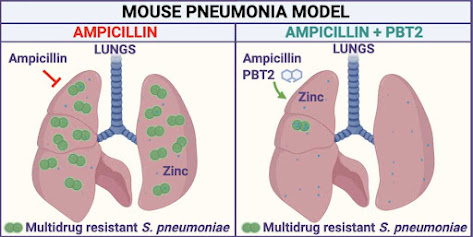
The international team from the Peter Doherty Institute for Infection and Immunity (Doherty Institute – a joint venture between the University of Melbourne and the Royal Melbourne Hospital), the University of Queensland, Griffith University, the University of Adelaide, and St Jude Children’s Research Hospital (USA), found how to repurpose a molecule called PBT2 - originally developed as a potential treatment for disorders such as Alzheimer's, Parkinson’s and Huntington’s diseases – to break bacterial resistance to commonly used frontline antibiotics.

Led by University of Melbourne Professor Christopher McDevitt, a laboratory head at the Doherty Institute, this discovery may see the comeback of readily available and cheap antibiotics, such as penicillin and ampicillin, as effective weapons in the fight against the rapidly rising threat of antibiotic resistance.

In a paper published today in Cell Reports, Professor McDevitt and his collaborators described how they discovered a way to break bacterial drug resistance and then developed a therapeutic approach to rescue the use of the antibiotic ampicillin to treat drug-resistant bacterial pneumonia caused by Streptococcus pneumoniae in a mouse model of infection.

Last year the World Health Organization (WHO) described antibiotic resistance as one of the greatest threats to global health, food security, and development. Rising numbers of bacterial infections – such as pneumonia, tuberculosis, gonorrhoea, and salmonellosis – are becoming harder to treat as the antibiotics used against them are becoming less effective.

Researchers Find Concerns for Animals Tied to Same Habitats

Many animals display strong site fidelity, including these
(clockwise from top left): Adélie penguins, mule deer, great gray owls,
sockeye salmon and northern elephant seals.
Credits: Daniel Costa, Jonathan Armstrong and Amanda Hancock 
Some wildlife are stuck in their ways. Like humans, wild animals often return to the same places to eat, walk on the same paths to travel and use the same places to raise their young.

A team of researchers led by scientists from the University of Wyoming and the University of Washington has reviewed the scientific literature and found that, while this “consistent” behavior may be beneficial when environmental conditions don’t change very fast, those benefits may not be realized in the ever-changing world dominated by humans. The research was published today (Tuesday) in the scientific journal Frontiers in Ecology and the Environment.

Ecologists use the term “site fidelity” to describe the behavior of animals that are stuck in their ways. Site fidelity is the tendency to return to previously visited locations and is common across many species, from fish to birds to mammals and insects. Think salmon returning to their natal streams to spawn, or birds returning year after year to the same nest site -- site fidelity is all around us in nature.

As animals become familiar with a place, site fidelity can help them know where to find good food or hiding spots from predators, and can help them move efficiently to and from these resources. However, the authors uncovered an emerging theme in the scientific literature.

“Animals that have strong site fidelity are having a tough time adjusting to the novel landscapes that are showing up around them as a result of humans,” says Jerod Merkle, an assistant professor at the University of Wyoming and the co-lead author of the paper.

Alzheimer’s Treatments on the Horizon

Memory disorders expert Zaldy Tan, MD, says new medications
for Alzheimer's disease patients are on the horizon.
Photo by Cedars-Sinai.
As 2022 gets underway, experts in the Cedars-Sinai Departments of Neurology and Neurosurgery are monitoring new Alzheimer’s treatments, while also advancing Cedars-Sinai-led research in noninvasive diagnostic tools for the disease.

Treatments for Alzheimer’s disease—a condition affecting more than 5 million Americans—have been slow to progress. But in mid-2021, the Food and Drug Administration (FDA) approved aducanumab—marketed under the brand name Aduhelm—the first new drug to treat Alzheimer’s disease since 2003.

The once-a-month intravenous infusion is intended to slow cognitive decline in patients in the early stages of the disease by eliminating the amyloid plaque that accumulates in the brain in Alzheimer’s patients. However, studies have not found that eliminating the plaque in the brain reverses cognitive and functional impairment or preserves brain function. Additional questions remain about the treatment’s side effects—including swelling and bleeding in the brain— safety and effectiveness as well as how much of the cost will be shouldered by patients and their families.

The FDA approval, however, spurred momentum in the field, bringing attention to two new therapies—lecanemab and donanemab.

“These two up-and-coming medications are ‘cousins’ of aducanumab because all three drugs target amyloid plaques that form in the spaces between brain cells and are thought to play a central role in Alzheimer’s disease,” said Zaldy Tan, MD, MPH, medical director of the Jona Goldrich Center for Alzheimer’s and Memory Disorders in the Department of Neurology. “What we don’t know yet is whether these new drugs will cause fewer side effects, or whether they will be more effective than aducanumab.”

Will this new superpower molecule revolutionize science?

When scientists discovered DNA and learned how to control it, not only science but society was revolutionized. Today researchers and the medical industry routinely create artificial DNA structures for many purposes, including diagnosis and treatment of diseases.

Now an international research team reports to have created a powerful supermolecule with the potential to further revolutionize science.

The work is published in Nature Communications . Authors are from University of Southern Denmark (DK), Kent State University (USA), Copenhagen University (Denmark), Oxford University (UK) and ATDBio (UK). Lead authors are Chenguang Lou, associate professor, University of Southern Denmark and Hanbin Mao, professor, Kent State University, USA.

"It may allow us to make more advanced nanostructures, for example, for detecting diseases"
Chenguang Lou, associate professor

The researchers describe their supermolecule as a marriage between DNA and peptides.

DNA is one of the most important biomolecules, and so are peptides; peptide structures are used, among other things, to create artificial proteins and various nanostructures.

If you combine these two, as we have, you get a very powerful molecular tool, that may lead to the next generation of nanotechnology; it may allow us to make more advanced nanostructures, for example, for detecting diseases, says corresponding author Chenguang Lou, associate professor at Department of Physics, Chemistry and Pharmacy, University of Southern Denmark.

Scientists move a step closer to understanding the “cold spot” in the cosmic microwave background

Observations for the Dark Energy Survey were carried out, using the Blanco Telescope in the Andes mountains of Chile. Scientists used its data to create a map of dark matter in the region of sky that contains the Eridanus supervoid and CMB Cold Spot.
Photo: Reidar Hahn, Fermilab

After the Big Bang, the universe, glowing brightly, was opaque and so hot that atoms could not form. Eventually cooling down to about minus 454 degrees Fahrenheit (-270 degrees Celsius), much of the energy from the Big Bang took the form of light. This afterglow, known as the cosmic microwave background, can now be seen with telescopes at microwave frequencies invisible to human eyes. It has tiny fluctuations in temperature that provide information about the early universe.

Now scientists might have an explanation for the existence of an especially cold region in the afterglow, known as the CMB Cold Spot. Its origin has been a mystery so far but might be attributed to the largest absence of galaxies ever discovered.

Scientists used data collected by the Dark Energy Survey to confirm the existence of one of the largest supervoids known to humanity, the Eridanus supervoid, as reported in a paper published in December 2021. This once-hypothesized but now-confirmed void in the cosmic web might be a possible cause for the anomaly in the CMB.

High Levels of PFAS Found in Anti-Fogging Sprays and Cloths

The anti-fogging sprays and cloths many people use to prevent condensation on their eyeglasses when wearing a mask or face shield may contain high levels of per- and polyfluorinated alkyl substances (PFAS), a new Duke University-led study finds.

The researchers tested four top-rated anti-fogging sprays and five top-rated anti-fogging cloths sold on Amazon. They found all nine products contained fluorotelomer alcohols (FTOHs) and fluorotelomer ethoxylates (FTEOs), two types of PFAS that largely have flown under the scientific radar until now.

Exposure to some PFAS, particularly perfluorooctanoic acid (PFOA) and perfluorooctanesulfonic acid (PFOS), is associated with impaired immune function, cancer, thyroid disease, and other health disorders. Mothers and young children may be especially vulnerable to the chemicals, which can affect reproductive and developmental health.

“Our tests show the sprays contain up to 20.7 milligrams of PFAS per milliliter of solution, which is a pretty high concentration,” said Nicholas Herkert, a postdoctoral researcher at Duke’s Nicholas School of the Environment, who led the study.

Because FTOHs and FTEOs have received relatively little study, scientists don’t yet know what health risks they might pose, Herkert noted, but research suggests that once FTOHs have been inhaled or absorbed through the skin, they could break down in the body to PFOA or other long-lived PFAS substances that are known to be toxic. Additionally, the FTEOs used in all four spray mixtures that were analyzed in the new study exhibited significant cell-altering cytotoxicity and adipogenic activity in lab tests, he said.

Featured Article

What Is: Sadism | Part Four of the "Dark Tetrad"

Scientific Frontline: Extended "At a Glance" Summary : Sadism (Part Four of the "Dark Tetrad") The Core Concept : Sadism...

Top Viewed Articles