
 |
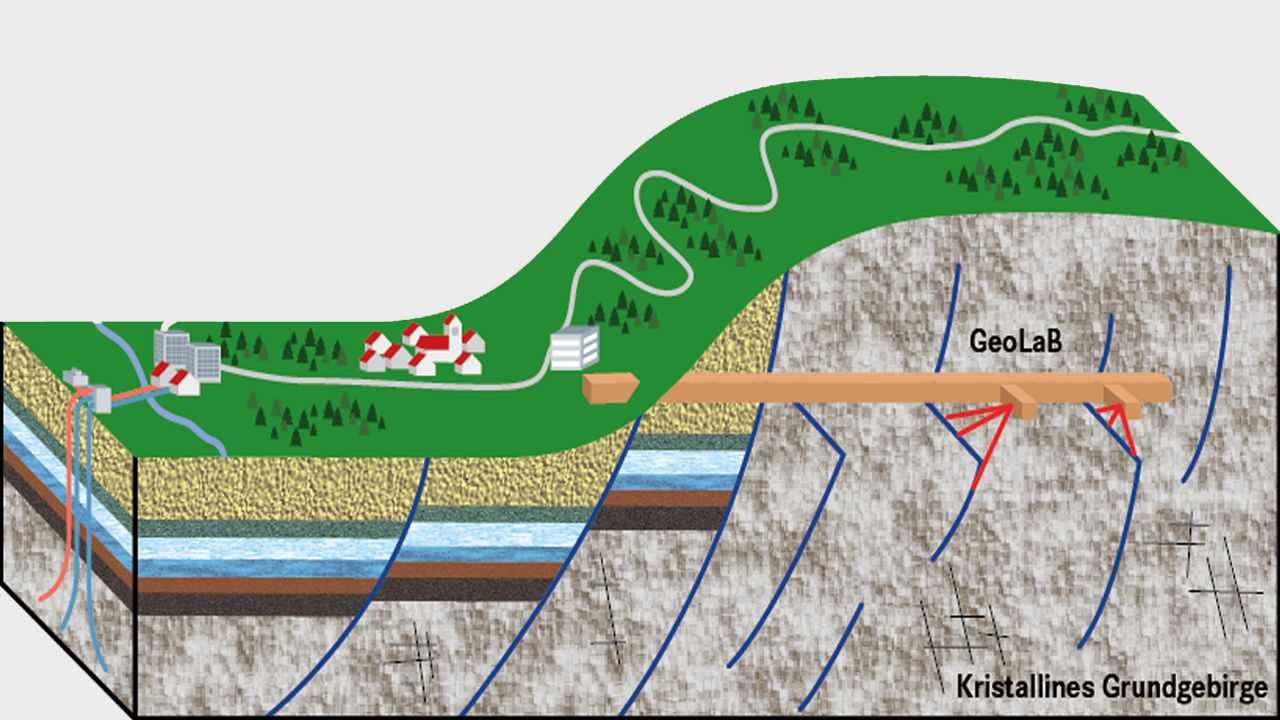
| The GeoLaB makes geosciences tangible: the first underground laboratory is being built in the Black Forest / Odenwald, in which researchers can directly observe deep geothermal processes. Credit: KIT |
Local, emission-free and base load-bearing: geothermal energy is an essential component of the energy transition. With GeoLaB, a new and unique underground research infrastructure, the Karlsruhe Institute of Technology (KIT), the German Research Center for Geosciences GFZ and the Helmholtz Center for Environmental Research UFZ now want to accelerate research and prepare the technology for widespread use. The project is to be realized either in the Black Forest or Odenwald, the Helmholtz Association is funding with 35 million euros.
In order to achieve climate neutrality and at the same time become more independent of energy imports, the use of deep geothermal energy is suitable in most regions of Germany. Heat from the subsurface is available regardless of the time of the year and day, which makes geothermal energy suitable for base loads. It is also renewable because heat flows into the reservoir due to the temperature conditions and the transport processes.
“Geothermal energy has huge potential. In Germany alone, we could replace a third of the gas requirements for our heat - and given the climate catastrophe and the geopolitical world situation, we can no longer do without it,” says Professor Holger Hanselka, President of KIT and Vice President for the Energy Research Area of the Helmholtz Association. “So that we can use the necessary technologies safely and that the environmental impact remains minimal, we will now develop geothermal energy accordingly with the help of GeoLaB."


.jpg)