. Scientific Frontline

Monday, March 21, 2022

Astronomers Closer to Unlocking Origin of Mysterious Fast Radio Bursts

Artist's conception of fast radio burst reaching Earth.
Credit: Jingchuan Yu, Beijing Planetarium

Nearly 15 years after the discovery of fast radio bursts (FRBs), the origin of the millisecond-long, deep-space cosmic explosions remain a mystery.

That may soon change, thanks to the work of an international team of scientists – including UNLV astrophysicist Bing Zhang – which tracked hundreds of the bursts from five different sources and found clues in FRB polarization patterns that may reveal their origin. The team’s findings were reported in the journal Science.

FRBs produce electromagnetic radio waves, which are essentially oscillations of electric and magnetic fields in space and time. The direction of the oscillating electric field is described as the direction of polarization. By analyzing the frequency of polarization in FRBs observed from various sources, scientists revealed similarities in repeating FRBs that point to a complex environment near the source of the bursts.

“This is a major step towards understanding the physical origin of FRBs,” said Zhang, a UNLV distinguished professor of astrophysics who coauthored the paper and contributed to the theoretical interpretation of the phenomena.
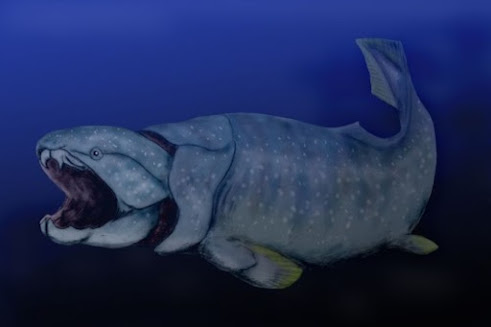
Ancient ancestors evolved to be strong and snappy, study finds

Dunkleosteus - one of the animals involved in the study.
Credit: Nobu Tamura

Researchers, led by the University of Bristol, have shown that the earliest jaws in the fossil record were caught in a trade-off between maximizing their strength and their speed.

Almost all vertebrates are jawed vertebrates, including humans, first evolving more than 400 million years ago and distinguished by their teeth-bearing jaws. Humans owe their evolutionary success to the evolution of jaws, which allowed animals to process a wider variety of foods.

Jaws evolved from the gill arches, a series of structures in fish that support their gills. A new study, published in the journal Science Advances, explores how a breathing structure came to be a biting structure. To do this, researchers based at Bristol’s School of Earth Sciences collected data on the shapes of fossil jaws during their early evolution and mathematical models to characterize them. These models allowed the team to extrapolate a wide range of theoretical jaw shapes that could have been explored by the first evolving jaws. These theoretical jaws were tested for their strength - how likely they were to break during a bite, and their speed - how efficiently they could be opened and closed. These two functions are in a trade-off – meaning that increasing strength usually means decreasing speed or vice versa.

Effectiveness of antibiotics significantly reduced when multiple bugs present

In the study, published today in The ISME Journal, researchers say that even a low level of one type of microbe in the airways can have a profound effect on the way other microbes respond to antibiotics.

The results highlight the need to consider the interaction between different species of microbe when treating infections with antibiotics - and to adjust dosage accordingly.

“People with chronic infections often have co-infection with several pathogens, but the problem is we don’t take that into account in deciding how much of a particular antibiotic to treat them with. Our results might help explain why, in these people, the antibiotics just don’t work as well as they should,” said Thomas O’Brien, who carried out the research for his PhD in the University of Cambridge’s Department of Biochemistry and is joint first author of the paper.

Chronic bacterial infections such as those in the human airways are very difficult to cure using antibiotics. Although these types of infection are often associated with a single pathogenic species, the infection site is frequently co-colonized by a number of other microbes, most of which are not usually pathogenic in their own right.

Treatment options usually revolve around targeting the pathogen, and take little account of the co-habiting species. However, these treatments often fail to resolve the infection. Until now scientists have had little insight into why this is.

To get their results the team developed a simplified model of the human airways, containing artificial sputum (phlegm) designed to chemically resemble the real phlegm coughed up during an infection, packed with bacteria.

Monday, February 21, 2022

Viagra promising as treatment for canine eating disorder

Cake, a beagle mix, who suffers from the eating disorder known as megaesophagus, sits in specialized chair known as a Bailey chair, at the WSU Veterinary Teaching Hospital. Bailey chairs allow dogs with megaesophagus to better digest their food.
Credit: Washington State University

Sildenafil, the generic version of the drug known as Viagra, could be the long-awaited remedy for a group of dogs with a rare disorder called megaesophagus.

The condition involves an enlargement of the esophagus and a loss of the organ’s ability to move food to the stomach, which leaves food bottling up in the lower esophagus. If left untreated, many animals regurgitate their food and aspirate food into their lungs, causing aspiration pneumonia.

“The literature tells us that many dogs with the disease die from aspiration pneumonia or are humanely euthanized due to poor quality of life within eight months of diagnosis,” said Dr. Jillian Haines, a veterinarian at Washington State University who co-led the study.

Liquid sildenafil was shown to relax the smooth muscle of the lower esophagus so it will open to let food pass to the stomach. Besides some rare gastrointestinal irritation, there are no side effects to dogs at the dose used in the study. While sildenafil is most known to treat erectile dysfunction, the drug is also used to treat elevated pulmonary blood pressure in dogs and humans.

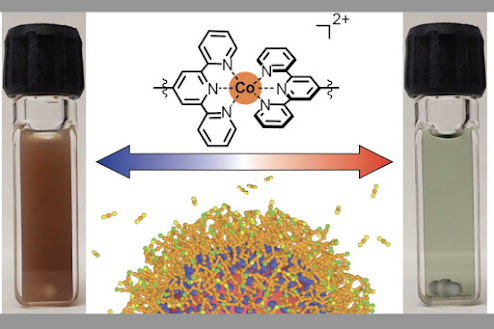
Versatile ‘Nanocrystal Gel’ Could Enable Advances in Energy, Defense and Telecommunications

This graphic shows the material in its gelled state (left) and its non-gelled state (right). When the material is heated (right), the chemical bonds between the nanocrystals break and the gel breaks down. When the material is cooled (left), chemical bonds form between the nanocrystals and they organize themselves into a network (the gel). Molecular bonding(top) that controls gelation as a function of temperature is understood using supercomputer simulations (bottom).
Credit: Kang, Valenzuela, et al./UT Austin

New applications in energy, defense and telecommunications could receive a boost after a team at The University of Texas at Austin created a new type of “nanocrystal gel” — a gel composed of tiny nanocrystals each 10,000 times smaller than the width of a human hair that are linked together into an organized network.

The crux of the team’s discovery is that this new material is easily tunable. That is, it can be switched between two different states by changing the temperature. This means the material can work as an optical filter, absorbing different frequencies of light depending on whether it’s in a gelled state. So, it could be used, for example, on the outside of buildings to control heating or cooling dynamically. This type of optical filter also has applications for defense, particularly for thermal camouflage.

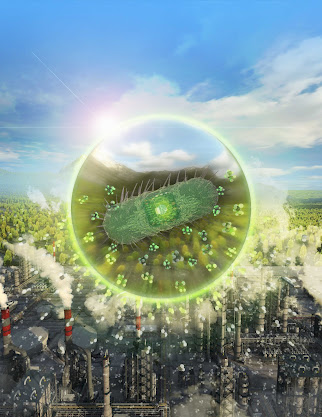
Bacteria upcycle carbon waste into valuable chemicals

Credit: Justin Muir
Bacteria are known for breaking down lactose to make yogurt and sugar to make beer. Now researchers led by Northwestern University and LanzaTech have harnessed bacteria to break down waste carbon dioxide (CO2) to make valuable industrial chemicals.

In a new pilot study, the researchers selected, engineered and optimized a bacteria strain and then successfully demonstrated its ability to convert CO2 into acetone and isopropanol (IPA).

Not only does this new gas fermentation process remove greenhouse gases from the atmosphere, it also avoids using fossil fuels, which are typically needed to generate acetone and IPA. After performing life-cycle analysis, the team found the carbon-negative platform could reduce greenhouse gas emissions by 160% as compared to conventional processes, if widely adopted.

The study was published in the journal Nature Biotechnology.

“The accelerating climate crisis, combined with rapid population growth, pose some of the most urgent challenges to humankind, all linked to the unabated release and accumulation of CO2 across the entire biosphere,” said Northwestern’s Michael Jewett, co-senior author of the study. “By harnessing our capacity to partner with biology to make what is needed, where and when it is needed, on a sustainable and renewable basis, we can begin to take advantage of the available CO2 to transform the bioeconomy.”

Jewett is the Walter P. Murphy Professor of Chemical and Biological Engineering at Northwestern’s McCormick School of Engineering and director of the Center for Synthetic Biology. He co-led the study with Michael Koepke and Ching Leang, both researchers at LanzaTech.

Molecule snapshot by explosion

Scientists use X-rays to trigger a violent explosion of single molecules. From the fragmentation pattern they infer detailed information on the molecule and its fragmentation.
Credit: illustratoren.de/TobiasWuestefeld in cooperation with European XFEL

 An international team of scientists at the European XFEL has taken a snapshot of a cyclic molecule using a novel imaging method. Researchers from the European XFEL, DESY, Universität Hamburg and the Goethe University Frankfurt and other partners used the world's largest X-ray laser to explode the molecule iodopyridine in order to construct an image of the intact molecule from the resulting fragments.

Exploding a photo subject in order to take its picture? An international research team at the European XFEL, the world's largest X-ray laser, applied this “extreme" method to take pictures of complex molecules. The scientists used the ultra-bright X-ray flashes generated by the facility to take snapshots of gas-phase iodopyridine molecules at atomic resolution. The X-ray laser caused the molecules to explode, and the image was reconstructed from the pieces. “Thanks to the European XFEL's extremely intense and particularly short X-ray pulses, we were able to produce an image of unprecedented clarity for this method and the size of the molecule," reports Rebecca Boll from the European XFEL, principal investigator of the experiment and one of the two first authors of the publication in the scientific journal Nature Physics in which the team describes their results. Such clear images of complex molecules have not been possible using this experimental technique until now.

A “hot Jupiter’s” dark side is revealed in detail for first time

An artists’s impression of WASP-121 b.
Credit: Mikal Evans

MIT astronomers have obtained the clearest view yet of the perpetual dark side of an exoplanet that is “tidally locked” to its star. Their observations, combined with measurements of the planet’s permanent day side, provide the first detailed view of an exoplanet’s global atmosphere.

“We’re now moving beyond taking isolated snapshots of specific regions of exoplanet atmospheres, to study them as the 3D systems they truly are,” says Thomas Mikal-Evans, who led the study as a postdoc in MIT’s Kavli Institute for Astrophysics and Space Research.

The planet at the center of the new study, which appears in Nature Astronomy, is WASP-121b, a massive gas giant nearly twice the size of Jupiter. The planet is an ultrahot Jupiter and was discovered in 2015 orbiting a star about 850 light years from Earth. WASP-121b has one of the shortest orbits detected to date, circling its star in just 30 hours. It is also tidally locked, such that its star-facing “day” side is permanently roasting, while its “night” side is turned forever toward space.  

“Hot Jupiters are famous for having very bright day sides, but the night side is a different beast. WASP-121b's night side is about 10 times fainter than its day side,” says Tansu Daylan, a TESS postdoc at MIT who co-authored the study.

Scientists engineer bacteria to cope in challenging environments

Green fluorescent protein (shown in the middle) is used by engineered bacteria as a reserve of amino acids. When nutrients become scarce, the protein can be broken down to provide essential amino acids needed for survival.
Credit: Klara Szydlo and Thomas Gorochowski

Researchers from the Universities of Bristol and Hamburg have engineered bacteria with internal nutrient reserves that can be accessed when needed to survive extreme environmental conditions. The findings, published in ACS Synthetic Biology, pave the way for more robust biotechnologies based on engineered microbes.

Synthetic Biology allows scientists to redesign organisms, harnessing their capabilities to lead to innovative solutions spanning the sustainable production of biomaterials to advanced sensing of pathogens and disease.

Dr Thomas Gorochowski, joint senior author and a Royal Society University Research Fellow in the School of Biological Sciences at Bristol, said: “Many of the engineered biological systems we have created to date are fragile and break easily when removed from the carefully controlled conditions of the lab. This makes their deployment and scale-up difficult.”

To tackle this problem, the team focused on the idea of building up reserves of protein within cells when times are good, and then breaking these down when conditions are difficult and additional nutrients are needed.

Friday, February 18, 2022

Pollination by birds can be advantageous

Photo by Philippe Donn from Pexels
Why have some plant species changed pollinators in their evolution? An international team of researchers from the Universities of Bonn and Xi'an Jiaotong-Liverpool University Suzhou (China) studied the reproductive systems of three sister species pairs, where one species is pollinated by insects and the other by hummingbirds. Mechanisms were discovered that explain the switch from insect to bird pollination. The study has now appeared in the journal Ecology and Evolution.

Different strategies have evolved in the pollination of flowering plants. The frequency and efficiency of the flower visitor plays a role. Here, there are major differences between the various animal groups. Worldwide, insects, especially bees, are the most common pollinators. Bees usually have quite a small activity range while other pollinator groups such as hummingbirds fly much longer distances. "It was previously assumed that plants switch their pollinator group from bees to hummingbirds when the activity and thus the pollination efficiency of bees is too low or too unpredictable, for example in the high mountains," says Dr. Stefan Abrahamczyk of the Nees Institute for Plant Biodiversity at the University of Bonn. For example, in cloud forests of tropical high mountains, it is often too humid or too cold for many bees.

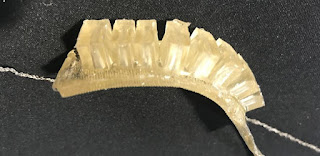
Self-healing materials for robotics made from ‘jelly’ and salt

The low-cost jelly-like materials, developed by researchers at the University of Cambridge, can sense strain, temperature and humidity. And unlike earlier self-healing robots, they can also partially repair themselves at room temperature.

The results are reported in the journal NPG Asia Materials.

Soft sensing technologies could transform robotics, tactile interfaces and wearable devices, among other applications. However, most soft sensing technologies aren’t durable and consume high amounts of energy.

“Incorporating soft sensors into robotics allows us to get a lot more information from them, like how strain on our muscles allows our brains to get information about the state of our bodies,” said David Hardman from Cambridge’s Department of Engineering, the paper’s first author.

As part of the EU-funded SHERO project, Hardman and his colleagues have been working to develop soft sensing, self-healing materials for robotic hands and arms. These materials can detect when they are damaged, take the necessary steps to temporarily heal themselves and then resume work – all without the need for human interaction.

“We’ve been working with self-healing materials for several years, but now we’re looking into faster and cheaper ways to make self-healing robots,” said co-author Dr Thomas George-Thuruthel, also from the Department of Engineering.

Sunken ships ideal habitat for reef-building corals

Aerial view of the Baker atomic test, less than one second after the detonation. Identifiable ships are (left to right): USS Pensacola (CA-24), USS Saratoga (CV-3), USS Pennsylvania (BB-38), the former Japanese battleship Nagato, USS New York (BB-34) and USS Salt Lake City (CA-25). Some 75 years later, scientists are studying how those sunken ships are providing a home to flourishing coral colonies. Photo courtesy U.S. Navy

An hour and a half before sunrise on the morning of Feb. 17, 1944, 500 U.S. Navy Grumman Hellcats swarmed the Japanese base at Chuuk Lagoon in Micronesia, the South Pacific.

Merchant tankers, ammunition ships, a cruiser, an auxiliary cruiser, two destroyers and a minesweeper tried desperately to escape. American submarines destroyed vessels outside the lagoon while torpedo bomber and dive bomber squadrons caught ships at anchor, sending them to the bottom in minutes. By the end of the next day, 39 ships of the Imperial Japanese Navy lay in watery graves.

Today the collection of wrecks has been called one of the great underwater marvels of the world. It’s a signature destination for divers.

Opioid’s Impact on the Brain Felt Across Generations, Study in Rats Suggests

Credit: Ishmail Abdus-Saboor
New scientific evidence has emerged that opioids, the cause of an ongoing public health crisis, can have a biological impact not only on those who use them, but on their progeny. In a study of rats, males with a father repeatedly exposed to morphine tended to be more sensitive to the pain-relieving effects of the opioid. Their brains were altered by their dad’s experiences with the drug, seemingly passed down on his DNA.

Published in Science Advances, this research could lay the foundation for new approaches to curbing the opioid epidemic.

“We don’t yet know if the intergenerational effects of morphine we see in rats also occur in humans,” said first author on the paper Andre Toussaint, a PhD candidate in the Wimmer lab at Temple University. “But if they do, people with a family history of opioid use disorder might be more strongly affected by—and potentially more easily addicted to—these drugs.”

The findings, made possible by a new method of measuring pain and the alleviation of pain, also cast doubt on decades of pain research that employs older, more subjective methods.

“Although pain impacts millions of people every day, the quantitative measurement of painful experiences remains difficult for scientists to capture,” said senior author Ishmail Abdus-Saboor, PhD, who conducted this research at the University of Pennsylvania and is now a principal investigator at Columbia’s Zuckerman Institute. “By rethinking how we measure pain, we are gaining a better understanding of the substances we use for pain relief.”

Targeted method for probing the function of 3D chromosomal structure

A new method—chemically induced chromosomal interaction (CICI)—can induce interactions between any two regions of the genome to test relationships between genome structure and function. The illustration (top) shows the scheme of the method. Researchers insert long arrays of binding sites into two genomic locations. These arrays are associated with a large amount of two transcription factor proteins, LacI and TetR. LacI and TetR then fuse with two additional proteins, FKBP12 and FRB, that bind in the presence of the compound rapamycin. Thus, researchers can induce the two genomic loci to strongly associate with each other by adding rapamycin to the cells and compare cellular function before and after the induced interaction. Typical data are shown below. The two loci (labeled by the red and green fluorescent dots) are spatially separated prior to the addition of rapamycin, but become co-localized after adding rapamycin.
Credit: Bai Laboratory, Pennsylvania State University

A new method that can induce interactions between specifically chosen locations on the genome allows researchers to begin to identify the causal relationship between three-dimensional chromosome structure and genome function. A paper by researchers at Penn State describing the method, called “chemically induced chromosomal interaction (CICI),” and two functional tests of the method appears in the journal Nature Communications.

The genomes of eukaryotes — organisms ranging from yeast to humans whose cells have a distinct nucleus — are made up of chromosomes. Inside the nucleus, the chromosomes, which are long, linear strands of DNA packaged with numerous proteins that carry genetic information, are arranged in a three-dimensional conformation that, depending on the cell type, can bring genomic regions that are linearly distant from one another into close enough contact to functionally interact. These interactions are thought to be important for things like gene regulation, which controls when and where certain genes are used by the cell.

Thursday, February 17, 2022

Chemists discover a range of environmental contaminants in fracking wastewater

As companies that drill for oil and natural gas using hydraulic fracturing consider recycling and reusing wastewater that surfaces from wells during the fracking process, chemists at The University of Toledo discovered that the new and unexplored waste contains many environmental contaminants including organic chemicals and metallic elements.

Research scientists at UToledo’s Dr. Nina McClelland Laboratory for Water Chemistry and Environmental Analysis in collaboration with the University of Texas Arlington achieved a comprehensive characterization of the chemical composition of produced water samples extracted in Texas, indicating the presence of toxic and carcinogenic contaminants in untreated samples, which can pose a threat to wildlife and human health.

Unraveling the complex composition of produced water by specialized extraction methodologies, the results published in Environmental Science and Technology provide critical information that can help regulatory agencies fine-tune proposed guidelines related to the safe treatment and disposal of fracking wastewater to protect drinking water sources.

“The discovery of these chemicals in produced water suggests that greater monitoring and remediation efforts are needed since many of them are listed to be dangerous for human health by the World Health Organization,” said Dr. Emanuela Gionfriddo, assistant professor of analytical chemistry in the UToledo Department of Chemistry and Biochemistry, and the School of Green Chemistry and Engineering. “Our comprehensive characterization sheds insight into the processes taking place during hydraulic fracturing and the nature of the geologic formation of each well site.”

Featured Article

What Is: Macrophage

A realistic scientific visualization of a macrophage, a crucial immune cell, actively engulfing bacteria with its extended pseudopods. The i...

Top Viewed Articles