. Scientific Frontline

Saturday, July 2, 2022

Biomedical engineering students work on transgender health project

UC College of Engineering and Applied Science students Anna King, left, and Rucha Tadwalkar use 3D printers in a biomedical engineering lab.
Photo/Michael Miller

Biomedical engineering students at the University of Cincinnati created a product to help decrease the gender dysphoria experienced by some transgender men during menstruation prior to gender-confirmation surgery.

UC College of Engineering and Applied Science students Rucha Tadwalkar and Anna King wanted to help people suffering from gender dysphoria, the condition of feeling one's emotional and psychological identity to be at variance with one's birth sex.

The students spoke to experts in adolescent and transition medicine at the Transgender Health Clinic at Cincinnati Children’s Hospital Medical Center.

“Our goal was to create a menstrual device that is inclusive of all individuals to decrease the mental health side effects of gender dysphoria, which are heightened during the menstrual cycle” Tadwalkar said.

One in 250 adults representing about 1 million people in the United States identify as transgender, according to the National Institutes of Health.

Friday, July 1, 2022

New study allows researchers to more efficiently form human heart cells from stem cells

Jianhua Zhang, PhD, Senior Scientist
Credit: Clint Thayer
Lab-grown human heart cells provide a powerful tool to understand and potentially treat heart disease. However, the methods to produce human heart cells from pluripotent stem cells are not optimal. Fortunately, a new study out of the University of Wisconsin–Madison Stem Cell & Regenerative Medicine Center is providing key insight that will aid researchers in growing cardiac cells from stem cells.

The research, published recently in eLife, investigates the role of extracellular matrix (ECM) proteins in the generation of heart cells derived from human pluripotent stem cells (hPSCs). The ECM fills the space between cells, providing structural support and regulating formation of tissues and organs. With a better understanding of ECM and its impact on heart development, researchers will be able to more effectively develop heart muscle cells, called cardiomyocytes, that could be useful for cardiac repair, regeneration and cell therapy.

“How the ECM impacts the generation of hPSC-cardiomyocytes has been largely overlooked,” says Jianhua Zhang, a senior scientist at the Stem Cell and Regenerative Medicine Center. “The better we understand how the soluble factors as well as the ECM proteins work in the cell culture and differentiation, the closer we get to our goals.”

Researchers like Zhang have been looking to improve the differentiation of hPSCs into cardiomyocytes, or the ability to take hPSCs, which can self-renew indefinitely in culture while maintaining the ability to become almost any cell type in the human body and turn them into heart muscle cells. To investigate the role of the ECM in promoting this cardiac differentiation of hPSCs, Zhang tested a variety of proteins to see how they impacted stem cell growth and differentiation — specifically, ECM proteins including laminin-111, laminin-521, fibronectin and collagen.

The evolutionary relationships of two groups of ancient invertebrates revealed

A scanning electron microscopy image of a Kamptozoa, a small aquatic invertebrate.
Credit: Dr. Natalia Shunatova / OIST

Kamptozoa and Bryozoa are two phyla of small aquatic invertebrates. They are related to snails and clams (collectively called mollusks), bristleworms, earthworms, and leeches (collectively called annelids), and ribbon worms (nemertea). But their precise position on the tree of life, and how closely related they are to these other animals, has always puzzled evolutionary biologists. Previous studies have consistently moved them around. What’s more, while Kamptozoa and Bryozoa were originally considered to form one group, they were separated based on their appearance and anatomy. Now, by using cutting-edge sequencing technology and powerful computational analysis, scientists from the Okinawa Institute of Science and Technology Graduate University (OIST), in collaboration with colleagues from St-Petersburg University and Tsukuba University, have revealed that the two phyla split from mollusks and worms earlier than previous studies have suggested, and thus they indeed form a distinct group.

A Souped-Up Gene Promoter Stops Heat from Sapping Plant Defenses

The immune system of plants relies on the hormone salicylic acid, which helps fine-tune their defenses against infections and insect infestations. But at warm temperatures, plants turn off their salicylic acid production. New research from HHMI Investigators reveals why and uses genetic engineering to boost immune function during warm spells.
Credit: Lesley Warren Design Group, ON, Canada

Plants’ immune defenses falter during heat waves, rendering them more vulnerable to insects and pathogens under climate change. HHMI scientists have now figured out why high temperatures knock out a key defense system and they’ve come up with a strategy that bolsters plant immunity.

Plants feeling the heat face risks beyond wilting. During heat waves, plants’ defenses falter, rendering them more vulnerable to infection and infestation. This is especially worrisome as climate change is making heat waves more frequent and intense.

Sheng Yang He
Duke University
Plant Sciences Microbiology
“Plants actually have a very powerful innate immune system that explains why they’ve survived so long on Earth,” says plant scientist Sheng Yang He, who is a Howard Hughes Medical Institute (HHMI) Investigator at Duke University. “But now we know that this immune system may not function so well in a hot climate, especially for many cool-weather crops. Continued warming of the climate may exacerbate this reduction of innate immunity and increase diseases and insect infestations in the future.”

He’s team has unearthed new clues to why heat saps plants’ immunity. That allowed them to find a genetic solution to keep a key plant defense system online during warm spells, the researchers report June 29, 2022, in Nature.

Plants’ immune function requires the hormone salicylic acid, which helps coordinate which defenses plants raise or lower. But sweltering plants throttle back on their production of salicylic acid, and researchers haven’t known why.

Home Sweet Home: A Study of the ‘Chemical Soup’ in our Houses


Chances are very good that as you read this, you are seated somewhere indoors. The surfaces around you are covered in microbes and you are also covered in microbes. All those microbes are busy excreting molecules and responding to the rest of the molecules in the mix. What does all of this mean for your health?

“We are living in a soup of chemistry,” says UConn Department of Chemistry researcher Alexander Aksenov, who is working to understand this microbial and molecular soup in our indoor environments and how it could be impacting our health. He and a multidisciplinary team of researchers, including from the University of California, San Diego, Colorado State University, and the University of Colorado published a paper today in Science Advances exploring these under-studied questions, with some surprising findings that could help inform us how to live healthier lives indoors.

Accounting for our full day, including time spent in cars, on average we spend over 90% of our time indoors, says Aksenov, so the indoor environment is by far the most important for us.

Previous studies show human activities impact our indoor environments, through things like gas stoves, chemical off-gassing, and the type of cleaning solutions we use. These studies usually looked at a limited number of molecules. For this study, the researchers sought to explore the full suite of molecules and microbes within a household environment.

Tonga volcano eruption triggered atmospheric gravity waves that reached the edge of space

Hunga Tonga-Hunga Ha‘apai erupts
Credit: NASA Visible Earth

The eruption of Hunga Tonga-Hunga Ha’apai on 15 January 2022 created waves that reverberated around the earth and reached 100km into the ionosphere.

The eruption of the Hunga Tonga-Hunga Ha’apai submarine volcano in January 2022 was one of the most explosive volcanic events of the modern era, a new study has confirmed.

A multi-institutional international team of researchers combined extensive satellite data with ground-level observations to show that the eruption was unique in observed science in both its magnitude and speed, and in the range of the fast-moving gravity and atmospheric waves it created.

Following a series of smaller volcanic events beginning in December 2021, Hunga Tonga erupted on 15 January this year, producing a vertical plume that extended more than 50km above the Earth’s surface.

The heat released from the water and hot ash in the plume was the most significant source of gravity waves on Earth for the following 12 hours. The eruption produced ripple-like gravity waves that satellite observations show extended across the Pacific basin.

Co-author Dr Scott Osprey, Department of Physics, University of Oxford advised that there could be further impacts from the Hunga Tonga eruption:

Thin crust or thick?

Photo credit: Erik Christensen.
Licensed under the Creative Commons Attribution-Share Alike 3.0 Unported,

The crusty conundrum carries fundamental implications. The thickness of continental crust — the part of Earth’s crust that forms land masses and continents — plays an important role in everything from the gradual movement of continents to the evolution of animal species on land and in shallow waters along coastlines.

The Earth is covered by two kinds of crust — continental and oceanic. The thinner oceanic crust is normally a little more than four miles thick, while the thicker continental crust is often as much as 25 miles thick. Continental crust is also much less dense than its oceanic counterpart.

In 1962, famed Princeton geologist Harry Hess theorized that the thickness of continental crust had to do with sea level and ocean depth. Deeper oceans enabled the formation of thicker continental crust, Hess posited. But as the crust thickens and rises above sea level, Hess said, erosion gradually starts to break it down.

The Hess theory proved quite durable, remaining unchallenged for decades. But in the past five years, new theories about oceans and land formation in the ancient world began to raise questions. For example, the geochemical signatures of ancient sediments around the world suggest to many researchers that during Earth’s Archean eon, which lasted from 4,000 million years ago until 2,500 million years ago, Earth was a “water world.” The planet was covered by deep oceans, with no continents rising above the water’s surface.

Researchers discover new leukemia-killing compounds

Natasha Kirienko (left) and Svetlana Panina in Kirienko’s Rice University laboratory in 2019. Kirienko, associate professor of biosciences, and Panina, a former postdoctoral research associate in Kirienko’s lab, collaborated with researchers at the University of Texas MD Anderson Cancer Center to study potential new mitophagy-inducing drugs that could be paired with other chemotherapies to deliver a potent one-two punch to leukemia.
Photo by Jeff Fitlow/Rice University

Researchers from Rice University and the University of Texas MD Anderson Cancer Center have discovered potential new drugs that work in concert with other drugs to deliver a deadly one-two punch to leukemia.

The potential drugs are still years away from being tested in cancer patients, but a recently published study in the journal Leukemia highlights their promise and the innovative methods that led to their discovery.

In previous studies, the research groups of Rice biochemist Natasha Kirienko and MD Anderson physician-scientist Marina Konopleva screened some 45,000 small-molecule compounds to find a few that targeted mitochondria. In the new study, they chose eight of the most promising compounds, identified between five and 30 closely related analogs for each and conducted tens of thousands of tests to systematically determine how toxic each analog was to leukemia cells, both when administered individually or in combination with existing chemotherapy drugs like doxorubicin.

“One of the big challenges was to establish optimal conditions and doses for testing on both cancer cells and healthy cells,” said study lead author Svetlana Panina , a researcher at the University of Texas at Austin who conducted the research during her postdoctoral studies at Rice. “The results from our previously published cytotoxicity assay were helpful, but very little is known about these small-molecule compounds. None of them had been thoroughly described in other studies, and we had to essentially start from scratch to determine how much to use, what they do in cells, everything. All the doses and treatment conditions had to be adjusted by multiple preliminary experiments.”

Slow spin of early galaxy observed for the first time

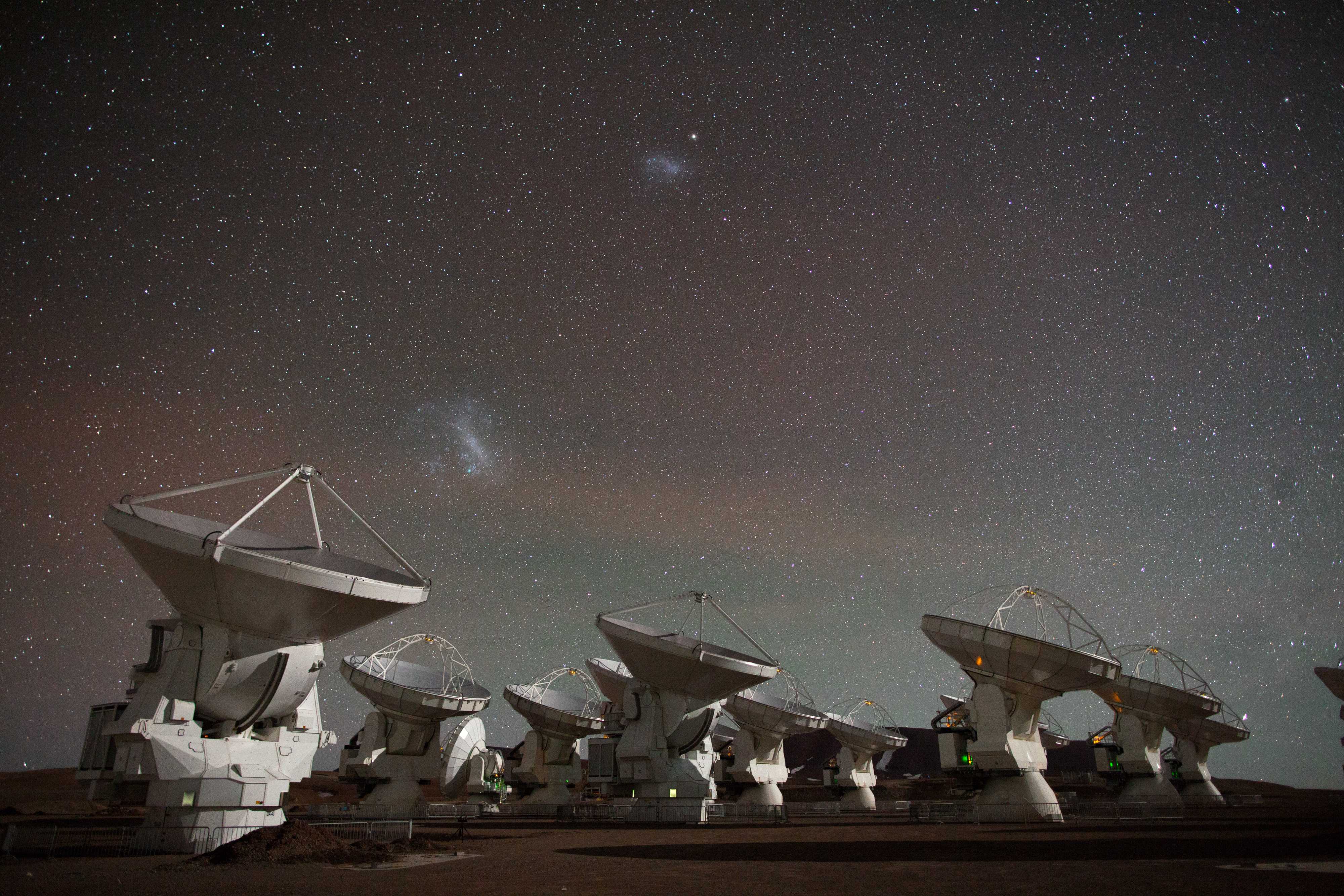
The Atacama Large Millimeter/submillimeter Array (ALMA) by night
Credit: ALMA (ESO/NAOJ/NRAO)/B. Tafreshi (twanight.org)

One of the most distant known galaxies, observed in the very earliest years of the Universe, appears to be rotating at less than a quarter of the speed of the Milky Way today, according to a new study involving University of Cambridge researchers.

For the study, published in The Astrophysical Journal Letters, an international team of researchers analyzed data from a galaxy known as MACS1149-JD1 (JD1), obtained from observations by the Atacama Large Millimeter/submillimeter Array (ALMA), an assembly of radio telescopes in Chile.

The galaxy is so far away that its light comes to us from a time when the Universe was only 550 million years old – 4% of its present age.

The researchers, led by Tsuyoshi Tokuoka of Waseda University, found subtle variations in the wavelengths of the light indicating that parts of the galaxy were moving away from us while other parts were moving towards us. From these variations, they concluded that the galaxy was disc-shaped and rotating at a speed of 50 kilometers a second. By contrast, the Milky Way, at the Sun’s position, rotates with a speed of 220 kilometers per second today.

From the size of the galaxy and the speed of its rotation, the researchers were able to infer its mass, which in turn enabled them to confirm that it was likely 300 million years old and therefore formed about 250 million years after the Big Bang.

“This is by far the furthest back in time we have been able to detect a galaxy’s spin,” said co-author Professor Richard Ellis from University College London (UCL). “It allows us to chart the development of rotating galaxies over 96% of cosmic history – rotations that started slowly initially, but became more rapid as the Universe aged.

Thursday, June 30, 2022

Don’t Stress: Maternal Stress Affects Child’s Diet

Photo credit cottonbro
Maternal exposure to stress during pregnancy could have long term detrimental effects on their children’s diets, and thereby on health conditions related to diet – such as increased levels of obesity and obesity-related diseases – according to new research from Michele Belot, professor in the Department of Economics.

“Being exposed to stressful events when pregnant seems to impact the dietary preferences and diet of the children in a negative way, and for reasons that are actually aside from what the mother is eating herself,” says Belot, who has a joint appointment in the School of Industrial and Labor Relations and College of Arts and Sciences. “So that means that we need to think about how to help pregnant women manage stress in a way that could be beneficial for the mother and also for the child.”

In the paper, “Maternal stress during pregnancy and children’s diet: Evidence from a population of low socioeconomic status” published in the journal Nutrition, Belot and her co-authors found that higher than average stress during pregnancy is linked with significantly less healthy food preferences for their children, as well as a weaker preference for sour and bitter foods.

“Stress during pregnancy could have long-term detrimental effects on the next generation in terms of a less healthy diet and subsequent health implications associated with these effects, such as higher rates of obesity and obesity-related diseases,” wrote the authors, which include Nicoli Vitt (University of Bristol), Martina Vecchi (Penn State) and Jonathan James (University of Bath). “As a consequence, we advocate for more research into understanding the sources of maternal stress and the extent to which these can be altered. Prenatal care and preconception counseling could be critical to develop preventive strategies to improve public health.”

For the study, the researchers selected 213 mothers of low socioeconomic status living in the area of Colchester, United Kingdom, with children aged between 2- and 12-years old. Their stress level during pregnancy was assessed using retrospective self-reporting. Specifically, they asked whether mothers experienced one or more of the following life events during the pregnancy with their child: Death of close family member or close friend, changes or difficulties in their relationship, legal issues, changes or difficulties in their family life, health issues, changes or difficulties in their or their spouse’s employment, financial issues, changes in their habits, other potentially stressful events.

Shedding light on reptilian health: Researchers investigate origins of snake fungal disease in U.S.

Jason Ladner assistant professor at Northern Arizona University’s Pathogen and Microbiome Institute
Credit: Northern Arizona University

Although only recently recognized as an issue in wildlife ecology, snake fungal disease (SFD) is of emerging concern in the U.S., with parallels among other better-known wildlife fungal diseases such as white-nose syndrome in bats. SFD can be deadly to snakes, and even in milder cases disrupts an animal’s abilities to perform normal biological functions such as hibernation, eating and avoiding predators.

To better understand SFD, a team of researchers, including assistant professor Jason Ladner of Northern Arizona University’s Pathogen and Microbiome Institute, conducted a genetic study of the pathogen that was recently published in PLOS Biology, “The population genetics of the causative agent of snake fungal disease indicate recent introductions to the USA.”

Collaborating with study co-author Jeff Lorch of the U.S. Geological Survey (USGS) and other scientists from the USGS, Genencor Technology Center, the University of California-Riverside, Stetson University, the Institute of Zoology, the University of Kentucky and Holyoke Community College, Ladner’s goal was to determine whether SFD originated in the U.S. or was introduced from outside the country, which could provide a historical basis for how it emerged—and ultimately inform management of the disease.

“Snake fungal disease first came to be recognized in the U.S. around 2008. There happened to be a well-studied population of rattlesnakes in Illinois that started coming down with some very severe fungal infections. People asked, ‘OK, what is this thing? Where is it? What’s going on? Is this a new emerging fungal pathogen or not?’ Ladner said. “What they eventually found was that it was already almost everywhere, at least in the eastern half of the U.S.”

Hidden in caves: Mineral overgrowths reveal unprecedented modern sea-level rise

Professional divers assisted researchers by searching for mineral overgrowths in Mallorca, Spain cave systems.
Resized Image using AI by SFLORG
Source: University of South Florida

The early 1900s were an exciting time across the world, with rapid advances in the steel, electric and automobile industries. The industrial changes also mark an inflection point in our climate. According to an international team of researchers led by the University of South Florida (USF), the sea level has risen 18 centimeters since the start of the 20th century.

The study, featured on the cover of the July 1 issue of Science Advances, works to identify preindustrial sea levels and examines the impact of modern greenhouse warming on sea-level rise.

The team, which includes USF graduate students, traveled to Mallorca, Spain – home to more than 1,000 cave systems, some of which have deposits that formed millions of years ago. For this study, they focused on analyzing deposits from 4,000 years ago to present day.

Laser Creates a Miniature Magnetosphere

Direct observations of pure electron outflow in magnetic reconnection. Scientific Reports (a) Schematics of the experiment. By irradiating a plastic target with the Gekko XII laser, plasma flow is generated in the presence of a weak magnetic field. The weak magnetic field is distorted by the dynamic pressure of the plasma flow and the anti-parallel magnetic configuration is created. (b) The insert schematically shows that the elongated magnetic field reconnects and releases the magnetic field energy as the reconnection outflows. Pure electron outflows have been measured with CTS for the first time in laser-produced plasmas
Credit: 2022 K. Sakai et al.

Magnetic reconnections in laser-produced plasmas have been studied to understand the microscopic electron dynamics, which is applicable to space and astrophysical phenomena. Osaka University researchers, in collaboration with researchers at the National Institute for Fusion Science and other universities, have reported the direct measurements of pure electron outflows relevant to magnetic reconnection using a high-power laser, Gekko XII, at the Institute of Laser Engineering, Osaka University in Japan. Their findings are published in Scientific Reports.

Magnetic reconnection is a fundamental process in many space and astrophysical phenomena such as solar flares and magnetic substorms, where the magnetic energy is released as the plasma energy. It is known that electron dynamics plays essential roles in the triggering mechanism of magnetic reconnection. However, it has been highly challenging to observe the tiny electron scale phenomena in the vast universe.

Thus, the researchers have created situation-only electrons directly coupled with magnetic field in laser-produced plasmas. The so-called laboratory astrophysics allows one to access the miniature universe.

Some Viruses Make You Smell Tastier to Mosquitoes

Certain smells can attract mosquitoes to human beings, including smells caused by the dengue and Zika viruses. 
Photo credit: by Pixabay

Zika and dengue fever viruses alter the scent of mice and humans they infect, researchers report in the June 30 issue of Journal Cell. The altered scent attracts mosquitoes, which bite the host, drink their infected blood, and then carry the virus to its next victim.

Dengue is spread by mosquitoes in tropical areas around the world, and occasionally in subtropical areas such as the southeastern US. It causes fever, rash, and painful aches, and sometimes hemorrhage and death. More than 50 million dengue cases occur every year, and about 20,000 deaths, most of them in children, according to the National Institutes of Health (NIH) National Institute for Allergy and Infectious Disease.

Zika is another mosquito-spread viral disease in the same family as dengue. Although it is uncommon for Zika to cause serious disease in adults, a recent outbreak in South America caused serious birth defects in the unborn children of infected pregnant women. Yellow fever, Japanese encephalitis, and West Nile are also members of this virus family.

These viruses require ongoing infections in animal hosts as well as mosquitoes in order to spread. If either of these are missing—if all the susceptible hosts clear the virus, or all the mosquitoes die—the virus disappears. For example, during the yellow fever outbreak in Philadelphia in 1793, the coming of the fall frosts killed the local mosquitoes, and the outbreak ended.

A tool that can detect ancient life on Earth and beyond

Biofinder detection of biological resides in fish fossil. (a) White light image of a Green River formation fish fossil, Knightia sp., from a distance of 50 cm using the Biofinder without laser excitation. (b) Fluorescence image of the fish fossil obtained by the Biofinder using a single laser pulse excitation, 1 µs detection time, and 3.6% gain on the CMOS detector. (c) Close-up white light image of the fish fossil cross-section using a 10× objective with 54 mm working distance showing the fish remains and rock matrix. (d) Fluorescence image with a single laser pulse excitation showing strong bio-fluorescence from the fish remains. 
Photo credit: Misra, et al.

An innovative scientific instrument developed by University of Hawaiʻi at Mānoa researchers is expected to be a game changer in the search for life—existing or extinct—on Earth and other planets.

The instrument, called a Compact Color Biofinder, uses specialized cameras to scan large areas for fluorescence signals of biological materials like amino acids, fossils, sedimentary rocks, plants, microbes, proteins and lipids. The instrument has been successfully used to detect these bio-residues in fish fossils from the 34–56 million-year-old Green River rock formation located in Colorado, Wyoming and Utah.

The findings are published in Nature Scientific Reports.

“The Biofinder is the first system of its kind,” said Anupam Misra, lead instrument developer and researcher at the Hawaiʻi Institute of Geophysics and Planetology at UH Mānoa’s School of Ocean and Earth Science and Technology. “At present, there is no other equipment that can detect minute amounts of bio-residue on a rock during the daytime. Additional strengths of the Biofinder are that it works from a distance of several meters, takes video and can quickly scan a large area.”

Featured Article

Ketamine high NOT related to treatment success for people with alcohol problems

Photo Credit:  Treedeo.St Studios Scientific Frontline: "At a Glance" Summary Main Discovery : The intensity of the acute psychede...

Top Viewed Articles