. Scientific Frontline: Search results for Extinction
Showing posts sorted by relevance for query Extinction. Sort by date Show all posts

Friday, January 14, 2022

Earth on trajectory to Sixth Mass Extinction say biologists

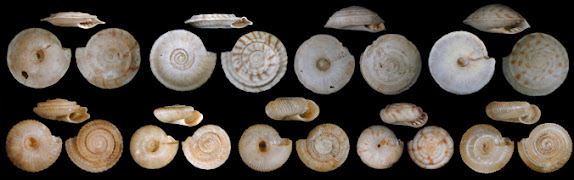
Shells from recently extinct land snails from French Polynesia. 
Photo credit: O.Gargominy, A.Sartori.

Scientific Frontline: "At a Glance" Summary: Sixth Mass Extinction

  • Main Discovery: Earth is currently undergoing a human-driven Sixth Mass Extinction, a reality confirmed by a comprehensive assessment of biodiversity loss that accounts for previously overlooked invertebrate species.
  • Methodology: Researchers from the University of Hawaiʻi at Mānoa and the Muséum National d’Histoire Naturelle extrapolated global extinction rates by utilizing estimates obtained specifically from land snails and slugs to calculate broader biodiversity loss since the year 1500.
  • Key Data: Current estimates indicate that between 7.5% and 13% of the two million known species—amounting to a staggering 150,000 to 260,000 species—have already gone extinct since 1500.
  • Significance: This analysis refutes denials of a mass extinction by proving the crisis is deeply impacting invertebrates, which constitute the vast majority of biodiversity. It also reveals that island species are disproportionately affected compared to continental species, while marine environments and terrestrial plants currently face lower extinction rates.
  • Future Application: These findings emphasize the urgent necessity of expanding conservation initiatives beyond charismatic vertebrate animals, accelerating the documentation of vulnerable biodiversity before it vanishes, and mobilizing international political action to halt the current extinction trajectory.
  • Branch of Science: Evolutionary Biology, Ecology, and Environmental Science.

Friday, October 17, 2025

What Is: Extinction Level Events

A Chronicle of Earth's Biotic Crises and an Assessment of Future Threats
Image Credit: Scientific Frontline

Defining Biotic Catastrophe

The history of life on Earth is a story of breathtaking diversification and innovation, but it is punctuated by chapters of profound crisis. These are the extinction level events—catastrophes of such magnitude that they fundamentally reset the planet's biological clock. Popular imagination often pictures a single, sudden event, like the asteroid that sealed the fate of the dinosaurs. The geological reality, however, is more complex and, in many ways, more instructive for our current era. Understanding these events requires a rigorous scientific framework that moves beyond simple notions of species loss to appreciate the systemic collapse of entire global ecosystems.

Friday, October 8, 2021

Extinction changes rules of body size evolution

A trilobite fossil from the Ordovician period, which lasted from about 485 to 443 million years ago. A new analysis of marine fossils from most of the past half-billion years shows the usual rules of body size evolution change during mass extinctions and their recoveries.
(Image credit: Smithsonian)

Scientific Frontline: "At a Glance" Summary: Extinction Changes Rules of Body Size Evolution

  • Main Discovery: The rules governing body size evolution fundamentally shift during mass extinctions and their subsequent recovery periods, altering the specific traits that dictate a species' survival or extinction.
  • Methodology: Researchers utilized statistical analyses and computer simulations on an extensive marine fossil dataset, evaluating 284,308 fossil occurrences across 10,203 genera spanning 485 million years.
  • Key Data: During recovery intervals following mass extinctions, newly evolved genera in most classes are distinctly smaller than the surviving holdover species, reversing the normal background pattern where newly evolved genera are slightly larger.
  • Significance: Revealing how body size selectivity changes after global annihilations provides critical insights into the origins of the modern biosphere and the underlying mechanics of ecosystem recovery.
  • Future Application: These findings offer a predictive framework to project the long-term evolutionary consequences of the current global biodiversity crisis, specifically helping anticipate which species might go extinct and what types of organisms could eventually reemerge.
  • Branch of Science: Paleontology and Evolutionary Biology.

Thursday, April 28, 2022

Unchecked global emissions on track to initiate mass extinction of marine life

Princeton University researchers report that unless greenhouse gas emissions are curbed, marine biodiversity could be on track to plummet to levels not seen since the extinction of the dinosaurs. The study authors modeled future marine biodiversity under projected climate scenarios and found that species such as dolphinfish (shown) would be imperiled as warming oceans decrease the ocean’s oxygen supply while increasing marine life’s metabolic demand for it. 
Credit: Evan Davis

As greenhouse gas emissions continue to warm the world’s oceans, marine biodiversity could be on track to plummet within the next few centuries to levels not seen since the extinction of the dinosaurs, according to a recent study in the journal Science by Princeton University researchers.

Princeton University researchers report that unless greenhouse gas emissions are curbed, marine biodiversity could be on track to plummet to levels not seen since the extinction of the dinosaurs. The study authors modeled future marine biodiversity under projected climate scenarios and found that species such as dolphinfish (shown) would be imperiled as warming oceans decrease the ocean’s oxygen supply while increasing marine life’s metabolic demand for it.

The paper’s authors modeled future marine biodiversity under different projected climate scenarios. They found that if emissions are not curbed, species losses from warming and oxygen depletion alone could come to mirror the substantial impact humans already have on marine biodiversity by around 2100. Tropical waters would experience the greatest loss of biodiversity, while polar species are at the highest risk of extinction, the authors reported.

Wednesday, March 15, 2023

Extinction vulnerability during ancient biodiversity crises is unpredictable

Jurassic marine fossils
Photo Credit: Dr James Witt

Evidence from past extinctions cannot be used as a definitive way of predicting future biodiversity loss, scientists have found by using AI.

A team of researchers including Dr James Witts of the University of Bristol’s School of Earth Sciences and led by Dr William Foster from Hamburg University used fossils from previous mass extinctions to see if AI-generated models can accurately predict extinction vulnerability.

Despite expectations, this research found that mass extinctions could not be used to generate predictive models for other biodiversity crises, with no common cause flagged. This is because marine communities are constantly evolving and no two mass extinctions are impacting the same marine ecosystem.

Co-author Dr Witts explained: “In a time of increasing extinction risk, knowing whether we can make predictions about the vulnerabilities of different organisms to extinction is essential.”

Dr Foster continued: “The scale of environmental change currently affecting our planet is unprecedented in human history, and so the best source of evidence we have for comparable environmental change lies in the deep past, accessible via analysis of the fossil record.

Tuesday, January 11, 2022

Researchers find low oxygen and sulfide in the oceans played greater role in ancient mass extinction

Seth Young’s research group collecting and describing limestone samples from a field site in the Roberts Mountains, Nevada.
Credit: Anders Lindskog/Florida State University

Florida State University researchers have new insight into the complicated puzzle of environmental conditions that characterized the Late Ordovician Mass Extinction (LOME), which killed about 85% of the species in the ocean.

Their work on the 445-million-year-old mass extinction event was published online in the journal AGU Advances.

“We found that reducing conditions — with low to no oxygen and little to no hydrogen sulfide levels — are probably playing a much more important role than we previously thought,” said lead author Nevin Kozik, a doctoral candidate in the Department of Earth, Ocean and Atmospheric Science and researcher at the FSU-headquartered National High Magnetic Field Laboratory. “If you imagine a pie chart of the causes of this extinction, we’re increasing that wedge that signifies oxygen deficiency, which is happening in concert with a cooling climate and widespread habitat loss due to sea-level change.”

The research is the first study to use measurements of multiple elements from several sites to examine the conditions that led to the LOME, the second-largest extinction event in the Earth’s history and the only mass extinction to occur during what are called icehouse conditions, when Earth’s climate is cold enough at the poles to support ice sheets year-round.

Thursday, January 26, 2023

Mercury Helps to Detail Earth’s Most Massive Extinction Event

The Karoo Basin in South Africa yields clues about the largest mass extinction in earth's history
Photo Credit: Juanita Swart

Scientific Frontline: "At a Glance" Summary

  • Main Discovery: Mercury isotope signatures found in the southern hemisphere provide definitive evidence linking the Latest Permian Mass Extinction (LPME) to massive volcanic eruptions in the Siberian Traps.
  • Methodology: Researchers analyzed the isotopic composition of mercury preserved in sedimentary rock samples from the Sydney Basin in Australia and the Karoo Basin in South Africa to match chemical signatures with volcanic emissions.
  • Key Data: The event eradicated 80-90% of life on Earth; radiogenic dating and stratigraphic analysis reveal the terrestrial extinction began 200,000 to 600,000 years prior to the primary marine collapse at 251.9 million years ago.
  • Significance: The findings establish that the extinction was not an instantaneous catastrophe but a prolonged biotic crisis that originated on land due to volcanic carbon dioxide emissions and subsequent rapid warming before impacting the oceans.
  • Future Application: These historical data points serve as critical models for predicting the long-term ecological consequences of modern climate change, which mirrors the LPME's rapid injection of greenhouse gases.
  • Branch of Science: Earth Sciences (Geochemistry, Geochronology, and Sedimentology)
  • Additional Detail: This study marks the first time mercury isotope compositions from high southern latitudes have been utilized to bridge significant gaps in the global geological record regarding this extinction event.

Friday, November 18, 2022

Rapid fluctuations in oxygen levels coincided with Earth’s first mass extinction

Nevin Kozik during fieldwork to investigate how rapid changes in marine oxygen levels may have played a significant role in driving Earth’s first mass extinction.
Photo Credit: Courtesy of Nevin Kozik

Rapid changes in marine oxygen levels may have played a significant role in driving Earth’s first mass extinction, according to a new study led by Florida State University researchers.

About 443 million years ago, life on Earth was undergoing the Late Ordovician mass extinction, or LOME, which eliminated about 85% of marine species. Scientists have long studied this mass extinction and continue to investigate its possible causes, such as reduced habitat loss in a rapidly cooling world or persistent low-oxygen conditions in the oceans.

By measuring isotopes of the element thallium — which shows special sensitivity to changes in oxygen in the ancient marine environment — the research team found that previously documented patterns of this mass extinction coincided with an initial rapid decrease in marine oxygen levels followed by a rapid increase in oxygen. Their work is published online in the journal Science Advances.

“Paleontologists have noted that there were several groups of organisms, such as graptolites and brachiopods, that started to decline very early in this mass extinction interval, but we didn’t really have any good evidence of an environmental or climate signature to tie that early decline of these groups to a particular mechanism,” said co-author Seth Young, an associate professor in the Department of Earth, Ocean and Atmospheric Science. “This paper can directly link that early phase of extinction to changes in oxygen. We see a marked change in thallium isotopes at the same time these organisms start their steady decline into the main phase of the mass extinction event.”

Sunday, March 12, 2023

Why are mammals more likely to go extinct on islands than on the mainland?

Illustration of Sardinian Dwarf Mammoth, Sardinian Giant Otter, Deer, Sardinian Dhole and Giant Pica
 Illustration Credit: Peter Schouten

Islands are "laboratories of evolution" and home to animal species with many unique features, including dwarfs that evolved to very small sizes compared to their mainland relatives, and giants that evolved to large sizes. A team of researchers from the German Centre of Integrative Biodiversity Research (iDiv) and Martin Luther University Halle-Wittenberg (MLU) has now found that species that evolved to more extreme body sizes compared to their mainland relatives have a higher risk of extinction than those that evolved to less extreme sizes. Their study, which was published in Science, also shows that extinction rates of mammals on islands worldwide increased significantly after the arrival of modern humans.

Islands are hotspots for biodiversity - they cover less than 7% of the Earth’s land area, but account for up to 20% of all terrestrial species on the planet. However, islands are also hotspots for species extinction as 50% of today’s IUCN threatened species are native to islands. 

Monday, September 19, 2022

Fossil eggs show dinosaur decline before extinction

Artist’s depiction of Late Cretaceous oviraptorosaurs, hadrosaurs, and tyrannosaurs living in central China
Credit: IVPP 

Nearly 66 million years ago, a large asteroid hit Earth and contributed to the global extinction of dinosaurs, leaving birds as their only living descendants.

Scientists know that a wide variety of dinosaurs lived around the world at the end of the Cretaceous period just before their extinction. However, scientists have debated whether dinosaurs were at their zenith or already in decline prior to their demise. In other words, did dinosaurs go out with a bang or a whimper?

Researchers from the Institute of Vertebrate Paleontology and Paleoanthropology (IVPP) of the Chinese Academy of Sciences, along with their collaborators, now have an answer. They've found evidence to support the hypothesis that dinosaurs were not very diverse before their extinction and had declined overall during the last part of the Cretaceous.

Their findings were published in PNAS on Sept. 19.

Most of the scientific data on the last days of the dinosaurs comes from North America. Although some published studies suggest that dinosaur populations there were thriving quite well before extinction, other more detailed research has suggested that dinosaurs were instead in decline, which set the stage for their eventual mass extinction.

Monday, January 31, 2022

Low Volcanic Temperature Ushered in Global Cooling and the Thriving of Dinosaurs

Researchers in Japan, Sweden, and the US have unearthed evidence that low volcanic temperatures led to the fourth mass extinction, enabling dinosaurs to flourish during the Jurassic period.

Large volcanic eruptions create climatic fluctuations, ushering in evolutionary changes. Yet it is the volcanic temperature of the eruption that determines whether the climate cools or warms.

Since the emergence of early animals, five mass extinctions have taken place. The fourth mass extinction occurred at the end of the Triassic Period - roughly 201 million years ago. This mass extinction saw many marine and land animals go extinct, especially large-body, crocodilian-line reptiles known as pseudosuchia. Approximately 60-70% of animal species disappeared. As a result, small bodied dinosaurs were able to grow and prosper.

Scientists think the fourth mass extinction was triggered by the eruptions in the Central Atlantic Magmatic Province - one of the largest regions of volcanic rock. But the correlation between the eruption and mass extinction has not yet been clarified.

Thursday, November 11, 2021

Humans hastened the extinction of the woolly mammoth

New research shows that humans had a significant role in the extinction of woolly mammoths in Eurasia, occurring thousands of years later than previously thought.

An international team of scientists led by researchers from the University of Adelaide and University of Copenhagen, has revealed a 20,000-year pathway to extinction for the woolly mammoth.

“Our research shows that humans were a crucial and chronic driver of population declines of woolly mammoths, having an essential role in the timing and location of their extinction,” said lead author Associate Professor Damien Fordham from the University of Adelaide’s Environment Institute.

“Using computer models, fossils and ancient DNA we have identified the very mechanisms and threats that were integral in the initial decline and later extinction of the woolly mammoth.”

Signatures of past changes in the distribution and demography of woolly mammoths identified from fossils and ancient DNA show that people hastened the extinction of woolly mammoths by up to 4,000 years in some regions.

“Our research shows that humans were a crucial and chronic driver of population declines of woolly mammoths, having an essential role in the timing and location of their extinction.” 
Dr Damien Fordham
The Environment Institute, University of Adelaide

Friday, December 10, 2021

Almost two-thirds of species at deep-sea hydrothermal vents are at risk of extinction

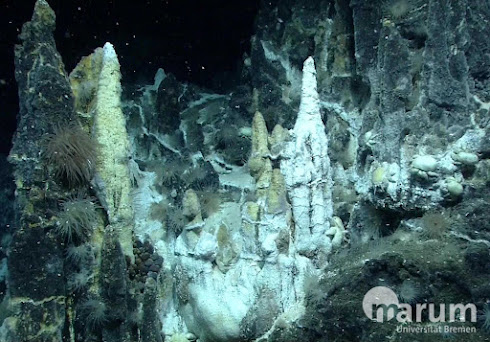
Image of a deep-sea Hydrothermal Vent taken by a Remotely Operate Vehicle (ROV).
Photo credit to Marum Universitat Bremen.

New research from Queen’s University Belfast has led to 184 deep-sea species being added to the global Red List of Threatened Species. With almost two-thirds of the species assessed listed as threatened, it highlights the urgent need to protect them from extinction.

The International Union for Conservation of Nature (IUCN)’s Red List of Threatened Species is the world’s foremost conservation authority, with universally recognized extinction risk categories (e.g. Endangered, Critically Endangered, etc.) used to raise awareness of species’ conservation needs to industry, policy makers, and the general public. More than 140,000 species have been Red Listed but less than 15% are from marine environments and barely any are from the deep sea.

The deep sea is the largest environment on earth with thousands of unique species living in extreme habitats. The remoteness of these seafloor habitats means they are often understudied, making it difficult to understand and communicate their conservation requirements.

Hydrothermal vents are just one of these unique deep-sea ecosystems. Vent habitats host a similar density of life as tropical rainforests and coral reefs. There are approximately 600 of these hotspots known worldwide and most are one-third of a football field in size. Vent communities are also distinctly different from the surrounding seafloor, making these highly insular habitats.

Thursday, January 29, 2026

Study chronicles centuries of Pacific Island land snail extinctions

beautiful shell colours and patterns of the Cuban snail Polymita picta. International trade of this species is prohibited by the Convention on International Trade in Endangered Species.
Photo Credit: B. Reyes-Tur.

Scientific Frontline: Extended "At a Glance" Summary

The Core Concept: A comprehensive scientific review quantifying the catastrophic loss of biodiversity among Pacific Island land snails, revealing that extinction rates on high volcanic islands range from 30% to 80% of total species.

Key Distinction/Mechanism: Unlike standard biodiversity assessments that rely on living populations, this research utilizes the "shell bank"—shells preserved in the soil for centuries. This mechanism allows scientists to identify and catalog "silent extinctions" of species that vanished before they could be formally described by modern science.

Origin/History: Published in Philosophical Transactions of the Royal Society B, the study traces the timeline of these extinctions to two primary waves: the initial arrival of humans on the islands and the subsequent, more extensive impact of Western colonization.

Major Frameworks/Components:

  • The Shell Bank: A fossil-like record of calcium carbonate shells used to reconstruct pre-human biodiversity baselines.
  • Invasive Predation: Identification of key biological drivers of extinction, specifically rats, the rosy wolf snail (Euglandina), and the New Guinea flatworm (Platydemus manokwari).
  • Habitat Alteration: The correlation between deforestation/land-use change and the collapse of endemic populations.
  • Extinction Trajectories: A model distinguishing between "natural" background extinction (e.g., via fossilized dunes) and the accelerated anthropogenic rates observed recently.
  • Branch of Science: Conservation Biology, Malacology (the study of mollusks), and Island Biogeography.

Future Application: Data from this review supports the development of urgent captive breeding programs ("buying time") and argues for a revision of global conservation agendas to prioritize non-charismatic invertebrates often overlooked in biodiversity crises.

Why It Matters: This research corrects the historical record, demonstrating that global extinction estimates are likely severe underestimates. By documenting species that were lost before they were found, it highlights the extreme vulnerability of island ecosystems to invasive species and human activity.

Wednesday, March 29, 2023

Extinction of steam locomotives derails assumptions about biological evolution

The Union Pacific Big Boy Steam Engine (one of the largest steam engines ever built and still functioning) visited Lawrence on Sept. 2, 2021.
Photo Credit: Bruce Lieberman

When the Kinks’ Ray Davies penned the tune “Last of the Steam-Powered Trains,” the vanishing locomotives stood as nostalgic symbols of a simpler English life. But for a paleontologist at the University of Kansas, the replacement of steam-powered trains with diesel and electric engines, as well as cars and trucks, might be a model of how some species in the fossil record died out.

Bruce Lieberman, professor of ecology & evolutionary biology and senior curator of invertebrate paleontology at the KU Biodiversity Institute & Natural History Museum, sought to use steam-engine history to test the merits of “competitive exclusion,” a long-held idea in paleontology that species can drive other species to extinction through competition.

Working with former KU postdoctoral researcher Luke Strotz, now of Northwest University in Xi’an, China, Lieberman found the fossil record largely lacks the detailed data verifying competitive exclusion found in the history of steam engines: “It's really hard to actually see any evidence that competition does play a big role in evolution,” Lieberman said.

Their findings have just been published in the paper “The end of the line: competitive exclusion and the extinction of historical entities2” in the peer-reviewed journal Royal Society Open Science.

Tuesday, November 22, 2022

Researchers find decrease in crucial trace element preceded ancient mass extinction

The research group collecting samples.
Photo Credit Ben Gill

A decline in the element molybdenum across the planet’s oceans preceded a significant extinction event approximately 183 million years ago, new research from Florida State University shows.

The decrease may have contributed to the mass extinction, in which up to 90% of species in the oceans perished, and it suggests that much more organic carbon was buried in the extinction event than had been previously estimated. The work is published in AGU Advances.

“This research tells us more about what was happening with molybdenum during this extinction event, but we also take it a step further,” said Jeremy Owens, an associate professor in FSU’s Department of Earth, Ocean and Atmospheric Science and a paper co-author. “Our findings help us understand how much carbon was cycling through the system, and it’s much larger than previously thought — potentially on the scale of modern atmospheric and oceanic increases due to human activities.”

Previous research showed decreases in molybdenum during the main phase of the ancient mass extinction, but it was unclear how widespread the decrease was, how early it started or how long it lasted.

Tuesday, March 22, 2022

A sulphurous end for the dinosaurs, according to new research

Artist's impression of dinosaur extinction
Credit: James McKay
Climate cooling associated with Sulphur gases directly contributed to the extinction of the dinosaurs, research carried out at the Universities of St Andrews and Bristol has found.

The gases were ejected into the Earth’s atmosphere after a six-mile-wide asteroid hit what is now the Yucatan Peninsula, around 66 million years ago.

The research, published today in PNAS (Proceedings of the National Academy of Sciences) in collaboration with Syracuse University (New York, US), and Texas A&M explored the consequences of the asteroid impact known as the Chicxulub impact.

The research team found that Sulphur gases circulated globally for years in the Earth’s atmosphere, cooling the climate and contributing to the mass extinction of life. This extinction event was catastrophic for dinosaurs and other life but also allowed for the diversification of mammals including primates.

Dr James Witts of the School of Earth Sciences at the University of Bristol said: “Our data provides the first direct evidence for the massive amounts of Sulphur released by the Chicxulub impact. It’s amazing to be able to see such rapid and catastrophic global change in the geological record.”

Dr Aubrey Zerkle of the School of Earth and Environmental Sciences at the University of St Andrews, explained: “One reason this particular impact was so devastating to life seems to be that it landed in a marine environment that was rich in Sulphur and other volatiles. The dinosaurs were just really unlucky!”

Wednesday, June 29, 2022

Shrimps and worms among first animals to recover after largest mass extinction

Reconstructed sea bed scenes (A) Pre-extinction, (B-D) Induan (early Early Triassic), (E) Smithian, (F) Spathian
Credit: Yaqi Jiang

Researchers studying ancient sea bed burrows and trails have discovered that bottom burrowing animals were among the first to bounce back after the end-Permian mass extinction.

In a new study, published today in the journal Science Advances, researchers from China, the USA and the UK, reveal how life in the sea recovered from the event, which killed over 90 percent of species on Earth, from their observations of trace fossils.

Life was devastated by the end-Permian mass extinction 252 million years ago, and recovery of life on Earth took millions of years for biodiversity to return to pre-extinction levels. But by examining trails and burrows on the South China sea bed, the international team were able to piece together sea life’s revival by pinpointing what animal activity was happening when.

Professor Michael Benton from the University of Bristol’s School of Earth Sciences, a collaborator on the new paper, said: “The end-Permian mass extinction and the recovery of life in the Early Triassic are very well documented throughout South China.

“We were able to look at trace fossils from 26 sections through the entire series of events, representing seven million crucial years of time, and showing details at 400 sampling points, we finally reconstructed the recovery stages of all animals including benthos, nekton, as well as these soft-bodied burrowing animals in the ocean.”

Thursday, January 15, 2026

Woolly rhino genes recovered from Ice Age wolf stomach

The autopsy of the Tumat-1 wolf puppy, when a fragment of a woolly rhinoceros tissue was found in the stomach.
Photo Credit: Courtesy of Cardiff University

Scientific Frontline: "At a Glance" Summary

  • Main Discovery: Researchers successfully sequenced the first complete genome of an extinct woolly rhinoceros (Coelodonta antiquitatis) using a tissue fragment preserved inside the stomach of a frozen Ice Age wolf puppy.
  • Methodology: The team extracted DNA from the 14,400-year-old stomach tissue—originally misidentified as cave lion—and compared it against high-quality genomes from specimens dated to 18,000 and 49,000 years ago to assess genetic changes over time.
  • Specific Data: The sample originates from Tumat, northeastern Siberia, and represents one of the youngest woolly rhino specimens ever found, dating to the period immediately preceding the species' extinction.
  • Context: Genomic analysis revealed no significant increase in inbreeding or accumulation of harmful mutations, indicating the population remained genetically diverse and stable despite 15,000 years of overlapping human presence.
  • Significance: The absence of genetic deterioration suggests the woolly rhinos' extinction was not caused by a slow decline or human overhunting, but rather by a rapid collapse driven by sudden climate warming at the end of the last Ice Age.

Thursday, June 30, 2022

Wildfires May Have Sparked Ecosystem Collapse During Earth’s Worst Mass Extinction

Credit: Victor O. Leshyk During the worst mass extinction event in Earth’s history, vast wetlands suffered increased wildfires, turning the world’s largest carbon sinks into carbon sources.
Resized Image using AI by SFLORG
Credit: Victor O. Leshyk 

Researchers at University College Cork (UCC) and the Swedish Museum of Natural History examined the end-Permian mass extinction (252 million years ago) that eliminated almost every species on Earth, with entire ecosystems collapsing. The researchers discovered a sharp spike in wildfire activity from this most devastating of mass extinctions. Promoted by rapid greenhouse gas emissions from volcanoes, extreme warming and drying led to wildfires across vast regions that were previously permanently wet. Instead of capturing carbon from the atmosphere, these wetlands became major sources of atmospheric carbon, enhancing the sharp warming trend. The research is published in PALAIOS today (30th June).

Fossils examined in eastern Australia & Antarctica

By studying fossil plant and charcoal records of the Sydney & Bowen basins in eastern Australia and Antarctica (Lambert Graben), the researchers discovered that the wetlands were regularly disturbed by fires leading up to the extinction event. In response, the plants had evolved a range of fire-coping mechanisms. However, the severe climate change and peak in fire activity during the extinction event seems to have pushed even these fire-adapted plants over a tipping point, from which the entire ecosystem could not recover for millions of years.

“Sifting through the fossil plant records of eastern Australia and Antarctica, we found high abundances of burnt, or charcoalified, plants throughout the late Permian Period. From this high baseline, charcoal abundances reached a prominent peak right at the top of the last Permian coal beds, indicating a major but short-lived increase in wildfires. This was followed by low charcoal for the next three million years of the Early Triassic Period. It was an end-Permian burnout, followed by an Early Triassic depression” comments Dr Chris Mays, Lecturer in Paleontology at University College Cork (UCC) and lead author of the study.

Earth on a path to a similar mass extinction?

The researchers highlight that in today’s world, wildfires have caused shocking mass animal die-offs in several regions around the world (e.g. California 2018, 2020, Australia 2019-20). Over the same time, our warming global climate has led to prolonged droughts and increased wildfires in typically wet habitats, such as the peat forests of Indonesia and the vast Pantanal wetlands of South America. These major ‘carbon sinks’―regions of natural capture of carbon from the atmosphere―are crucial in our fight against climate change. As the fossil record reveals, without these regions of carbon capture, the world can stay intolerably warm for hundreds of millennia.

“The potential for wildfires as a direct extinction driver during hyperthermal events, rather than a symptom of climatic changes deserves further examination. Unlike the species that suffered the mass extinctions of the past, we have the opportunity to prevent the burning of the world’s carbon sinks and help avoid the worst effects of modern warming” comments Dr Mays.

Source/Credit: Coláiste na hOllscoile Corcaigh (University College Cork)

en063022_03

Featured Article

What Is: Abyssopelagic Zone

A master of abyssopelagic survival, the anglerfish overcomes absolute darkness and sparse food supplies with a specialized, light-producing ...

Top Viewed Articles