 |
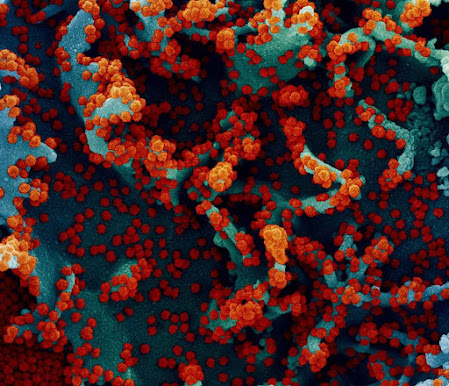
| Colorized scanning electron micrograph of a human cell heavily infected with SARS-CoV-2 virus particles (red). NIAID |
The study, called the Adaptive COVID-19 Treatment Trial 3 (ACTT-3), took place from August 5, 2020 to December 21, 2020. It was sponsored and funded by the National Institute of Allergy and Infectious Diseases (NIAID), part of the National Institutes of Health.
Interferon beta-1a has the same amino acid sequence as a naturally occurring protein called interferon beta, which is in a class of proteins called type 1 interferons. Infected cells normally produce type 1 interferons to help the immune system fight pathogens, especially viruses. Interferon beta has both antiviral and anti-inflammatory properties.
Laboratory studies have shown that the normal type 1 interferon response is suppressed after infection with SARS-CoV-2, the virus that causes COVID-19. In addition, previous studies of hospitalized patients with COVID-19 demonstrated reduced production of interferon in response to SARS-CoV-2 infection in many patients, and this was associated with more severe disease. Other laboratory studies and clinical data supported the hypothesis that treatment with interferon beta-1a might improve health outcomes in people with COVID-19.