. Scientific Frontline

Monday, November 1, 2021

Is there a "Global Climate Emergency"?

This was the question posed by a global team of researchers, who sought to investigate the pros and cons of declaring climate emergencies.

In the wake of recent climate disasters, such as the wildfires that have ravaged Australia, Hurricane Ida in America, and severe flooding across Europe, more and more governments have declared climate emergencies. Over 2,000 local governments and 20 national parliaments worldwide have decided upon the measure, and it is expected that more will follow.

However, Dr Linda Westman, from the Sheffield Urban Institute at the University of Sheffield, alongside researchers from the universities of Utrecht, Sussex, Oslo, and the Australian National University, as well as the Manipal Academy of Higher Education, found that in declaring climate emergencies, governments could actually be alienating people from taking action on climate change, as they become desensitized to the issue and may begin to feel fearful and guilty, instead of empowered to change things.

Furthermore, there are fears that emergency frames could be used by governments to curtail people’s freedoms and clamp down on political debates, but so far this has not been seen.

Potential direct ancestor of modern humans identified

Artist rendering of Homo bodoensis
(Credit: Ettore Mazza)
A direct ancestor to modern humans has been identified, providing clarity to an important chapter in human evolution. The announcement by an international team of researchers, including a University of Hawaiʻi at Mānoa professor, was published in Evolutionary Anthropology.

Homo bodoensis lived in Africa during the Middle Pleistocene (774,000-129,000 years ago). The new name is based on a reassessment of existing fossils from Africa and Eurasia from this time period, according to co- and corresponding author Professor and Department Chair Christopher Bae from UH Mānoa’s Department of Anthropology in the College of Social Sciences.

The Middle Pleistocene is an important time period because it saw the rise of our species (Homo sapiens) in Africa and the Neanderthals (Homo neanderthalensis) in Europe. However, the time period is poorly understood, often being called the “muddle in the middle.”

“The new species, Homo bodoensis, should help to simplify the picture of human evolution during the Middle Pleistocene because it is more clearly defined, where the African fossils can easily fit,” Bae said.

Researchers shed light on blind spot of shark attacks

Credit: Dr. Laura Ryan
Scientists have found more evidence to support the mistaken identity theory’ in juvenile white sharks during surface attacks on humans.

Research, which has been published in the Journal of the Royal Society Interface, suggests that sharks mistake humans for seal prey.

Shark attack on humans have long fascinated the general public but have remained a source of confusion for scientists. This is due to the fact that they often bite, but do not subsequently eat, their human targets.

To help unlock this mystery, a team from Macquarie University, in collaboration with the University of Bristol created a virtual white shark visual system. Videos of human and seal movements filmed from below the water’s surface were then processed in with this system to see visual motion and shape cues through the perspective of a white shark.

“Until now, the potential similarity between humans and seals has been assessed based on human vision. However, white sharks have much lower visual acuity than us, meaning they cannot see fine details, and lack color vision” explained Dr Laura Ryan, the lead author on the paper. “In these experiments, we were able to view the world through the eyes of a white shark.”

Dr Martin How of Bristol’s School of Biological Sciences said: “We used a computer simulation to compare the way that seals, swimmers and surfers move on the water's surface, when viewed from the perspective of white sharks below.

Astronomers suggest radiation, not supernovae, drives superwinds in some galaxies

This image zooms in on the Mrk 71 region in the galaxy NGC 2366. The red, blue and green colors reflect the emission of oxygen and helium ions. The observations were made from the Hubble Space Telescope. Image credit: Sally Oey

The finding could provide insight into how the universe became transparent

When astronomers observe superwinds traveling at extremely high speeds from super star clusters, or “starbursts,” they previously assumed the winds were driven by supernovae, the explosions of stars.

This was the case for a starburst called Mrk 71 in a nearby galaxy. Astronomers had observed incredibly fast superwinds—traveling at about 1% of the speed of light—emanating from the cluster, and classic reasoning suggested the blasts from many supernovae drive the gas to such a high rate of speed.

But University of Michigan astronomers think supernovae aren’t the reason: the cluster is too young to have supernovae. They suspect a different mechanism is behind the superwind.

By studying the wind and starburst properties, the astronomers established that ultraviolet radiation from the compact starburst itself drove the superwind. Their findings, published in the journal Astrophysical Journal Letters, may help explain one chapter of the universe’s beginnings.

Sunday, October 31, 2021

Sun Emits X-class Flare


The Sun emitted a significant solar flare peaking at 11:35 a.m. EDT on Oct. 28, 2021. NASA’s Solar Dynamics Observatory, which watches the Sun constantly, captured an image of the event.

Solar flares are powerful bursts of radiation. Harmful radiation from a flare cannot pass through Earth’s atmosphere to physically affect humans on the ground, however — when intense enough — they can disturb the atmosphere in the layer where GPS and communications signals travel.

To see how such space weather may affect Earth, please visit NOAA's Space Weather Prediction Center http://spaceweather.gov/, the U.S. government’s official source for space weather forecasts, watches, warnings, and alerts. NASA works as the research arm of the nation’s space weather effort. NASA observes the Sun and our space environment constantly with a fleet of spacecraft that study everything from the Sun’s activity to the solar atmosphere, and to the particles and magnetic fields in the space surrounding Earth.

This flare is classified as an X1.0-class flare.

X-class denotes the most intense flares, while the number provides more information about its strength. An X2 is twice as intense as an X1, an X3 is three times as intense, etc. Flares that are classified X10 or stronger are considered unusually intense.

Earlier in the week, from late-afternoon on October 25th through mid-morning on the 26th, a different active region on the Sun gave a show of small flares and eruptions of plasma.

Source/Credit: Video: NASA/GSFC/SDO

Final Editing: Scientific Frontline

sw103021_01

Friday, October 29, 2021

Scientists identify the cause of Alzheimer’s progression in the brain

SumaLateral Whole Brain
Image  Credit: National Institute of Mental Health, National Institutes of Health

The international team, led by the University of Cambridge, found that instead of starting from a single point in the brain and initiating a chain reaction which leads to the death of brain cells, Alzheimer’s disease reaches different regions of the brain early. How quickly the disease kills cells in these regions, through the production of toxic protein clusters, limits how quickly the disease progresses overall.

The researchers used post-mortem brain samples from Alzheimer’s patients, as well as PET scans from living patients, who ranged from those with mild cognitive impairment to those with late-stage Alzheimer’s disease, to track the aggregation of tau, one of two key proteins implicated in the condition.

In Alzheimer’s disease, tau and another protein called amyloid-beta build up into tangles and plaques – known collectively as aggregates – causing brain cells to die and the brain to shrink. This results in memory loss, personality changes and difficulty carrying out daily functions.

By combining five different datasets and applying them to the same mathematical model, the researchers observed that the mechanism controlling the rate of progression in Alzheimer’s disease is the replication of aggregates in individual regions of the brain, and not the spread of aggregates from one region to another.

Detector Advance Could Lead to Cheaper, Easier Medical Scans

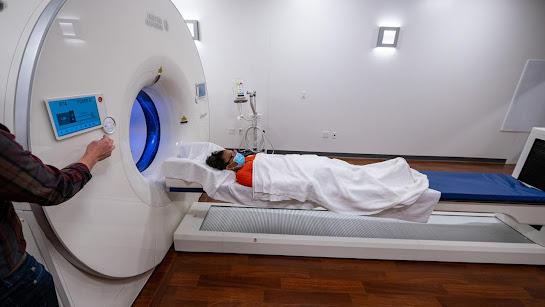
PET scanners such as this EXPLORER scanner at UC Davis are useful tools in medical diagnosis. New work by biomedical engineers at UC Davis and Hamamatsu Photonics, Japan, could lead to cheaper, easier medical imaging. (Photo by UC Davis Health)

Researchers in the U.S. and Japan have demonstrated the first experimental cross-sectional medical image that doesn’t require tomography, a mathematical process used to reconstruct images in CT and PET scans . The work, published in Nature Photonics, could lead to cheaper, easier and more accurate medical imaging.

The advance was made possible by development of new, ultrafast photon detectors, said Simon Cherry, professor of biomedical engineering and of radiology at the University of California, Davis, and senior author on the paper.

“We’re literally imaging at the speed of light, which is something of a holy grail in our field,” Cherry said.

Experimental work was led by Sun Il Kwon, project scientist in the UC Davis Department of Biomedical Engineering and Ryosuke Ota at Hamamatsu Photonics, Japan, where the new photon detector technology was developed. Other collaborators included research groups led by Professor Yoichi Tamagawa at the University of Fukui, and by Professor Tomoyuki Hasegawa at Kitasato University.

Research unlocks the technology to produce unbreakable screens

Luminating composite glasses
Cracked phone screens could become a thing of the past thanks to breakthrough research conducted at The University of Queensland.

The global team of researchers, led by UQ’s Dr Jingwei Hou, Professor Lianzhou Wang and Professor Vicki Chen, have unlocked the technology to produce next-generation composite glass for lighting LEDs and smartphone, television and computer screens.

The findings will enable the manufacture of glass screens that are not only unbreakable but also deliver crystal clear image quality.

Dr Hou said the discovery was a huge step forward in perovskite nanocrystal technology as previously, researchers were only able to produce this technology in the bone-dry atmosphere of a laboratory setting.

“The emitting materials are made from nanocrystals, called lead-halide perovskites,” he said.

“They can harvest sunlight and concert it into renewable electricity - playing a vital role in low-cost and high-efficiency new generation solar cells and many promising applications like lighting.

“Unfortunately, these nanocrystals are extremely sensitive to light, heat, air and water – even water vapor in our air would kill the current devices in a matter of minutes.

“Our team of chemical engineers and material scientists has developed a process to wrap or bind the nanocrystals in porous glass.

New results deal a blow to the theoretical sterile neutrino

Teams prepare to move the MicroBooNE cryostat from DZero to the Liquid Argon Test Facility (LArTF).  Credit: Cindy Arnold, Fermilab

The results were gathered by an international team at the MicroBooNE experiment in the United States, with leadership from a UK team including researchers from the University of Cambridge.

The two most likely explanations for anomalies that were seen in two previous physics experiments: one which suggests a sterile neutrino, and one which points at limitations in those experiments, have been ruled out by MicroBooNE.

The fourth neutrino

For more than two decades, this proposed fourth neutrino has remained a promising explanation for anomalies seen in earlier physics experiments. In these previous experiments, neutrinos were observed acting in a way not explained by the Standard Model of Physics – the leading theory to explain the building blocks of the universe and everything in it.

Neutrinos are the most abundant particle with mass in our universe, but they rarely interact with other matter, making them hard to study. But these elusive particles seem to hold answers to some of the biggest questions in physics – such as why the universe is made up of more matter than antimatter.

A 170-ton neutrino detector the size of a bus was created to study these particles – and became known as MicroBooNE. The international experiment has close to 200 collaborators from 36 institutions in five countries, and is supported by the Science and Technology Facilities Council (STFC) in the UK.

Climate change increases fluvial sediment in the high mountains of Asia

The Laigu Glacier in southeastern High Mountain Asia.
Photo Credit: Dongfeng Li

Scientific Frontline: "At a Glance" Summary: Climate Change Increases Fluvial Sediment in High Mountain Asia

  • Main Discovery: Climate change, driving warmer and wetter conditions, has severely accelerated glacier retreat and permafrost thaw, leading to a substantial and unprecedented increase in fluvial sediment transport across High Mountain Asia.
  • Methodology: Researchers collated and analyzed flow and sediment load data from 28 quasi-pristine headwater basins over a six-decade period, utilizing historical observational data and a climate elasticity model to isolate the specific impact of temperature and precipitation changes from human activities.
  • Key Data: Present-day fluvial sediment flux from the region is nearly two billion metric tons per year, having increased at an average rate of 32 percent for every one degree of warming since the 1950s, and is projected to more than double by 2050 under extreme climate change scenarios.
  • Significance: Elevated sediment loads threaten to diminish the storage capacity and operational lifespans of downstream hydropower reservoirs while degrading aquatic ecosystems by acting as a transport vector for heavy metals, phosphorus, and mobilizing organic carbon from permafrost landscapes.
  • Future Application: These datasets will be utilized to develop a dynamic sediment transport model specifically engineered for cold environments to better predict the seasonality of future fluvial sediment fluxes and guide the development of regional infrastructure and agriculture.
  • Branch of Science: Earth Science, Environmental Science, Hydrology, Climatology.

Study finds the SARS-CoV-2 virus can infect the inner ear

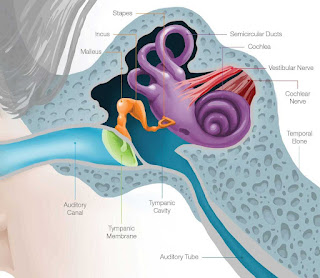
Many Covid-19 patients have reported symptoms affecting the ears, including hearing loss and tinnitus. Dizziness and balance problems can also occur, suggesting that the SARS-CoV-2 virus may be able to infect the inner ear.

A new study from MIT and Massachusetts Eye and Ear provides evidence that the virus can indeed infect cells of the inner ear, including hair cells, which are critical for both hearing and balance. The researchers also found that the pattern of infection seen in human inner ear tissue is consistent with the symptoms seen in a study of 10 Covid-19 patients who reported a variety of ear-related symptoms.

The researchers used novel cellular models of the human inner ear that they developed, as well as hard-to-obtain adult human inner ear tissue, for their studies. The limited availability of such tissue has hindered previous studies of Covid-19 and other viruses that can cause hearing loss.

“Having the models is the first step, and this work opens a path now for working with not only SARS-CoV-2 but also other viruses that affect hearing,” says Lee Gehrke, the Hermann L.F. von Helmholtz Professor in MIT’s Institute for Medical Engineering and Science, who co-led the study.

Konstantina Stankovic, a former associate professor at Harvard Medical School and former chief of otology and neurotology at Massachusetts Eye and Ear, who is now the Bertarelli Foundation Professor and chair of the Department of Otolaryngology – Head and Neck Surgery at Stanford University School of Medicine, co-led the study. Minjin Jeong, a former postdoc in Stankovic’s laboratory at Harvard Medical School, who is now at Stanford Medical School, is the lead author of the paper, which appears today in Communications Medicine.

Thursday, October 28, 2021

Researchers set ‘ultrabroadband’ record with entangled photons

Researchers in the lab of Qiang Lin at the University of Rochester have generated record ‘ultrabroadband’ bandwidth of entangled photons using the thin-film nanophotonic device illustrated here. At top left, a laser beam enters a periodically poled thin-film lithium niobate waveguide (banded green and gray). Entangled photons (purple and red dots) are generated with a bandwidth exceeding 800 nanometers.
(Illustration by Usman Javi and Michael Osadciw)

The engineers have achieved unprecedented bandwidth and brightness on chip-sized nanophotonic devices.

Quantum entanglement—or what Albert Einstein once referred to as “spooky action at a distance”— occurs when two quantum particles are connected to each other, even when millions of miles apart. Any observation of one particle affects the other as if they were communicating with each other. When this entanglement involves photons, interesting possibilities emerge, including entangling the photons’ frequencies, the bandwidth of which can be controlled.

Researchers at the University of Rochester have taken advantage of this phenomenon to generate an incredibly large bandwidth by using a thin-film nanophotonic device they describe in Physical Review Letters.

The breakthrough could lead to:

  1. Enhanced sensitivity and resolution for experiments in metrology and sensing, including spectroscopy, nonlinear microscopy, and quantum optical coherence tomography
  2. Higher dimensional encoding of information in quantum networks for information processing and communications

“This work represents a major leap forward in producing ultrabroadband quantum entanglement on a nanophotonic chip,” says Qiang Lin, professor of electrical and computer engineering. “And it demonstrates the power of nanotechnology for developing future quantum devices for communication, computing, and sensing,”

Heatwaves like ‘the Blob’ could decrease role of ocean as carbon sink

A major two-year heatwave may have temporarily dampened the Pacific’s ability to sequester carbon, according to research from the University of British Columbia and University of Southern Denmark. Credit: Jody Wright

Researchers have found the two-year heatwave known as ‘the Blob’ may have temporarily dampened the Pacific’s ‘biological pump,’ which shuttles carbon from the surface ocean to the deep sea where it can be stored for millennia.

Canadian and European researchers, in collaboration with the U.S. Department of Energy Joint Genome Institute, conducted a large-scale study of the impact of one of the largest marine heatwaves on record – colloquially known as the Blob – on Pacific Ocean microorganisms. Their observations suggest that it’s not just larger marine life that is affected by abrupt changes in sea temperature.

“Heatwaves such as the Blob may decrease the ocean’s biological role as a carbon sink for fixed atmospheric carbon,” said Dr. Steven Hallam (he/him), a microbiologist at the University of British Columbia and author of the paper published in Nature Communications Biology.

This ‘biological pump’ process is an important mechanism for buffering the impact of human activity on Earth’s climate, said co-author Dr. Colleen Kellogg (she/her), a research scientist with the Hakai Institute. “The ocean is a huge global reservoir for atmospheric carbon dioxide. If marine heatwaves reduce the capacity for carbon dioxide to be absorbed into the ocean, then this shrinks this reservoir and leaves more of this greenhouse gas in the atmosphere.”

Ways to make equestrian sport safer for horses and riders

Photo by Jean van der Meulen from Pexels

In the first study of horse falls for over 20 years, University of Bristol academics have identified some simple interventions to reduce the risk of injury in equestrian sport - making it safer for both horses and riders.

The study pinpointed characteristics associated with an increased risk of falls in eventing, such as higher-level events, longer courses, more starters at cross-country phase and less experienced horses and athletes.

Identifying these risk factors allows riders and event organizers to assess the level of risk for individual horse, rider and event combinations. The study, published in the Equine Veterinary Journal, recommends simple mitigations such as adjusting minimum eligibility requirements (MERs) to ensure horses and riders always compete at a level appropriate to their ability.

Led by Bristol Veterinary School’s Dr. Euan Bennet and Professor Tim Parkin, with Dr Heather Cameron-Whytock of Nottingham Trent University, and funded by Federation Equestre Internationale (FEI), it is the first large scale study using a global data set of every FEI eventing competition over an 11-year period.

Engineering molecules to turn off inflammation

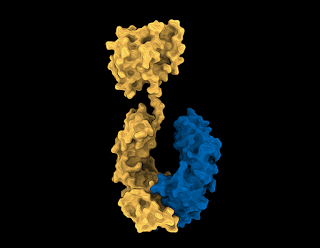
Stylized scientific image of the anti-inflammatory
molecule, Interleukin-37
In a long-term collaboration between researchers and industry, an exciting first step has been made in the creation of a new generation of medicines for auto-immune diseases such as arthritis and inflammatory bowel disease using one of our body’s own anti-inflammatory off-switch molecules.

Our body’s own immune system produces many highly potent anti-inflammatory molecules, but they are often highly fragile, short-lived, and do not have drug-like properties. Interleukin-37 is one such molecule produced by the body to turn off inflammation.

Together with partner F. Hoffmann-La Roche (Roche), the multidisciplinary research team from the Monash University Biomedicine Discovery (BDI) Institute, Monash University’s Department of Pediatrics and the Hudson Institute of Medical Research have harnessed their Fc-fusion platform to engineer the next generation of Interleukin-37, one that retains anti-inflammatory potency, is highly stable and has an excellent therapeutic likeness.

The findings from the research collaboration have now been published in Cell Chemical Biology.

A little bit of inflammation can be a good thing and is often the body's immune system doing its job. However, when inflammation persists, or the immune system starts attacking the body’s own cells, this can lead to disease.

One of the study’s lead authors Dr. Andrew Ellisdon from the Monash BDI says many human diseases, including autoimmune diseases such as arthritis or inflammatory bowel disease, are characterized by too much inflammation. There is a gap in producing new generations of potent anti-inflammatory therapeutics.

Featured Article

What Is: Abyssopelagic Zone

A master of abyssopelagic survival, the anglerfish overcomes absolute darkness and sparse food supplies with a specialized, light-producing ...

Top Viewed Articles