. Scientific Frontline

Tuesday, April 18, 2023

Teasing strange matter from the ordinary

New insights from Jefferson Lab reveal details of how strange matter forms in ordinary matter
Photo Credit: Courtesy of Jefferson Lab

In a unique analysis of experimental data, nuclear physicists have made the first-ever observations of how lambda particles, so-called “strange matter,” are produced by a specific process called semi-inclusive deep inelastic scattering (SIDIS). What’s more, these data hint that the building blocks of protons, quarks and gluons, are capable of marching through the atomic nucleus in pairs called diquarks, at least part of the time. These results come from an experiment conducted at the U.S. Department of Energy’s Thomas Jefferson National Accelerator Facility.

It’s a result that has been decades in the making. The dataset was originally collected in 2004. Lamiaa El Fassi, now an associate professor of physics at Mississippi State University and principal investigator of the work, first analyzed these data during her thesis project to earn her graduate degree on a different topic.

Nearly a decade after completing her initial research with these data, El Fassi revisited the dataset and led her group through a careful analysis to yield these unprecedented measurements. The dataset comes from experiments in Jefferson Lab’s Continuous Electron Beam Accelerator Facility (CEBAF), a DOE user facility. In the experiment, nuclear physicists tracked what happened when electrons from CEBAF scatter off the target nucleus and probe the confined quarks inside protons and neutrons. The results were recently published in Physical Review Letters.

Durable, low-cost COVID-19 vaccine could help fill in gaps around the world

A protein-based COVID-19 vaccine developed by researchers at Stanford Medicine and their colleagues may be ideal for infants.
Image Credit: Gerd Altmann

In a study led by Stanford Medicine researchers, a low-cost COVID-19 vaccine that does not require refrigeration provided immunity in rhesus monkeys for one year.

A low-cost, protein-based COVID-19 vaccine tested in rhesus monkeys by Stanford Medicine researchers and colleagues offered immunity against known variants for at least one year. Researchers hope the vaccine, which can remain unrefrigerated for up to two weeks and may be especially beneficial for infants, will help alleviate the need for boosters while improving herd immunity around the world.

If the vaccine succeeds in human trials, it could be an alternative to the mRNA vaccines widely used for COVID-19, without drawbacks such as high expense and low-temperature storage requirements. Protein-based vaccines, which use protein fragments of the target virus rather than the whole virus, have been used for decades to protect against diseases such as shingles and hepatitis.

“Our motivation was to come up with a vaccine that would provide worldwide access to vaccination,” said Peter Kim, PhD, the Virginia and D.K. Ludwig Professor in Biochemistry. “In the case of the mRNA vaccines, for example, they are expensive, difficult to make and require storage in freezers. So, we wanted to solve those problems with this vaccine.”

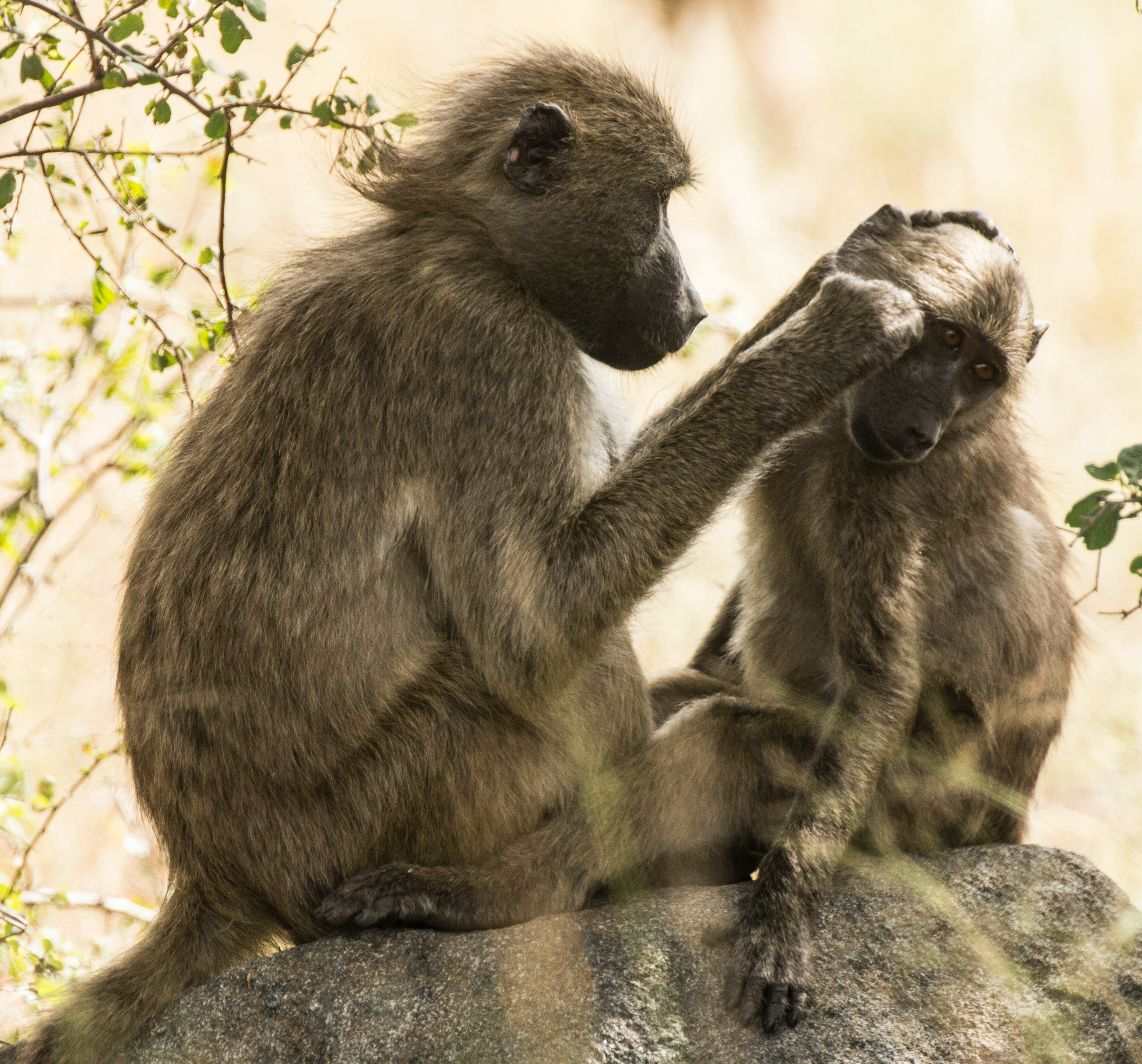
Study shows how machine learning can identify social grooming behavior from acceleration signals in wild baboons

Photo Credit: Charl Durand

Scientists from Swansea University and the University of Cape Town have tracked social grooming behavior in wild baboons using collar-mounted accelerometers.

The study, published in the journal Royal Society Open Science, is the first to successfully calculate grooming budgets using this method, which opens a whole avenue of future research directions.

Using collars containing accelerometers built at Swansea University, the team recorded the activities of baboons in Cape Town, South Africa, identifying and quantifying general activities such as resting, walking, foraging and running, and also the giving and receiving of grooming.

A supervised machine learning algorithm was trained on acceleration data matched to baboon video recordings and successfully recognized the giving and receiving grooming with high overall accuracy.

The team then applied their machine learning model to acceleration data collected from 12 baboons to quantify grooming and other behaviors continuously throughout the day and night-time.

Researchers develop carbon-negative concrete

Graduate student Zhipeng Li and Professor Xianming Shi.
Photo Credit: Courtesy of Washington State University

A viable formula for a carbon-negative, environmentally friendly concrete that is nearly as strong as regular concrete has been developed at Washington State University.  

In a proof-of-concept work, the researchers infused regular cement with environmentally friendly biochar, a type of charcoal made from organic waste, that had been strengthened beforehand with concrete wastewater. The biochar was able to suck up to 23% of its weight in carbon dioxide from the air while still reaching a strength comparable to ordinary cement.   

The research could significantly reduce carbon emissions of the concrete industry, which is one of the most energy- and carbon-intensive of all manufacturing industries. The work, led by doctoral student Zhipeng Li, is reported in the journal Materials Letters.

“We’re very excited that this will contribute to the mission of zero-carbon built environment,” said Xianming Shi, professor in the WSU Department of Civil and Environmental Engineering and the corresponding author on the paper.

The quantum spin liquid that isn't one

Prof. Andrej Pustogow
Photo Credit: Courtesy of TU Wien

The simplest explanation is often the best - this also applies to fundamental science. Researchers from TU Wien and Toho University recently showed that a supposed quantum spin liquid can be described by more conventional physics.

For two decades, it was believed that a possible quantum spin liquid was discovered in a synthetically produced material. In this case, it would not follow the laws of classical physics even on a macroscopic level, but rather those of the quantum world. There is great hope in these materials: they would be suitable for applications in quantum entangled information transmission (quantum cryptography) or even quantum computation.

Now, however, researchers from TU Wien and Toho University in Japan have shown that the promising material, κ-(BEDT-TTF)2Cu2(CN)3, is not the predicted quantum spin liquid, but a material that can be described using known concepts.

In their recent publication in the journal "Nature Communications", the researchers report how they investigated the mysterious quantum state by measuring the electrical resistance in κ-(BEDT-TTF)2Cu2(CN)3 as a function of temperature and pressure. In 2021, Andrej Pustogow from the Institute of Solid-State Physics at TU Wien has already investigated the magnetic properties of this material, opens an external URL in a new window.

Bird feeding helps small birds fight infection

Photo Credit: Lidia Stawinska

Seeds and fat balls do more than just fill small birds’ stomachs. New research from Lund University in Sweden shows that feeding during the wintertime causes birds to be healthier, since they do not have to expend as much energy fighting infections.

A small change in body temperature can be fatal for humans. Small birds, meanwhile, lower their body temperature at night by several degrees during the winter. Just like us, the birds attempt to save energy when it is cold. If they are exposed to infection, the body’s first reaction is to raise its temperature, which clashes with the bird’s simultaneous need to save energy by lowering body temperature.               

“We investigated how access to food during winter affected the balancing act between maintaining a low body temperature in order to save energy, and the possibility of raising body temperature in order to fight infection,” says Hannah Watson, biologist Lund University.

Swimming secrets of prehistoric reptiles unlocked by new study

Paleobiologist Dr Susana Gutarra taking measurements from a very complete specimen of Liopleurodon, a plesiosaur from the Middle-Late Jurassic of Germany (Museum of Paleontology in Tübingen).
Photo Credit: Dr Susana Gutarra

Some of the most extraordinary body transformations in evolution have occurred in animals that adapted to life in water from land-living ancestors, such as modern whales, turtles and seals. During the Mesozoic, from 252 to 66 million years ago, while the dinosaurs stomped about on land, many groups of reptiles took to the seas, such as the iconic ichthyosaurs, plesiosaurs, crocodiles and mosasaurs.

In a new paper, published in the journal Palaeontology, a Bristol team of paleobiologists used state-of-the-art statistical methods to perform a large-scale quantitative study, the first of its kind, on the locomotion of Mesozoic marine reptiles.

The researchers collected measurements from 125 fossilized skeletons, and used these to explore changes in swimming styles within lineages and through time, discovering that there was no explosive radiation at the beginning of the Mesozoic, but a gradual diversification of locomotory modes, which peaked in the Cretaceous period.

New embryonic brain circuit discovered

Layer 5 pyramidal neurons in normal mice (left) compared with mice with autism gene knocked-out (right), showing a patch of disorganized cortex.
Microscopic Image Credit: IOB

Researchers have identified a new brain circuit in mouse embryos that develops at an unexpectedly early stage. Their findings may provide new insights into circuit abnormalities in autism.

A research team led by Professor Botond Roska at the Institute of Molecular and Clinical Ophthalmology Basel (IOB) and the University of Basel has studied circuits in the brains of living mouse embryos. They discovered a previously unknown, early active circuit in the cerebral cortex. Genetic disruption of this circuit leads to changes similar to those seen in brains of people with autism. The team reports these findings in the scientific journal "Cell".

Autism has long been associated with faulty circuits in the cortex, which is the part of the brain that governs sensory perception, cognition, and other high-order functions. Most of the cortex is composed of excitatory cells called pyramidal neurons. The research team studied when and how these neurons assemble into the first active circuits in the cortex.

“Understanding the detailed development of cell types and circuits in the cortex can provide important insights into autism and other neurodevelopmental diseases,” says Botond Roska, Director at IOB and professor at the Faculty of Medicine, University of Basel. 

Eating disorder burden weighs on parents

Parents of recovered children had significantly better ratings of physical health, psychological health
Photo Credit: Karolina Grabowska

With eating disorders on the rise among young people, a Flinders University expert is calling for an urgent increase in support for parents as new research reveals the immense burden they often endure. 

Dr Simon Wilksch, a Senior Research Fellow at Flinders University and Clinic Director of Advanced Psychology Services, conducted an Australia-wide survey of parents whose child (under 18 years-old) experienced an eating disorder. The findings are now published in a special report in the International Journal of Eating Disorders

“While extensive research reveals the devastating toll of eating disorders on the young person, it has been far less common to investigate the burden on parents. This is a significant gap, given that the leading treatment for pediatric eating disorders heavily involves parents,” says Dr Wilksch, a credentialed eating disorder clinician. 

“However, the parent role extends beyond active treatment to also include first identifying signs of the illness; initial help seeking with a GP; pursuing referral to treatment services; and, navigating physical and psychological health challenges in their child.  

Scientists Study Whether Flows in the Earth's Core Can Affect Global Processes

Scientists are trying to answer the question of how changes in the Earth's rotational speed affect tectonic activity.
Photo Credit: NASA

Scientists from Moscow State University, together with colleagues from the Ural Federal University, the University of Helsinki and the University of Oxford, have studied the response of viscous incompressible fluid flow in a spherical layer of the Earth to random external forcing. The results help scientists understand how random changes in the planet's rotation speed affect the tectonic activity that leads to earthquakes, volcanic eruptions and tsunamis. The research has been published in the Philosophical Transactions of the Royal Society, the world's oldest scientific journal. 

"In our research we considered flows of a viscous incompressible fluid induced either by rotation of the inner sphere only or by co-rotation of the spheres. The magnitude of the rotation speed of the inner sphere was subjected to the influence of noise - random deviations in time of the angular rotation speed from the average values. Mean flow generation was found to occur under the action of additive noise. Calculations have shown that the response to noise depends on how the flow was created - by rotation of the inner sphere only or by rotation of both spheres," explains Maria Gritsevich, Senior Researcher at the Ural Federal University and Assistant Professor at the University of Helsinki.

Revealed: Molecular “superpower” of antibiotic-resistant bacteria

Scanning electron micrograph of en:Clostridioides difficile bacteria from a stool sample
Photo Credit: Public Health Image Library

A species of ordinary gut bacteria that we all carry flourishes when the intestinal flora is knocked out by a course of antibiotics. Since the bacteria is naturally resistant to many antibiotics, it causes problems, particularly in healthcare settings. A study led from Lund University in Sweden now shows how two molecular mechanisms can work together make the bacterium extra resistant. “Using this knowledge, we hope to be able to design even better medicines,” says Vasili Hauryliuk, senior lecturer at Lund University, who led the study.

The threat from antibiotic resistant bacteria is as well-known as it is grave. Last year, The Lancet reported that an estimated 1.27 million people died in 2019 as a result of bacterial infection that could not be treated with existing medicines. To tackle this threat is it is essential to understand the underpinning molecular mechanisms.

Monday, April 17, 2023

Researchers discover how some brain cells transfer material to neurons in mice

Neuronal accumulation of ribosomal reporter (green) in the brain of adult mice.
Resized Image using AI by SFLORG
Photo Credit Olga Chechneva

Researchers at UC Davis are the first to report how a specific type of brain cells, known as oligodendrocyte-lineage cells, transfer cell material to neurons in the mouse brain. Their work provides evidence of a coordinated nuclear interaction between these cells and neurons. The study was published today in the Journal of Experimental Medicine.

“This novel concept of material transfer to neurons opens new possibilities for understanding brain maturation and finding treatments for neurological conditions, such as Alzheimer’s disease, cerebral palsy, Parkinson’s and Huntington’s disease,” said corresponding author Olga Chechneva. Chechneva is an assistant project scientist at UC Davis Department of Biochemistry and Molecular Medicine and independent principal investigator in the Institute for Pediatric Regenerative Medicine at Shriners Children's Northern California.

Our knowledge about this mechanism is extremely new, and it opens many questions for understanding how neurons work and their biological relevance in many neurological disorders. This is very exciting.”—Olga Chechneva

Graphene ‘tattoo’ treats cardiac arrhythmia with light

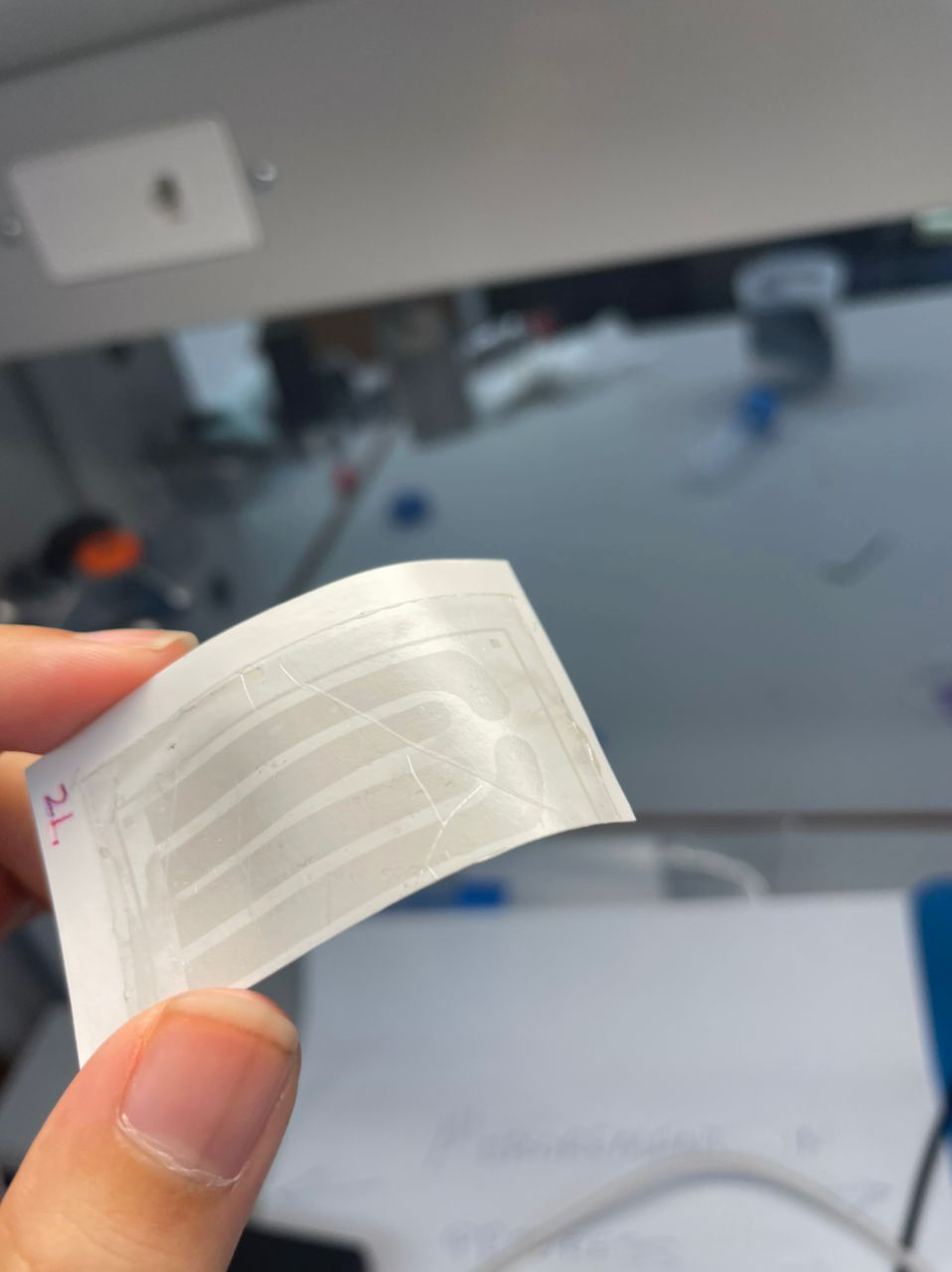
Graphene implant on tattoo paper
Photo Credit: Ning Liu/University of Texas at Austin

First graphene-based cardiac implant senses irregularities, then stimulates the heart

Researchers led by Northwestern University and the University of Texas at Austin (UT) have developed the first cardiac implant made from graphene, a two-dimensional super material with ultra-strong, lightweight and conductive properties.

Similar in appearance to a child’s temporary tattoo, the new graphene “tattoo” implant is thinner than a single strand of hair yet still functions like a classical pacemaker. But unlike current pacemakers and implanted defibrillators, which require hard, rigid materials that are mechanically incompatible with the body, the new device softly melds to the heart to simultaneously sense and treat irregular heartbeats. The implant is thin and flexible enough to conform to the heart’s delicate contours as well as stretchy and strong enough to withstand the dynamic motions of a beating heart.

After implanting the device into a rat model, the researchers demonstrated that the graphene tattoo could successfully sense irregular heart rhythms and then deliver electrical stimulation through a series of pulses without constraining or altering the heart’s natural motions. Even better: The technology also is optically transparent, allowing the researchers to use an external source of optical light to record and stimulate the heart through the device. 

Physicists find unusual waves in nickel-based magnet

(Left) In nickel molybdate crystals made of two parts nickel, three parts molybdenum and eight parts oxygen, nickel ions are subject to both tetrahedral and octahedral crystalline environments, and the ions are locked in triangular lattices in each environment. (Right) Crystal electric field spin excitons from tetrahedral sites in nickel molybdate crystals form a dispersive, diffusive pattern around the Brillouin zone boundary, likely due to spin entanglement and geometric frustrations. Left and right halves of the image show different model calculations of these patterns.
Illustration Credit: Courtesy of Bin Gao/Rice University

Perturbing electron spins in a magnet usually results in excitations called “spin waves” that ripple through the magnet like waves on a pond that’s been struck by a pebble. In a new study, Rice University physicists and their collaborators have discovered dramatically different excitations called “spin excitons” that can also “ripple” through a nickel-based magnet as a coherent wave.

In a study published in Nature Communications, the researchers reported finding unusual properties in nickel molybdate, a layered magnetic crystal. Subatomic particles called electrons resemble miniscule magnets, and they typically orient themselves like compass needles in relation to magnetic fields. In experiments where neutrons were scattered from magnetic nickel ions inside the crystals, the researchers found that two outermost electrons from each nickel ion behaved differently. Rather than aligning their spins like compass needles, the two canceled one another in a phenomenon physicists call a spin singlet.

Environmental toxin PCB found in deep sea trench

A sediment core has just been retrieved from the Atacama trench during an expedition with the research vessel R/V Sonne.
Photo Credit: Anni Glud / University of Southern Denmark

Despite being banned in numerous countries since the 1970s, PCBs continue to persist in the environment. Recent findings from deep-sea researchers reveal that PCBs have been detected at the depths of the Atacama Trench in the Pacific Ocean, highlighting the enduring impact of these toxic pollutants.

Throughout their deep-sea expedition, the research team retrieved sediment cores from multiple locations within the Atacama Trench and conducted meticulous analyses to detect PCB occurrences. Astonishingly, every single sample of surface sediment analyzed from all five locations within the trench was found to contain PCBs, indicating the widespread presence of these hazardous pollutants even in the remote depths of the ocean.

The groundbreaking study, helmed by Professor Anna Sobek from Stockholm University's Department of Environmental Science and Professor Ronnie N. Glud, esteemed director of the Danish Center for Hadal Research at the University of Southern Denmark, has been published in the prestigious scientific journal Nature Communications. This significant contribution sheds light on the alarming presence of PCBs in the Atacama Trench and underscores the urgent need for continued research and action to mitigate their adverse effects on marine ecosystems.

Featured Article

Ketamine high NOT related to treatment success for people with alcohol problems

Photo Credit:  Treedeo.St Studios Scientific Frontline: "At a Glance" Summary Main Discovery : The intensity of the acute psychede...

Top Viewed Articles