. Scientific Frontline

Saturday, November 13, 2021

Breaking down fungal biofilm defenses provides potential path to treating sticky infections

David Andes is a professor of medicine at the
University of Wisconsin School of Medicine and Public Health.
The microbes that make us sick often have ways to evade our attacks against them. Perhaps chief among these strategies is a sticky, armor-like goo, called the biofilm matrix, that encases clusters of disease-causing organisms.

This defense works, sometimes in tragic ways. For example, biofilms form readily and invisibly on medical devices like catheters and implants and are highly resistant to drugs that might otherwise treat them. The infections they cause cost tens of thousands of lives and billions of dollars a year in the U.S.

“There are no approved antimicrobials to treat biofilms. The only way to treat a biofilm is to physically remove it from the body,” says David Andes, a professor of medicine at the University of Wisconsin School of Medicine and Public Health.

In a new study designed to better understand and combat these structures, Andes and his collaborators identified some of the key proteins in biofilms of the fungus Candida albicans that control both how they resist antifungal drugs and how they become dispersed throughout the body.

While more work is necessary, the newly identified proteins provide potential drug targets to impair a pathogen’s antimicrobial defenses. In fact, the study found that Candida that could not make some of these proteins were much more sensitive to the existing antifungal fluconazole.

However, interfering with some of these same proteins made the biofilms more likely to spread to the kidney in a rat model of infection. This is a shortcoming that further research will need to address.

Friday, November 12, 2021

Could liposomes be the unsung heroes of the pandemic?

UC Berkeley engineers attached SARS-CoV-2 “spike” proteins to the surface of liposomes, creating lab-made mimics of the deadly virus called “spike-liposomes,” which, when paired with a new DNA-patterning technique, could enable efficient testing of antibody therapies. This microscope image of their technique shows that mixing spike-liposomes (top right, tagged with green fluorescent protein) with ACE2 receptor (bottom red, tagged with red fluorescent protein), results in a composite of both proteins (left), indicating that their spike-liposomes bind to ACE2 receptor in the same way as SARS-CoV-2 virus.
Image by Molly Kozminsky

Liposomes may be the unsung heroes of the COVID-19 pandemic. Without the protection of these microscopic vesicles, the delicate strands of messenger RNA (mRNA) that lie at the heart of the Pfizer and Moderna COVID-19 vaccines would be quickly destroyed by enzymes in the body, making it nearly impossible for their genetic instructions to reach the insides of human cells.

But vaccine delivery isn’t the only way that these particles can be used in the battle against COVID-19. In a new study, a team of engineers at the University of California, Berkeley, attached SARS-CoV-2 “spike” proteins to the surface of liposomes, creating lab-made mimics of the deadly virus which the researchers call “spike-liposomes.” These spike-lipsomes can be used to test the efficacy of neutralizing antibodies that could potentially be used to treat COVID-19 patients.

The study also demonstrates how a new DNA-patterning technique, developed by the team last year, can help scientists rapidly characterize and conduct experiments on a variety of different types of liposomes, and their cousins, lipid nanoparticles.

Tiny chip provides a big boost in precision optics

A 1 mm by 1 mm integrated photonic chip developed by Jaime Cardenas, assistant professor of optics, and PhD student Meiting Song (lead author) will make interferometers—and therefore precision optics—even more powerful. Potential applications include more sensitive devices for measuring tiny flaws on mirrors, or dispersion of pollutants in the atmosphere, and ultimately, quantum applications. University of Rochester photo / J. Adam Fenster

By merging two or more sources of light, interferometers create interference patterns that can provide remarkably detailed information about everything they illuminate, from a tiny flaw on a mirror, to the dispersion of pollutants in the atmosphere, to gravitational patterns in far reaches of the Universe.

“If you want to measure something with very high precision, you almost always use an optical interferometer, because light makes for a very precise ruler,” says Jaime Cardenas, assistant professor of optics at the University of Rochester.

Now, the Cardenas Lab has created a way to make these optical workhorses even more useful and sensitive. Meiting Song, a PhD student, has for the first time packaged an experimental way of amplifying interferometric signals—without a corresponding increase in extraneous, unwanted input, or “noise”—on a 1 mm by 1 mm integrated photonic chip. The breakthrough, described in Nature Communications, is based on a theory of weak value amplification with waveguides that was developed by Andrew Jordan, a professor of physics at Rochester, and students in his lab.

Electric vehicles could fully recharge in under 5 minutes with new charging station cable design

A new charging cable design developed by Purdue professor Issam Mudawar (center) and his students could reduce an electric vehicle’s charging time to under five minutes.
Purdue University photo/Jared Pike

Purdue University engineers have invented a new, patent-pending charging station cable that would fully recharge certain electric vehicles in under five minutes – about the same amount of time it takes to fill up a gas tank.

Today, chargers are limited in how quickly they can charge an EV’s battery due to the danger of overheating. To charge an EV faster, a higher current needs to travel through the charging cable. The higher the current, the greater amount of heat that must be removed to keep the charging cable operational. The cooling systems that chargers currently use remove only so much heat.

Using an alternative cooling method, Purdue researchers designed a charging cable that can deliver a current 4.6 times that of the fastest available EV chargers on the market today by removing up to 24.22 kilowatts of heat. The project was funded by a research and development alliance between Ford Motor Co. and Purdue.

Blood pressure drugs could protect against type 2 diabetes

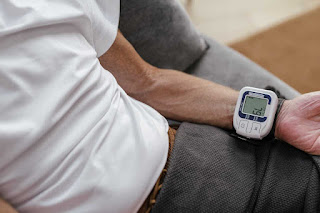
Photo by SHVETS production from Pexels
BHF-funded researchers suggest lowering blood pressure should be added as a strategy for diabetes prevention.

Lowering high blood pressure is an effective way to reduce a person’s risk of developing type 2 diabetes in the future, according to research funded by the British Heart Foundation (BHF) and published today in The Lancet.

Doctors already prescribe blood pressure-lowering drugs to reduce a person’s chance of having a life-threatening heart attack or stroke, but whether these drugs can help to stave-off diabetes has been unknown.

Now, after much uncertainty, this study reveals that their protective effects are wider reaching than previously thought and may directly reduce a person’s risk of type 2 diabetes, a condition that 13.6 million people in the UK are now estimated to be at high risk of developing.

In the most detailed study to date of over 145,000 people from 19 randomized clinical trials across the world, researchers at the Universities of Oxford and Bristol found that a 5 mmHg reduction in systolic blood pressure – which is easy to achieve through blood pressure-lowering drugs or lifestyle changes – reduced the risk of type 2 diabetes by 11 per cent. All participants were followed up for an average of 4.5 years and 9,883 people developed type 2 diabetes.

New understanding of how mesenchymal stromal cells benefit patients in cell therapy

Apoptotic MSC (red) being engulfed by a macrophage (green).
The therapeutic benefit to patients receiving mesenchymal stromal cell (MSC) therapy is not because the injected cells remain viable, but because of cell death, researchers at the Monash Biomedicine Discovery Institute (BDI) have found.

In recent years, significant efforts have been made to develop stem cell-based therapies for difficult-to-treat diseases. MSC therapy is regenerative cell-based therapy for the treatment of these diseases and has shown great promise.

The findings of the BDI study show the therapeutic effects of MSCs are due to the recipient’s immune cells responding to the MSCs undergoing a specific type of cell death, called apoptosis, after injection that brings about anti-inflammatory effects.

Apoptosis is not simply cell death. It is a regulated process that ensures dying cells do not activate unwanted inflammation but instead promote an anti-inflammatory environment.

These apoptotic cells produce extracellular factors that have anti-inflammatory or therapeutic effects which may be possible to harness as alternatives to cell-based therapies.

Led by Associate Professor Tracy Heng, the study found that by disabling apoptosis in MSCs, the cells became ineffective in mitigating disease in models of lung inflammation and multiple sclerosis, diseases in which MSCs are currently being trialed as therapeutic agents.

The findings have now been published in Nature Communications.

Evidence found of COVID Antibodies in Breast Milk of Vaccinated Mothers

Immunity from both prior infection and vaccination produces antibody response in breast milk

A study published in JAMA Pediatrics co-authored by researchers at the University of Rochester Medical Center and New York University has found evidence that mothers with two types of immunity from COVID – disease-acquired (those who have contracted COVID and recovered) and mRNA vaccination-acquired – produced breast milk with active SARS-CoV-2 antibodies.

The study, titled “Comparison of human milk antibody induction, persistence, and neutralizing capacity in response to SARS-CoV-2 infection versus mRNA vaccination” was funded by The National Institute of Allergy and Infectious Diseases (NIAID) with in-kind support from Medela LLC. Samples were collected from 77 mothers - 47 in the infected group, 30 in the vaccine group – to determine the level of antibodies in breast milk over time. Mothers who had disease-acquired immunity produced high levels of Immunoglobulin A (IgA) antibodies against the virus in breast milk, while vaccine-acquired immunity produced robust Immunoglobulin G (IgG) antibodies.

Samples of breast milk were infected with live SARS-CoV-2 virus, and both types of antibodies provided neutralization against SARS-CoV-2, the first time such evidence has been discovered for IgA and IgG antibodies, according to study co-author Bridget Young, Ph.D., assistant professor in the Division of Pediatric Allergy and Immunology at URMC.

“It’s one thing to measure antibody concentrations, but it’s another to say that antibodies are functional and can neutralize the SARS-CoV-2 virus,” said Young, “One of the exciting findings in this work is that breast milk from both mothers with COVID-19 infection, and from mothers receiving mRNA vaccination contained these active antibodies that were able to neutralize the virus.”

Thursday, November 11, 2021

Near-Earth Asteroid Might be a Lost Fragment of the Moon

An artist's impression of Earth quasi-satellite Kamo`oalewa near the Earth-moon system. Using the Large Binocular Telescope, astronomers have shown that it might be a lost fragment of the moon.
Addy Graham/University of Arizona

A near-Earth asteroid named Kamo`oalewa could be a fragment of our moon, according to a paper published today in Nature Communications Earth and Environment by a team of astronomers led by the University of Arizona.

Kamo`oalewa is a quasi-satellite – a subcategory of near-Earth asteroids that orbit the sun but remain relatively close to Earth. Little is known about these objects because they are faint and difficult to observe. Kamo`oalewa was discovered by the PanSTARRS telescope in Hawaii in 2016, and the name – found in a Hawaiian creation chant – alludes to an offspring that travels on its own. The asteroid is roughly the size of a Ferris wheel – between 150 and 190 feet in diameter – and gets as close as about 9 million miles from Earth.

Due to its orbit, Kamo`oalewa can only be observed from Earth for a few weeks every April. Its relatively small size means that it can only be seen with one of the largest telescopes on Earth. Using the UArizona-managed Large Binocular Telescope on Mount Graham in southern Arizona, a team of astronomers led by UArizona planetary sciences graduate student Ben Sharkey found that Kamo`oalewa's pattern of reflected light, called a spectrum, matches lunar rocks from NASA's Apollo missions, suggesting it originated from the moon.

Fate of Sinking Tectonic Plates is Revealed

The researchers put sinking tectonic plates through a simulated gauntlet
 of destructive geologic forces. Only when all forces were included
did the plate behave in a way that matches geophysical evidence from the surface.
Credit: Taras Gerya, David Bercovici, Thorsten Becker/Springer Nature
Our world’s surface is a jumble of jostling tectonic plates, with new ones emerging as others are pulled under. The ongoing cycle keeps our continents in motion and drives life on Earth. But what happens when a plate disappears into the planet’s interior?

The question has long puzzled scientists because conventional wisdom said that sinking tectonic plates must remain intact to keep pulling on the portion behind it, but according to geophysical evidence, they are destroyed.

Now, in a study published Nov. 11 in Nature, scientists say they’ve found an answer that reconciles the two stories: Plates are significantly weakened as they sink but not so much that they break apart entirely.

The finding came after scientists put tectonic plates through a computer-generated gauntlet of destructive geologic forces. The model showed that as the plate enters the mantle, it bends abruptly downward, cracking its cold, brittle back. At the same time, the bending changes the fine grain structure of the rock along its underbelly, leaving it weakened. Combined, the stresses pinch the plate along its weak points, leaving it mostly intact but segmented like a slinky snake.

This means the plate continues to be pulled under despite becoming folded and distorted.

Humans hastened the extinction of the woolly mammoth

New research shows that humans had a significant role in the extinction of woolly mammoths in Eurasia, occurring thousands of years later than previously thought.

An international team of scientists led by researchers from the University of Adelaide and University of Copenhagen, has revealed a 20,000-year pathway to extinction for the woolly mammoth.

“Our research shows that humans were a crucial and chronic driver of population declines of woolly mammoths, having an essential role in the timing and location of their extinction,” said lead author Associate Professor Damien Fordham from the University of Adelaide’s Environment Institute.

“Using computer models, fossils and ancient DNA we have identified the very mechanisms and threats that were integral in the initial decline and later extinction of the woolly mammoth.”

Signatures of past changes in the distribution and demography of woolly mammoths identified from fossils and ancient DNA show that people hastened the extinction of woolly mammoths by up to 4,000 years in some regions.

“Our research shows that humans were a crucial and chronic driver of population declines of woolly mammoths, having an essential role in the timing and location of their extinction.” 
Dr Damien Fordham
The Environment Institute, University of Adelaide

‘Dancing molecules’ successfully repair severe spinal cord injuries

A new injectable therapy forms nanofibers with two different bioactive signals (green and orange) that communicate with cells to initiate repair of the injured spinal cord.
Illustration by Mark Seniw

Northwestern University researchers have developed a new injectable therapy that harnesses “dancing molecules” to reverse paralysis and repair tissue after severe spinal cord injuries.

In a new study, researchers administered a single injection to tissues surrounding the spinal cords of paralyzed mice. Just four weeks later, the animals regained the ability to walk.

The research will be published in the Nov. 12 issue of the journal Science. The study is now available online.


By sending bioactive signals to trigger cells to repair and regenerate, the breakthrough therapy dramatically improved severely injured spinal cords in five key ways: (1) The severed extensions of neurons, called axons, regenerated; (2) scar tissue, which can create a physical barrier to regeneration and repair, significantly diminished; (3) myelin, the insulating layer of axons that is important in transmitting electrical signals efficiently, reformed around cells; (4) functional blood vessels formed to deliver nutrients to cells at the injury site; and (5) more motor neurons survived.

‘Wonder gas’ hailed as new treatment for diabetic foot ulcers could also kill COVID-19 virus indoors

Dr Endre Szili in his lab at UniSA's Future Industries Institute.
A new formulation developed by University of South Australia scientists to treat antimicrobial-resistant bacterial infections in diabetic foot ulcers could also be used to kill the COVID-19 virus circulating in air conditioning systems.

Enhancing cold plasma ionized gas with peracetic acid eradicates bacteria in wounds and substantially reduces SARS-CoV-2 viral loads, Australian and UK scientists claim in a paper published in Applied Physics Letters.

In an experiment to find an effective treatment for diabetic foot ulcers which are notoriously resistant to antibiotics, UniSA physicist Dr Endre Szili, in collaboration with Professor Rob Short at Lancaster University and British colleagues at the University of Bath, GAMA Healthcare and AGA Nanotech, made an unexpected discovery.

“By combining cold plasma gas with acetyl donor molecules to improve its oxidation action, we found it completely killed bacteria that are found in chronic wounds,” according to lead researcher Dr Szili.

“We then investigated whether this same technology could be effective at killing the SARS-CoV-2 virus and it appears that it is.

“We showed that we could achieve an 84 per cent reduction in viral load using plasma combined with acetyl donor molecules based on a standard dosage that is safe for human cells. However, it is highly possible with some modifications that we could eradicate it completely.”

Global Temperatures Over Last 24,000 Years Show Today's Warming 'Unprecedented'

Global average surface temperature since the last ice age 24,000 years ago. Time is stretched for the past 1000 years to visualize recent changes.
Credit: Matthew Osman

A University of Arizona-led effort to reconstruct Earth's climate since the last ice age, about 24,000 years ago, highlights the main drivers of climate change and how far out of bounds human activity has pushed the climate system.

The study, published Wednesday in Nature, has three main findings:

It verifies that the main drivers of climate change since the last ice age are rising greenhouse gas concentrations and the retreat of the ice sheets.

It suggests a general warming trend over the last 10,000 years, settling a decade-long debate the paleoclimatology community about whether this period trended warmer or cooler.

The magnitude and rate warming over the last 150 years far surpasses the magnitude and rate of changes over the last 24,000 years.

"This reconstruction suggests that current temperatures are unprecedented in 24,000 years, and also suggests that the speed of human-caused global warming is faster than anything we've seen in that same time," said Jessica Tierney, a UArizona geosciences associate professor and co-author of the study.

New method to detect Tatooine-like planets validated

A new technique developed in part by University of Hawaiʻi astronomer Nader Haghighipour has allowed scientists to quickly detect a transiting planet with two suns.

Termed circumbinary planets, these objects orbit around a pair of stars. For years, these planets were merely the subject of science fiction, like Tatooine in Star Wars. However, thanks to NASA’s successful planet-hunting Kepler and Transiting Exoplanet Survey Satellite (TESS) missions, a team of astronomers, including Haghighipour, have found 14 such bodies so far.

Kepler and TESS detect planets via the transit method, where astronomers measure the tiny dimming of a star as a planet passes in front of its host star, blocking some of the starlight. Usually, astronomers need to see at least three of these transits to pin down the planet’s orbit. This becomes challenging when there are two host stars.

“Detecting circumbinary planets is much more complicated than finding planets orbiting single stars. When a planet orbits a double-star system, transits of the same star don’t occur at consistent intervals,” explained Haghighipour. “The planet might transit one star, and then transit the other, before transiting the first star again, and so on.”

Domestic cats drive spread of Toxoplasma parasite to wildlife

Shelby Credit: Heidi-Ann Fourkiller
New UBC research suggests free-roaming cats are likely to blame in the spread of the potentially deadly Toxoplasma gondii parasite to wildlife in densely populated urban areas.

The study—the first to analyze so many wildlife species over a global scale—also highlights how healthy ecosystems can protect against these types of pathogens.

The researchers, led by UBC faculty of forestry adjunct professor Dr. Amy Wilson, examined 45,079 cases of toxoplasmosis in wild mammals—a disease that has been linked to nervous system disorders, cancers and other debilitating chronic conditions—using data from 202 global studies.

They found wildlife living near dense urban areas were more likely to be infected.

“As increasing human densities are associated with increased densities of domestic cats, our study suggests that free-roaming domestic cats—whether pets or feral cats—are the most likely cause of these infections,” says Dr. Wilson.

“This finding is significant because by simply limiting free roaming of cats, we can reduce the impact of Toxoplasma on wildlife.”

One infected cat can excrete as many as 500 million Toxoplasma oocysts (or eggs) in just two weeks. The oocysts can then live for years in soil and water with the potential to infect any bird or mammal, including humans. Toxoplasmosis is particularly dangerous for pregnant people.

Featured Article

What Is: Macrophage

A realistic scientific visualization of a macrophage, a crucial immune cell, actively engulfing bacteria with its extended pseudopods. The i...

Top Viewed Articles