. Scientific Frontline

Wednesday, August 31, 2022

Climate change and ocean oxygen

Oxygen-deficient zones (in red) shrank during long warm periods in the past, contrary to widespread expectations.   
Image Credit: Alexandra Auderset, Princeton and MPIC

In the last 50 years, oxygen-deficient zones in the open ocean have increased. Scientists have attributed this development to rising global temperatures: Less oxygen dissolves in warmer water, and the tropical ocean’s layers can become more stratified.

But now, contrary to widespread expectations, an international team of scientists led by researchers from the Max Planck Institute for Chemistry and Princeton University has discovered that oxygen-deficient zones shrank during long warm periods in the past.

“We had not expected such a clear effect,” said Alexandra Auderset, first author of the new paper in the journal Nature and currently a visiting postdoctoral research fellow at Princeton University. She led the study with Alfredo Martínez-García at the Max Planck Institute for Chemistry in Mainz, as part of a long-term collaboration with Daniel Sigman’s group at Princeton University.

Understanding these changes is important because “when oxygen becomes scarce, life has a harder time,” said Sigman, Dusenbury Professor of Geological and Geophysical Sciences. For example, in low-oxygen regions of the eastern Pacific and northern Indian Ocean, only specialized microbes and organisms with a slow metabolism — such as jellyfish — can survive.

Marine Protected Areas in Antarctica should include young emperor penguins, scientists say

A group of Juvenile emperor penguins at Atka Bay on the sea ice edge ready for their first swim. In four years, they will return to breed, spending much of their time in unprotected areas of the Southern Ocean.
Image credit: Daniel P. Zitterbart/ ©Woods Hole Oceanographic Institution

Scientists at the Woods Hole Oceanographic Institution (WHOI) and European research institutions are calling for better protections for juvenile emperor penguins, as the U.S. Fish and Wildlife Service considers listing the species under the Endangered Species Act and the Commission for the Conservation of Antarctic Marine Living Resources (CCAMLR) considers expanding the network of Marine Protected Areas (MPAs) in the Southern Ocean.

In one of the few long-term studies of juvenile emperor penguins–and the only study focused on a colony on the Weddell Sea–research published today in Royal Society Open Science found that the young birds spend about 90 percent of their time outside of current and proposed MPAs. The study, which tracked eight penguins with satellite tags over a year, also found that they commonly traveled over 1,200 kilometers (745 miles) beyond the species range defined by the International Union for Conservation of Nature (IUCN), which is based on studies of adult emperor penguins from a few other colonies.

Considered immature until about 4 years of age, juvenile emperor penguins are more vulnerable than adults because they have not fully developed foraging and predator avoidance skills. As climate change reduces sea-ice habitat and opens up new areas of the Southern Ocean to commercial fishing, the researchers conclude that greatly expanded MPAs are crucial to protect this iconic, yet threatened, penguin species at every life stage.

Brain activity during sleep differs in young people with genetic risk of psychiatric disorders

Photo by Lux Graves on Unsplash

Young people living with a genetic alteration that increases the risk of psychiatric disorders have markedly different brain activity during sleep, a study led by researchers from the Universities of Bristol and Cardiff published in the journal eLife shows.

The brain activity patterns during sleep shed light on the neurobiology behind a genetic condition called 22q11.2 Deletion Syndrome (22q11.2DS) and could be used as a biomarker to detect the onset of neuropsychiatric disorders in people with 22q11.2DS.

Caused by a gene deletion of around 30 genes on chromosome 22, 22q11.2DS occurs in one in 3000 births. It increases the risk of intellectual disability, autism spectrum disorder (ASD), attention-deficit hyperactivity disorder (ADHD) and epileptic seizures. It is also one of the largest biological risk factors for schizophrenia. However, the biological mechanisms underlying psychiatric symptoms in 22q11.2DS are unclear.

Marianne van den Bree, co-senior author and Professor of Psychological Medicine at Cardiff said: “We have recently shown that the majority of young people with 22q11.2DS have sleep problems, particularly insomnia and sleep fragmentation, that are linked with psychiatric disorders. However, our previous analysis was based on parents reporting on sleep quality of their children, and the neurophysiology – what’s happening to brain activity – has not yet been explored.”

Scientists Determined Content of Harmful Substances in Ekaterinburg Mud

In Ekaterinburg, scientists made more than 60 mud samples.
Photo credit: Ilya Safarov

Scientists at Ural Federal University and the Institute of Industrial Ecology Ural Branch of the Russian Academy of Sciences, together with their colleagues from Southern Federal University, Egypt and Saudi Arabia, have studied the concentration of potentially harmful substances in surface sediments in Ekaterinburg and identified possible sources of pollution. The research contributes to the development and adoption of standards for the content of harmful substances in mud. The results of the research, funded by the Russian Science Foundation (Project №18-77-10024), are described in the journal Chemosphere.

Over several seasons, scientists took more than 60 mud samples collected at the same sites: first, in green areas with flower beds and lawns, second, from roads and, third, from neighborhoods, parking lots and sidewalks in residential areas of the 1.5 million metropolises. Dirt samples were dried under laboratory conditions for several weeks and then passed through a 1-mm sieve. The resulting dust was analyzed.

"In samples from all surveyed areas the highest concentrations of iron and manganese are found, as they are contained in rocks and soils, on which Yekaterinburg is located. Dust from green areas, in addition, has high concentrations of zinc and lead, in samples from roads - cobalt, nickel, tin and antimony, dust from yard passages, parking lots and sidewalks is full of zinc and copper," says Andrian Seleznev, Associate Professor of Department of Health and Safety at UrFU, Senior Scientist of Industrial Ecology Ural Branch of the Russian Academy of Sciences.

Archaeology and ecology combined sketch a fuller picture of past human-nature relationships

Hunting of a deer. Wall painting, 6th millennium BC. Museum of Anatolian Civilizations, Ankara.
 Image source: Wikimedia Commons

For decades now, archaeologists wielded the tools of their trade to unearth clues about past peoples, while ecologists have sought to understand current ecosystems. But these well-established scientific disciplines tend to neglect the important question of how humans and nature interacted and shaped each other across different places and through time. An emerging field called archaeoecology can fill that knowledge gap and offer insights into how to solve today’s sustainability challenges, but first, it must be clearly defined. A new paper by SFI Complexity Fellow Stefani Crabtree and Jennifer Dunne, SFI’s Vice President for Science, lays out the first comprehensive definition of archaeoecology and calls for more research in this nascent but important field.

While an archaeology or palaeobiology study might examine a particular relationship, such as how humans in New Guinea raised cassowaries during the Late Pleistocene, archaeoecology takes a much broader view. “It’s about understanding the whole ecological context, rather than focusing on one or two species,” Dunne explains.

3D imaging contributes to a better understanding of early stages of Alzheimer's disease

Three-dimensional image of noradrenergic nerve cells in the envelope of locus coeruleus.
Photo credit: Gilvesy et al.

With the help of a new imaging technique for 3D, researchers at Karolinska Institutet, among others, have been able to characterize a part of the brain that shows the most accumulation of tau protein, an important biomarker for the development of Alzheimer's disease. The results published in the journal Acta Neuropathologica may in the future make it possible to have a more accurate neuropathological diagnosis of Alzheimer's disease spectrum at a very early stage.

Intracellular accumulation of pathological tau protein in the brain is a hallmark of several age-related neurodegenerative diseases, including Alzheimer's disease, which accounts for 60-80 percent of all dementia cases worldwide.

In a new study, researchers at Karolinska Institutet, SciLifeLab in Stockholm and several universities from Hungary, Canada, Germany and France have applied a state-of-the-art immune imaging technology, in combination with light sheet microscopy, to investigate a human brain stem core, locus coeruleus, which is an important core in the mammalian brain.

Tuesday, August 30, 2022

How Prehistoric Humans Simplified the World’s Food Webs

Illustration depicting all mammal species that would inhabit Southern California today if not for human-linked extinction. Extinct species appear in black and white.
Credit: Oscar Sanisidro/University of Alcalá

Research conducted with the help of a University at Albany anthropologist has revealed the cascading effects that humans have had on mammal declines and their food webs over the last 130,000 years, a new study in the journal Science shows.

The study, which was carried out by researchers in the United States, United Kingdom, Denmark and Spain, set out to determine the magnitude of food web loss among mammals since the Late Pleistocene, following the arrival and expansion of human populations around the world.

“We’ve known for a long time that as humans spread out of Africa, everywhere they went, waves of animal extinctions followed their arrival,” said John Rowan, an assistant professor of anthropology at UAlbany who co-authored the study. “When humans got to North America, there were saber-toothed cats, dire wolves, mammoths, mastodons and giant bears. But all these animals start to disappear soon after our species show up.”

While scientists were aware of the human link to mammal extinctions, little was understood regarding how those losses reverberated throughout food webs, which characterize how species interact with one another in an ecosystem. Extinction alone can impact the links in a food web, but so can reductions and shifts in geographic range due to human impacts, such as habitat destruction.

Scientists Grow Lead-Free Solar Material With a Built-In Switch

Light microscopy image of nanowires, 100 to 1,000 nanometers in diameter, grown from cesium germanium tribromide (CGB) on a mica substrate. The CGB nanowires are samples of a new lead-free halide perovskite solar material that is also ferroelectric.
Credit: Peidong Yang and Ye Zhang/Berkeley Lab

Solar panels, also known as photovoltaics, rely on semiconductor devices, or solar cells, to convert energy from the sun into electricity.

To generate electricity, solar cells need an electric field to separate positive charges from negative charges. To get this field, manufacturers typically dope the solar cell with chemicals so that one layer of the device bears a positive charge and another layer a negative charge. This multilayered design ensures that electrons flow from the negative side of a device to the positive side – a key factor in device stability and performance. But chemical doping and layered synthesis also add extra costly steps in solar cell manufacturing.

Now, a research team led by scientists at DOE’s Lawrence Berkeley National Laboratory (Berkeley Lab), in collaboration with UC Berkeley, has demonstrated a unique workaround that offers a simpler approach to solar cell manufacturing: A crystalline solar material with a built-in electric field – a property enabled by what scientists call “ferroelectricity.” The material was reported earlier this year in the journal Science Advances.

Researchers produce nanodiamonds capable of delivering medicinal and cosmetic remedies through the skin

Nanodiamond applied on skin samples and penetrated through all skin layers: nanodiamond concentration reduces as the layer is deeper
Credit: Prof. Dror Fixler, Bar-Ilan University 

The skin is one of the largest and most accessible organs in the human body, but penetrating its deep layers for medicinal and cosmetic treatments still eludes science.

Although there are some remedies -- such as nicotine patches to stop smoking -- administered through the skin, this method of treatment is rare since the particles that penetrate must be no larger than 100 nanometers (one thousandth of a centimeter). Creating effective tools using such tiny particles is a great challenge. Because the particles are so small and difficult to see, it is equally challenging to determine their exact location inside the body – information necessary to ensure that they reach the intended target tissue. Today such information is obtained through invasive, often painful, biopsies.

A novel approach, developed by researchers at Bar-Ilan University in Israel, provides an innovative solution to overcoming both of these challenges. Combining techniques in nanotechnology and optics, they produced tiny (nanometric) diamond particles so small that they are capable of penetrating skin to deliver medicinal and cosmetic remedies. In addition, they created a safe, laser-based optical method that quantifies nanodiamond penetration into the various layers of the skin and determines their location and concentration within body tissue in a non-invasive manner – eliminating the need for a biopsy.

X-shaped radio galaxies might form more simply than expected


When astronomers use radio telescopes to gaze into the night sky, they typically see elliptical-shaped galaxies, with twin jets blasting from either side of their central supermassive black hole. But every once in a while, — less than 10% of the time — astronomers might spot something special and rare: An X-shaped radio galaxy, with four jets extending far into space.

Although these mysterious X-shaped radio galaxies have confounded astrophysicists for two decades, a new Northwestern University study sheds new insight into how they form — and its surprisingly simple. The study also found that X-shaped radio galaxies might be more common than previously thought.

The study was published in the Astrophysical Journal Letters. It marks the first large-scale galaxy accretion simulation that tracks the galactic gas far from the supermassive black hole all the way toward it.

Simple conditions lead to messy result

Using new simulations, the Northwestern astrophysicists implemented simple conditions to model the feeding of a supermassive black hole and the organic formation of its jets and accretion disk. When the researchers ran the simulation, the simple conditions organically and unexpectedly led to the formation of an X-shaped radio galaxy.

Dolphins form largest alliance network outside humans

Male trio with female.
Credit: Dr Simon Allen

Male bottlenose dolphins form the largest known multi-level alliance network outside humans, an international team led by researchers at the University of Bristol have shown. These cooperative relationships between groups increase male access to a contested resource.

The scientists, with colleagues from the University of Zurich and University of Massachusetts, analyzed association and consortship data to model the structure of alliances between 121 adult male Indo-Pacific bottlenose dolphins at Shark Bay in Western Australia. Their findings have been published in The Proceedings of the National Academy of Sciences (PNAS).

Male dolphins in Shark Bay form first-order alliances of two-three males to cooperatively pursue consortships with individual females. Second-order alliances of four-14 unrelated males compete with other alliances over access to female dolphins and third-order alliances occur between cooperating second-order alliances.

Co-lead author Dr Stephanie King, Associate Professor from Bristol’s School of Biological Sciences explained: “Cooperation between allies is widespread in human societies and one of the hallmarks of our success. Our capacity to build strategic, cooperative relationships at multiple social levels, such as trade or military alliances both nationally and internationally, was once thought unique to our species.

“Not only have we shown that male bottlenose dolphins form the largest known multilevel alliance network outside humans, but that cooperative relationships between groups, rather than simply alliance size, allows males to spend more time with females, thereby increasing their reproductive success.”

University Created Glass with Outstanding Radiation Protection Properties

Boron-based glass is one of the best known and highest quality systems.
Photo credit: Ilya Safarov

Physicists at Ural Federal University, together with colleagues from universities in Germany, Pakistan, and Egypt, have synthesized new glass with outstanding radiation protection properties. The glass can be used in such fields as nuclear medicine, astronaut spacesuits, and spacecraft production. An article about the research was published in the Journal of Inorganic and Organometallic Polymers and Materials.

A novel boro-bariofluoride sodium calcium nickel glasses were created using a conventional melt-hardening technique. By heating the composition to melting temperature and then abruptly cooling it to room temperature, the researchers obtained a homogeneous mixture of boron oxide, barium fluoride, calcium oxide, sodium oxide, and nickel oxide.

"Research of physical and optical properties of glasses synthesized in this way showed that as nickel oxide is added to the composition, all optical characteristics of the initial boro-bariofluoride and sodium-calcium glass samples obtained from it improve. The density of glasses increases, the absorption spectrum increases, shifting towards longer wavelengths of radiation, and the ability of the system to shield photons carrying electromagnetic radiation increases," explains Ali Abouhaswa, Senior Researcher of the Section of Solid State Magnetism at UrFU, a co-author of the article.

According to the scientist, the adding of nickel oxide makes the glass applicable to optoelectronic and photoelectric devices, such as gas sensors, UV-photosensors, photovoltaic cells, photocatalysts, and electrochromic devices.

Novel Coronaviruses Are Riskiest for Spillover

A wildlife surveillance team member samples a bumblee bat for viruses in Myanmar.
Credit: Smithsonian Conservation Biology Institute

In the past decade, scientists have described hundreds of novel viruses with the potential to pass between wildlife and humans. But how can they know which are riskiest for spillover and therefore which to prioritize for further surveillance in people?

Scientists from the University of California, Davis created network-based models to prioritize novel and known viruses for their risk of zoonotic transmission, which is when infectious diseases pass between animals and humans.

Their study, published in the journal Communications Biology, provides further evidence that coronaviruses are riskiest for spillover and should continue to be prioritized for enhanced surveillance and research.

The machine learning models were designed by the EpiCenter for Disease Dynamics at the UC Davis One Health Institute in the School of Veterinary Medicine.

Prioritizing novel viruses

The models found that novel viruses from the coronavirus family are expected to have a larger number of species as hosts. This is consistent with known viruses, indicating this family of viruses should be most highly prioritized for surveillance.

‘Long COVID’ effects on business and education

Wenlong Yuan is the Stu Clark Chair in Entrepreneurship and Innovation at UM
Credit: University of Manitoba

The pandemic has affected many aspects of our lives, from health consequences to collateral damage to restaurants and “mom and pop stores.” Supply chain problems have created panic shopping among consumers and many entertainment venues have seen the number of patrons decimate.

But what about large corporations such as Wal-Mart, BMO, or Exxon? What has COVID done to them?

Wenlong Yuan is the Stu Clark Chair in Entrepreneurship and Innovation at the UM Asper School of Business. His current research includes the implications of the COVID-19 pandemic for international business strategy and small and medium-sized enterprises (SMEs).

“Every kind of firm was affected by COVID,” he says, “so on the macro level we can see a very broad impact of the pandemic. Smaller businesses were hit worse than larger companies, mostly because they had fewer employees, and they couldn’t operate when even a few were sick. But nevertheless, larger businesses felt the effects too.”

Yuan says that previous to COVID, global markets were linked to one another and increases in one sector usually meant a parallel increase in another, like oil and tech stocks varying together.

But COVID created a situation where decoupling emerged, so that the economies of traditionally linked countries began doing their own thing.

Rat lungworm transmitted by many more species than slugs, snails

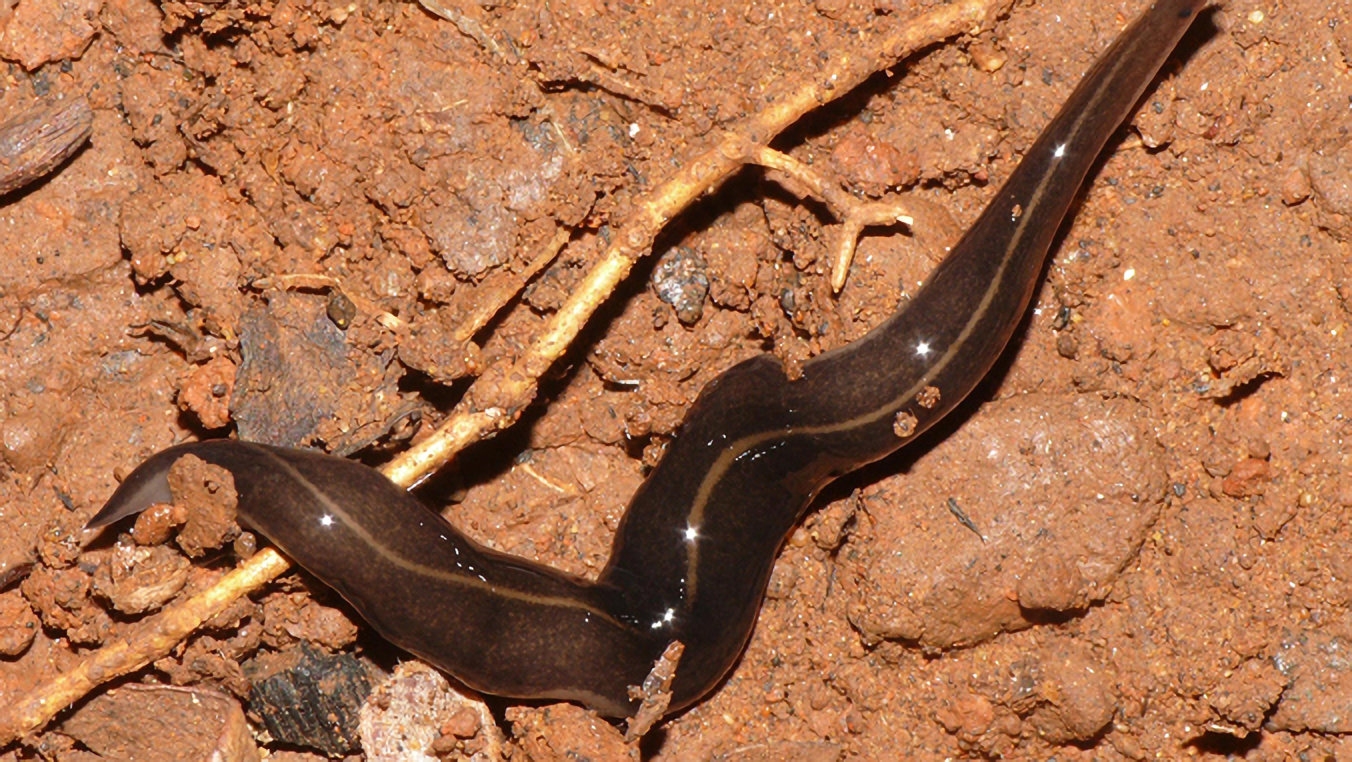
Flatworm in Hawaiʻi can act as a paratenic host of rat lungworm.
Photo credit: Shinji Sugiura CC4

While many people know that rat lungworm disease can be spread to humans by slugs and snails, new research shows those creatures are not the only ones that have been transmitting the illness.

Researchers from the University of Hawaiʻi at Mānoa and the University of London, UK, combed through nearly 140 scientific studies published between 1962–2022 and found 32 species of freshwater prawns/shrimp, crayfish, crabs, flatworms, fish, sea snakes, frogs, toads, lizards, centipedes, cattle, pigs and snails can act as carriers of the rat lungworm parasite (Angiostrongylus cantonensis). Of these, at least 13 species of prawns/shrimp, crabs, flatworms, fish, frogs, toads, lizards and centipedes have been associated with causing rat lungworm disease in humans.

Robert Cowie, senior author on the study and faculty member in UH Mānoa’s School of Ocean and Earth Science and Technology (SOEST), supervised Helena Turck, first author and graduate student at the University of London, UK, who did this study as her master’s degree thesis research, remotely during the pandemic. Professor Mark Fox of the Royal Veterinary College also collaborated on the study.

Cowie explained that the rat lungworm has a complex life cycle that involves slugs and snails as so-called “intermediate” hosts and rats as “definitive” hosts in which the worms reach maturity and reproduce. Rats become infected when they eat an infected snail or slug. People also become infected when they eat an infected snail or slug, and this can lead to serious illness and occasionally death.

Featured Article

What Is: Abyssopelagic Zone

A master of abyssopelagic survival, the anglerfish overcomes absolute darkness and sparse food supplies with a specialized, light-producing ...

Top Viewed Articles