. Scientific Frontline: Search results for Biofilm
Showing posts sorted by date for query Biofilm. Sort by relevance Show all posts

Saturday, June 20, 2026

What Is: A Biofilm

A macroscopic view of biofilm on a metal surface.

Scientific Frontline: Extended "At a Glance" Summary
: The Biofilm Paradigm

The Core Concept: A biofilm is a highly organized, cooperative, and surface-attached microbial community encased within a self-produced polymeric matrix. It represents a fundamental evolutionary transition from an isolated, free-floating cellular existence to a complex, resilient, quasi-multicellular architectural state.

Key Distinction/Mechanism: Unlike planktonic (free-swimming) bacteria, which are highly vulnerable to environmental stressors and reliant on individual metabolic efficiency, biofilm-dwelling cells utilize quorum sensing (chemical communication) to synchronize gene expression. This communal state induces a phenotypic shift, resulting in shared metabolic labor, structured resource channels, and profound environmental shielding provided by an Extracellular Polymeric Substance (EPS) matrix.

Major Frameworks/Components:

  • Planktonic State: The free-swimming, isolated mode of bacterial life utilized primarily for spatial dispersal.
  • Sessile State: The surface-attached, immobile phase of persistent colonization.
  • Extracellular Polymeric Substance (EPS): A hydrated, biochemical matrix composed of polysaccharides, proteins, lipids, and extracellular DNA (eDNA) that provides structural scaffolding and a protective barrier.
  • Cyclic di-GMP (c-di-GMP): The ubiquitous intracellular second messenger that functions as the master regulatory switch dictating the physiological transition between planktonic motility and sessile biofilm formation.

Thursday, April 16, 2026

What Is: Quorum Sensing


Scientific Frontline: Extended "At a Glance" Summary
: Quorum Sensing

The Core Concept: Quorum sensing is a sophisticated, population-density-dependent communication mechanism that enables bacteria and other microorganisms to coordinate collective behaviors through the secretion and detection of specialized chemical signaling molecules.

Key Distinction/Mechanism: Unlike isolated cellular functions, quorum sensing operates as a biochemical network where chemical signals called autoinducers accumulate as the microbial population multiplies. Once the extracellular concentration reaches a critical threshold, they bind to specialized receptors, triggering synchronized, community-wide gene expression alterations that control behaviors such as bioluminescence, virulence, and biofilm formation.

Origin/History: While the evolutionary roots of these systems trace back approximately 2.5 billion years—when mechanisms like bioluminescence likely evolved to protect early bacteria from severe oxidative damage—modern foundational phenomena were first observed in 1968 in the marine bacterium Vibrio fischeri. Researchers Woody Hastings and Kenneth Nealson later determined these bacteria communicated via secreted molecules, a process initially termed "autoinduction" before "quorum sensing" was widely adopted in 1994.

Thursday, April 9, 2026

How microbes survive in the plastisphere

Confocal laser scanning microscopy image of the plastisphere collected from plastic waste in the Pacific Ocean. The image shows the biological components that coexist in close proximity within the plastisphere: green – bacteria, blue – algae, red – extracellular sugar matrix, white – fungal hyphae.
   Photo Credit: Dr Thomas Neu/UFZ

Scientific Frontline: Extended "At a Glance" Summary
: The Plastisphere

The Core Concept: The "plastisphere" is a novel marine ecosystem composed of a diverse community of microorganisms—including bacteria, viruses, fungi, and algae—that colonize and thrive on the persistent plastic particles polluting the world's oceans.

Key Distinction/Mechanism: Unlike naturally occurring marine plankton, which have evolved reduced genomes suited for nutrient-poor pelagic environments, microbes in the plastisphere possess significantly larger genomes with multiple functional gene copies. This biological adaptation allows the plastisphere biofilm to efficiently absorb nutrients, repair ultraviolet radiation damage, and utilize shared metabolic pathways, effectively creating localized, nutrient-rich niches in the open ocean.

Major Frameworks/Components:

  • Metagenomic Sequencing: Analyzing the total environmental DNA of biological communities residing on ocean macroplastics to compare their structural and functional composition against naturally occurring plankton.
  • Functional Gene Analysis: The examination of approximately 340 key functional genes responsible for nutrient uptake, carbon degradation, and rapid genomic repair mechanisms.
  • Alternative Energy Utilization: The capacity of plastisphere microbes to employ alternative energy strategies, such as anoxygenic photosynthesis, to survive the extreme conditions of the ocean surface.
  • Biomass Potential: The detection of elevated chlorophyll a concentrations, indicating that the biofilm has the potential to generate comparatively more biomass than surrounding plankton communities.

Tuesday, March 31, 2026

Viruses ‘eavesdrop’ on each other – but it can backfire

A colony of Bacillus subtilis grown on solid medium. These structured communities reflect how bacteria can organise & grow collectively.
Image Credit Elvina Smith

Scientific Frontline: Extended "At a Glance" Summary
: Viral Eavesdropping and Arbitrium Systems

The Core Concept: Phages (viruses that infect bacteria) utilize chemical signals to communicate and can "eavesdrop" on the signals of other viral species, a process that can manipulate the eavesdropping virus into adopting a disadvantageous infection strategy.

Key Distinction/Mechanism: When infecting a host cell, phages must decide whether to replicate and kill the host (lysis) or remain dormant (lysogeny). They use chemical signals called peptides (part of the "arbitrium" system) to assess host availability; high peptide levels indicate scarce hosts (favoring dormancy), while low levels indicate abundant hosts (favoring lysis). However, cross-species eavesdropping can cause a listening virus to mistakenly choose dormancy, ultimately benefiting the signaling virus by eliminating competition.

Major Frameworks/Components:

  • Arbitrium Communication Systems: The specific peptide-based chemical signaling networks used by phages to coordinate infection strategies.
  • Lysis-Lysogeny Decision: The fundamental biological choice a virus makes upon infecting a cell, determining whether it will actively replicate and destroy the cell or integrate and lie dormant.
  • Inter-Species Cross-Talk: The phenomenon where signals intended for intra-species coordination are intercepted by unrelated viral species.
  • Viral Manipulation: The evolutionary dynamic where communication serves not just as cooperation, but as a mechanism for one species to suppress the competitive reproduction of another.

Monday, March 16, 2026

Ocean bacteria team up to break down biodegradable plastic

“This shows plastic biodegradation is highly dependent on the microbial community where the plastic ends up,” says Marc Foster.
Image Credit: MIT News; iStock
(CC BY-NC-ND 3.0)

Scientific Frontline: "At a Glance" Summary
: Marine Microbial Degradation of Biodegradable Plastics

  • Main Discovery: A consortium of ocean bacteria works collaboratively to break down aromatic aliphatic co-polyesters, with the species Pseudomonas pachastrellae depolymerizing the plastic and complementary bacteria consuming the resulting chemical subunits.
  • Methodology: Researchers submerged plastic samples in the Mediterranean Sea to cultivate bacterial biofilms, isolated 30 distinct species, and systematically tested their metabolic capabilities using carbon dioxide tracking to monitor the mineralization process.
  • Key Data: The polymer breakdown yielded three distinct chemical components: terephthalic acid, sebacic acid, and butanediol. A streamlined consortium of exactly five complementary bacterial species achieved the same total degradation rate as the original 30-member community, whereas single species failed entirely.
  • Significance: The study proves that environmental plastic biodegradation relies heavily on synergistic microbial communities rather than individual organisms, fundamentally shifting how the environmental lifespan of biodegradable materials is calculated.
  • Future Application: These findings provide a foundational framework for engineering optimized microbial recycling systems capable of accelerating plastic degradation or converting polymer waste into valuable chemical resources.
  • Branch of Science: Environmental Microbiology, Marine Biology, Polymer Chemistry.
  • Additional Detail: The identified five-member bacterial consortium exhibited strict metabolic specificity, successfully mineralizing the targeted co-polyester but failing entirely to degrade alternative plastic formulations.

Sunday, February 8, 2026

What Is: Conservation

The Architecture of Co-Extinction.
This conceptual model illustrates the cascading failure of biophysical systems, from trophic peaks to the microscopic foundations of the soil, demonstrating why the defense of a single species is the defense of an entire functional web.
Image Credit: Scientific Frontline

Scientific Frontline: Extended "At a Glance" Summary

The Core Concept: Conservation is the active, mission-oriented defense of the biophysical systems—including species, genetic sequences, and hydrological cycles—that sustain life on Earth. Far from a passive preservation of wilderness, it is a "crisis discipline" functioning as the applied science of preventing the structural collapse of the biological tapestry.

Key Distinction/Mechanism: While ecology is the study of relationships between organisms and their environment, conservation is the interventionist practice of maintaining those relationships against anthropogenic disruption. It operates on a "non-equilibrium paradigm," rejecting the old idea of nature as a static, self-balancing painting in favor of viewing ecosystems as dynamic, chaotic engines where the loss of a single component can trigger cascading failures.

Major Frameworks/Components:

  • Trophic Cascades: The "top-down" regulation of ecosystems where the presence of apex predators (like wolves) alters prey behavior and physical geography (e.g., river hydrology).
  • Co-Extinction: The phenomenon where the extinction of a host species triggers the "hidden extinction" of dependent affiliates, such as specialized parasites or pollinators.
  • The Landscape of Fear: A mechanism where predators force prey to avoid vulnerable areas, allowing riparian vegetation to recover and stabilize stream banks.
  • Biofiltration: The use of biological agents, from freshwater mussels to wetland root zones, to filter pollutants and cycle nutrients like nitrogen.
  • Rewilding: A strategy of active restoration involving the reintroduction of keystone species (e.g., beavers) to jumpstart stalled ecosystem processes.

Branch of Science: Conservation Biology, Ecology, Environmental Science, and Restoration Ecology.

Future Application:

  • Industrial Biofiltration: Engineering biofilters and bioscrubbers that utilize microorganisms to metabolize industrial toxins from air and wastewater streams.
  • Urban Phytoremediation: Strategic afforestation in megacities (e.g., Beijing's "Million Mu" project) to physically intercept particulate matter and metabolize gaseous pollutants.
  • Corridor Design: Creating continental-scale wildlife corridors (like "Yellowstone to Yukon") to facilitate species migration in response to climate change.

Why It Matters: Conservation preserves the literal machinery of the planet. It prevents the "domino effect" of biodiversity loss, where the removal of a single species compromises global carbon sequestration, soil stability, and water filtration, demonstrating that the defense of a single species is ultimately the defense of the entire functional web.

Tuesday, November 25, 2025

Microplastics pose a human health risk in more ways than one

Bio-beads collected near Truro.
Photo Credit Beach Guardian

A new study shows that microplastics in the natural environment are colonized by pathogenic and antimicrobial resistant bacteria. The study team calls for urgent action for waste management and strongly recommends wearing gloves when taking part in beach cleans. 

Microplastics are plastic particles less than 5mm in size and are extremely widespread pollutants. It is estimated that over 125 trillion particles have accumulated in the ocean (surface to seabed) and they have also been detected in soils, rivers, lakes, animals and the human body. 

An emerging concern associated with microplastics is the microbial communities that rapidly make their home on the particle surface, forming complex biofilms known as the “Plastisphere”. These communities may often include pathogenic (disease-causing) or antimicrobial resistant (AMR) bacteria. 

Tuesday, March 5, 2024

Possible ‘Trojan Horse’ found for treating stubborn bacterial infections

Transmission electron microscope (TEM) image of the bacterial cell with an extracellular vesicle attached.
Image Credit: Courtesy of Washington State University

Bacteria can be tricked into sending death signals to stop the growth of their slimy, protective homes that lead to deadly infections, a new study demonstrates.

The discovery by Washington State University researchers could someday be harnessed as an alternative to antibiotics for treating difficult infections. Reporting in the journal Biofilm, the researchers used the messengers, which they named death extracellular vesicles (D-EVs), to reduce growth of the bacterial communities by up to 99.99% in laboratory experiments.

“Adding the death extracellular vesicles to the bacterial environment, we are kind of cheating the bacteria cells,” said Mawra Gamal Saad, first author on the paper and a graduate student in WSU’s Gene and Linda Voiland School of Chemical Engineering and Bioengineering. “The cells don’t know which type of EVs they are, but they take them up because they are used to taking them from their environment, and with that, the physiological signals inside the cells change from growth to death.”

Thursday, February 15, 2024

Innovative materials to combat bacteria

Three bacteria from the ESKAPE group: Staphylococcus aureus (yellow), Pseudomonas aeruginosa (short thick blue rods) and Escherichia coli (long blue rods).
Image Credit: © UNIGE

While crucial to biotechnology, bacteria can also cause severe disease, exacerbated by their increasing resistance to antibiotics. This duality between economic benefits and infectious risks underlines the importance of finding ways to control their development. A team at the University of Geneva (UNIGE) is currently developing a new generation of bactericidal alloys, with a wide range of industrial applications. They could be used to treat the contact surfaces responsible for their transmission. The project, which is supported by Innosuisse, will take 18 months to complete.

Resistance to antimicrobial drugs - such as antibiotics and antivirals - is a global public health issue. According to the World Health Organization (WHO), it is currently responsible for 700,000 deaths a year worldwide. If no action is taken, the number of deaths will rise to 10 million a year by 2050, with dramatic consequences for public health and the economy.

To promote and guide research in this field, the WHO has published a list of pathogens that should be targeted as a matter of priority, because they are particularly threatening to human health. The list includes Staphylococcus aureus and E. coli bacteria, which are associated with the most common hospital-acquired infections, as well as salmonella. Contaminated contact surfaces (utensils, handles, stair railings) play a fundamental role in their transmission.

Monday, June 19, 2023

“Predatory bacteria” provide hope for chlorine-free drinking water

The inside of a water pipe
Photo Credit: Krisjtan Pullerits / Lund University

Scientific Frontline: Extended "At a Glance" Summary: Chlorine-Free Drinking Water

The Core Concept: The potential to replace traditional chemical chlorination in municipal water treatment with biological control agents, specifically predatory bacteria.

Key Distinction/Mechanism: Unlike chlorine, which acts as an indiscriminate chemical disinfectant, Bdellovibrio bacteria function as a natural biocontrol that specifically targets and reduces harmful microbial populations within the water biofilm.

Origin/History: Research led by Lund University in Varberg, Sweden, following the integration of ultrafiltration technology in 2020, which rendered traditional chlorine usage largely redundant.

Major Frameworks/Components:

  • Ultrafiltration systems for initial microbial screening.
  • Bdellovibrio as a biological agent for pathogen suppression.
  • Biofilm ecology in pipe infrastructure.
  • Metagenomic monitoring to ensure stable, safe microbial water flora.

Monday, June 12, 2023

Cholera bacteria form aggressive biofilm to kill immune cells

The cholera-pathogen Vibrio cholerae (blue) forms an aggressive biofilm on the surface of immune cells (red).
Video Credit: University of Basel, Biozentrum

Scientific Frontline: Extended "At a Glance" Summary: Aggressive Biofilms in Vibrio cholerae

The Core Concept: Vibrio cholerae, the pathogen responsible for cholera, utilizes an aggressive, mesh-like biofilm on the surface of host immune cells to trigger cell death. This mechanism represents a shift from the traditional understanding of biofilms as strictly defensive structures.

Key Distinction/Mechanism: Unlike typical biofilms composed of a slimy matrix of sugars and proteins, this specific structure consists of intertwined bacterial appendages that encase macrophages. The bacteria secrete hemolysin, a toxin that creates pores in the macrophage membrane, directly resulting in cell lysis.

Major Frameworks/Components:

  • Bacterial Colonization: Vibrio cholerae uses "feeler" appendages to anchor onto the surface of macrophages.
  • Extracellular Meshwork: Bacteria divide and entwine these feelers to create a lethal cage around the immune cell.
  • Hemolysin Activity: This specific toxin is the primary agent identified in breaching the macrophage's protective membrane.
  • Human Intestinal Organoid Model: Used to replicate the infection environment, proving that the pathogen forms these lethal biofilms after disrupting the intestinal barrier.

Wednesday, April 12, 2023

Research reveals dual nature of beneficial bacteria UD1022

UD post-doctoral researcher Amanda Rosier is lead author on two papers reporting on the behavior of UD1022, a UD-patented beneficial bacteria that can help protect alfalfa from fungal pathogens.
Photo Credits: Evan Krape and courtesy of Amanda Rosie

Scientific Frontline: Extended "At a Glance" Summary: UD1022 (Beneficial Bacteria)

The Core Concept: UD1022 is a unique, patented strain of Bacillus subtilis, a naturally occurring bacterium that colonizes the surface of plant roots to promote vigorous growth and trigger system-wide resistance against microscopic disease agents.

Key Distinction/Mechanism: While it acts as a highly effective, broad-spectrum antifungal by producing an antibiotic molecule called surfactin and forming protective biofilms, UD1022 exhibits a complex "dual nature." It can inadvertently harm plants by secreting molecules that interrupt the "quorum sensing" (chemical communication) of other beneficial, nitrogen-fixing bacteria like rhizobium, thereby preventing them from colonizing the roots.

Major Frameworks/Components:

  • Surfactin Production: An antibiotic molecule synthesized by UD1022 that directly inhibits fungal pathogen growth.
  • Biofilm Formation: Thick, sugary coatings produced by the bacteria that help them adhere to plants and suppress specific fungal species.
  • Quorum Sensing Interference: The mechanism by which UD1022 silences the chemical signaling molecules of symbiotic bacteria, inhibiting root colonization and nitrogen fixation.
  • Rhizosphere Dynamics: The complex, localized ecological interactions between plant roots, soil, and competing microbial communities.

Thursday, February 9, 2023

Packaged DNA: MLU researchers develop new method to promote bone growth

Image Credit: Sangharsh Lohakare

DNA can help to stimulate bone healing in a localized and targeted manner, for example after a complicated fracture or after severe tissue loss following surgery. This has been demonstrated by researchers at Martin Luther University Halle-Wittenberg (MLU), the University of Leipzig, the University of Aveiro (Portugal) and the Fraunhofer Institute for Microstructure of Materials and Systems IMWS in Halle. They have developed a new process in which they coat implant materials with a gene-activated biomaterial that induces stem cells to produce bone tissue. Their findings were published in the renowned journal Advanced Healthcare Materials.

Bones are a fascinating example of the body’s ability to regenerate. They are able to regain full functionality - even after a fracture - thanks to their ability to form new, resilient tissue at the fracture site. "However, when it comes to complicated fractures or major tissue loss, even a bone’s self-healing power is insufficient," explains Professor Thomas Groth, head of the Biomedical Materials research group at MLU’s Institute of Pharmacy. "In such cases, implants are needed to stabilize the bone, replace parts of joints, or bridge larger defects with degradable materials." The success of such implants depends largely on how well they are incorporated into the bone. Increased efforts have been made in recent years to support this process by coating implants with bioactive materials to activate bone cells and mesenchymal stem cells. 

Friday, February 3, 2023

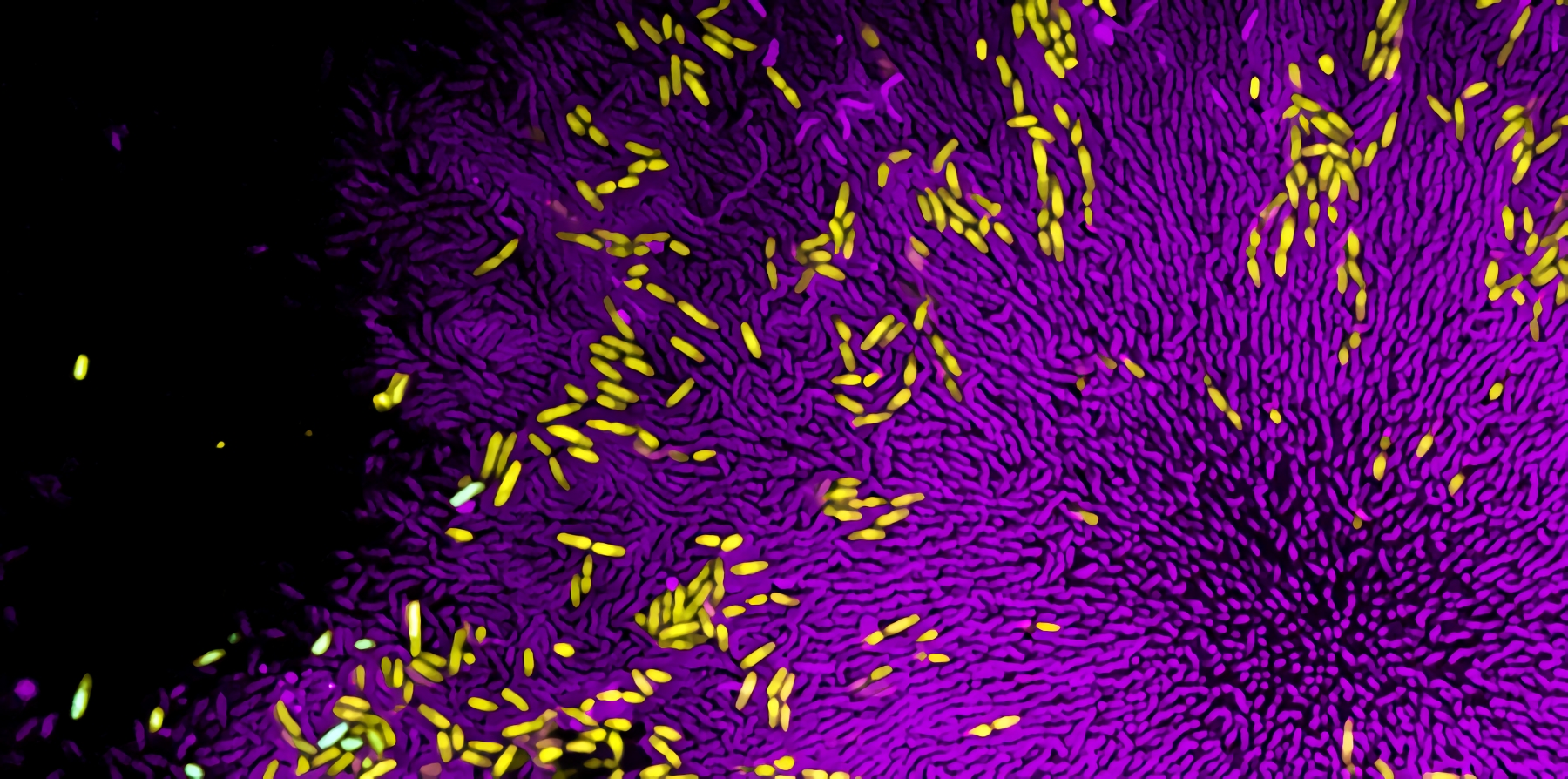
Harmful bacteria can elude predators when in mixed colonies

 Colonies of the bacterium V. cholerae (purple) insulate E. coli (yellow) from its natural predator
Image Credit: James Winans

Efforts to fight disease-causing bacteria by harnessing their natural predators could be undermined when multiple species occupy the same space, according to a study by Dartmouth College researchers.

When growing in mixed colonies, some harmful bacteria may be able to withstand attacks from the bacteria and viruses that target them by finding protection inside groups of rival species, according to a report published in the Proceedings of the National Academy of Sciences.

The researchers found that the intestinal bacterium Escherichia coli became surrounded by tightly packed colonies of Vibrio cholerae — which causes the deadly disease cholera — when the species were grown together. These clusters protected E. coli from the bacteria Bdellovibrio bacteriovorus that preys on both species individually, but in the study could only kill the outer layer of V. cholerae. This left the unscathed cells of E. coli and V. cholerae insulated within the colonies free to multiply.

Monday, August 1, 2022

New Method to Promote Biofilm Formation and Increase Efficiency of Biocatalysis

 The researchers screened synthetic polymers for their ability to induce biofilm formation in a strain of E. coli (MC4100), which is known to be poor at forming biofilms. They also monitored the biomass and biocatalytic activity of both MC4100 and PHL644 (a good biofilm former), incubated the presence of these polymers, and found that MC4100 matched and even outperformed PHL644.
Credit: EzumeImages

Birmingham scientists have revealed a new method to increase efficiency in biocatalysis, in a paper published today in Materials Horizons.

Biocatalysis uses enzymes, cells or microbes to catalyze chemical reactions, and is used in settings such as the food and chemical industries to make products that are not accessible by chemical synthesis. It can produce pharmaceuticals, fine chemicals, or food ingredients on an industrial scale.

However, a major challenge in biocatalysis is that the most commonly used microbes, such as probiotics and non-pathogenic strains of Escherichia coli, are not necessarily good at forming biofilms, the growth promoting ecosystems that form a protective micro-environment around communities of microbes and increase their resilience and so boost productivity.

This problem is normally solved by genetic engineering, but researchers Dr Tim Overton from the university’s School of Chemical Engineering, and Dr Francisco Fernández Trillo from the School of Chemistry*, both of whom are members of the Institute of Microbiology and Infection, set out to create an alternative method to bypass this costly and time-consuming process.

The researchers identified a library of synthetic polymers and screened them for their ability to induce biofilm formation in E. coli, a bacterium that is one of the most widely studied micro-organisms, and commonly used in biocatalysis.

Thursday, May 19, 2022

Mystery of seafloor metamorphosis unlocked

An adult tubeworm, in its tube, with its plume of tentacles extended.
Photo credit: Freckelton et al. 2022

Most bottom-dwelling marine invertebrate animals, such as sponges, corals, worms and oysters, produce tiny larvae that swim in the ocean prior to attaching to the seafloor and transforming into juveniles. A study published in the Proceedings of the National Academy of Sciences and led by University of Hawaiʻi at Mānoa researchers revealed that a large, complex molecule, called lipopolysaccharide, produced by bacteria is responsible for inducing larval marine tubeworms, Hydroides elegans, to settle to the seafloor and begin the complex processes of metamorphosis.

“This is a major milestone in understanding the factors that determine where larvae of bottom-living invertebrates settle and metamorphose,” said Michael Hadfield, senior author on the paper and emeritus professor in the UH Mānoa School of Ocean and Earth Science and Technology (SOEST). “It is the key to understanding how benthic (underwater) communities are established and maintained on all surfaces under salt water, that is, on 71% of Earth’s surface.”

Saturday, November 13, 2021

Breaking down fungal biofilm defenses provides potential path to treating sticky infections

David Andes is a professor of medicine at the
University of Wisconsin School of Medicine and Public Health.

Scientific Frontline: Extended "At a Glance" Summary: Fungal Biofilm Defenses

The Core Concept: A fungal biofilm is a sticky, armor-like extracellular matrix that encases clusters of disease-causing microorganisms, protecting them from host immune responses and antimicrobial treatments.

Key Distinction/Mechanism: Unlike free-floating pathogens, organisms within a biofilm secrete a complex array of proteins that directly drive resistance to antifungal drugs, such as fluconazole, and regulate the dispersion of cells throughout the body.

Major Frameworks/Components:

  • Extracellular Matrix: The physical barrier consisting of secreted materials, including specialized proteins, that shields the fungi.
  • Protein Regulation: Specific proteins dictate both the biofilm's structural integrity against antifungal agents and its capacity to release cells for systemic spread.
  • Targeted Gene Mutation: Experimental genetic alterations creating Candida albicans strains that lack specific biofilm-producing proteins, rendering the fungus significantly more susceptible to existing drugs.
  • Turbinmicin: A recently discovered antifungal agent capable of blocking the pathogen's ability to secrete protective biofilm components.

Thursday, November 11, 2021

‘Wonder gas’ hailed as new treatment for diabetic foot ulcers could also kill COVID-19 virus indoors

Dr Endre Szili in his lab at UniSA's Future Industries Institute.
A new formulation developed by University of South Australia scientists to treat antimicrobial-resistant bacterial infections in diabetic foot ulcers could also be used to kill the COVID-19 virus circulating in air conditioning systems.

Enhancing cold plasma ionized gas with peracetic acid eradicates bacteria in wounds and substantially reduces SARS-CoV-2 viral loads, Australian and UK scientists claim in a paper published in Applied Physics Letters.

In an experiment to find an effective treatment for diabetic foot ulcers which are notoriously resistant to antibiotics, UniSA physicist Dr Endre Szili, in collaboration with Professor Rob Short at Lancaster University and British colleagues at the University of Bath, GAMA Healthcare and AGA Nanotech, made an unexpected discovery.

“By combining cold plasma gas with acetyl donor molecules to improve its oxidation action, we found it completely killed bacteria that are found in chronic wounds,” according to lead researcher Dr Szili.

“We then investigated whether this same technology could be effective at killing the SARS-CoV-2 virus and it appears that it is.

“We showed that we could achieve an 84 per cent reduction in viral load using plasma combined with acetyl donor molecules based on a standard dosage that is safe for human cells. However, it is highly possible with some modifications that we could eradicate it completely.”

Featured Article

What Is: Enteric Nervous System: The Second Brain

Scientific Frontline: Extended "At a Glance" Summary: The Enteric Nervous System (ENS) The Core Concept : The Enteric Nervous Syst...

Top Viewed Articles