. Scientific Frontline

Wednesday, September 29, 2021

Sandia-developed solar cell technology reaches space


This photo shows what DragonSCALES look like today. Formerly known as solar glitter when initially developed at Sandia National Laboratories, the technology has evolved since being transferred to mPower Technology.(Photo courtesy mPower Technology)

Somewhere among the glitter of the night sky is a small satellite powered by innovative, next-generation solar cell technology developed at Sandia National Laboratories.

mPower Technology’s DragonSCALES, consist of small, highly interconnected photovoltaic cells formerly known as solar glitter at Sandia. They are orbiting Earth for the first time on a Lynk Global Inc. satellite that supports direct connection to unmodified mobile phones. The satellite was launched this summer.

The technology is being evaluated as a potential solar power solution for the Lynk Global constellation fleet. Data collected will provide valuable feedback to validate the product’s performance in space.

“It’s been amazing to watch this technology emerge from the labs and become a product sought after by satellite companies and federal agencies,” said Mary Monson, Sandia’s senior manager of technology partnerships and business development.
Research finds grave concern for coral reefs


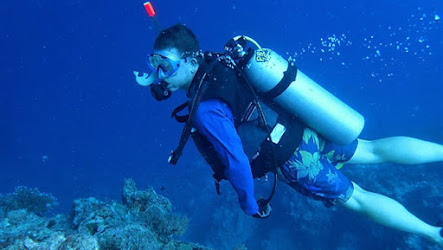
Sabine evaluating a potential deployment site for a mooring in Palau.
Similar to a giant sponge, the ocean absorbs a quarter of the excess CO2 produced every year from human activities (anthropogenic carbon) around the world. Carbon dioxide dissolves in the surface water and through the overturning circulation of ocean currents and mixing processes, is slowly transported into the ocean’s interior—which allows the surface ocean to absorb more CO2. In this cycle, CO2 reacts with the water molecules in the ocean to form carbonic acid in a process known as ocean acidification. Like ocean warming, an increase in ocean acidification can also have a profound impact on marine ecosystems.

University of Hawaiʻi at Mānoa Oceanography Professor Christopher Sabine has devoted his life to understanding the connections between the ocean and anthropogenic carbon. After earning his PhD in chemical oceanography at UH Mānoa in the early 1990s, Sabine spent the next decade conducting high-quality carbon measurements in an effort to better understand where inorganic carbon is stored in the ocean.

Tuesday, September 28, 2021

Largest trial of antibiotic amoxicillin for treating chest infections in children finds little effect

 The largest randomized placebo-controlled trial of the antibiotic amoxicillin for treating chest infections in children - one of the most common acute illnesses treated in primary care in developed countries, has found it is little more effective at relieving symptoms than the use of no medication. The study, published in The Lancet and funded by the National Institute for Health Research (NIHR), was led by researchers from the University of Southampton and supported by centers at the Universities of Bristol, Oxford and Cardiff.

Although viruses are believed to cause many of these infections in children, whether or not antibiotics are beneficial in treatment of chest infections in children is still debated. While research so far in adults has shown that antibiotics are not effective for uncomplicated chest infections until now, there has not been the same level of research in children.

Researchers sought to test whether amoxicillin reduces the duration of moderately bad symptoms in children presenting with uncomplicated (non-pneumonic) lower respiratory tract chest infections in primary care. The trial recruited 432 children aged six months to twelve years-old with acute uncomplicated chest infections from primary care practices in England and Wales who were then randomly assigned to receive either amoxicillin or a placebo three times a day for seven days. Doctors or nurse-prescribers assessed symptoms at the start of the study and parents, with help from their children where possible, completed a daily symptom diary.

Researchers target key protein to fight inflammatory disease

 
Photo by Ivan Samkov from Pexels
For the first time, researchers have identified key molecules within the immune system that may help fight the inflammation that drives chronic diseases including cancers, sepsis and brain disease.

The University of Queensland collaborated with the Indian Institute of Technology, Kanpur on the study.

UQ Professor Trent Woodruff said the research investigated the part of the immune system responsible for the body’s natural response to pathogens and injury, known as the ‘complement system’.

“When activated inappropriately, the system drives inflammatory diseases such as sepsis, COVID-19, stroke, heart attacks, cancers and brain illnesses,” Professor Woodruff said.

A key protein, known as C5aR2, is a potential therapeutic target for treating chronic disease, due to its ability to moderate many immune and inflammatory processes.

“It’s been really challenging for researchers to understand how this protein is activated due to its unusual structure,” Professor Woodruff said.

“Instead of coupling with cell-signaling proteins, C5aR2 instead relies on signal regulating proteins known as β-arrestin proteins.”

“Our study investigated interactions between the C5aR2 and β-arrestin proteins, while screening for molecules that activated a connection between the two”, Professor Woodruff said.

“We found key and specific cell signals present when the C5aR2 was activated, which may act to boost the immune system’s response in inflammation.”

Co-investigator Professor Arun Shukla said the findings provided a framework for further exploration of β-arrestin proteins for their therapeutic modulation in disease.

“We are now working to progress these research findings into disease models and potentially enable scientists to design novel drug molecules targeting C5aR2 to treat inflammatory disorders”.

This study is the journal Molecular Cell, as part of an international collaboration with Professor Arun Shukla, based in India, and researchers Asuka Inoue, based in Japan, and Stéphane A. Laporte in Canada.

Source/Credit: University of Queensland

scn092821_01

Dinosaurs' ascent driven by volcanoes powering climate change

 The rise of dinosaurs coincided with environmental changes driven by major volcanic eruptions over 230 million years ago, a new study reveals.

The Late Triassic Carnian Pluvial Episode (CPE) saw an increase in global temperature and humidity - creating a major impact on the development of animal and plant life, coinciding with the establishment of modern conifers.

Researchers analyzed sediment and fossil plant records from a lake in northern China’s Jiyuan Basin, matching pulses of volcanic activity with significant environmental changes, including the CPE’s ‘mega monsoon’ climate, some 234 million to 232 million years ago.

The international research team, including experts at the University of Birmingham, today published their findings in Proceedings of the National Academy of Sciences (PNAS) – revealing four distinct episodes of volcanic activity during this time period, with the most likely source being major volcanic eruptions from the Wrangellia Large Igneous Province, the remnants of which are preserved in western North America.

Monday, September 27, 2021

Journey to Landsat 9


The first Landsat satellite launched in 1972. Since then, NASA has always kept a Landsat in orbit to collect images of the physical material covering our planet’s surface and changes to land usage. Those images allow researchers to monitor phenomena including agricultural productivity, forest extent and health, water quality, coral reef habitat health, and glacier dynamics.


Hyena scavenging provides public health and economic benefits to African cities


Hyenas are frequently vilified and often feared. Hemingway once described the hyena as a stinking, foul devourer of the dead, with jaws that crack the bones the lion leaves.

But a new study concludes that spotted hyena scavenging provides significant public health and economic benefits to the African cities they roam.

In a study conducted in and around the Ethiopian city of Mekelle, home to 310,000 people and 120,000 livestock animals, a University of Michigan conservation ecologist and two colleagues found that spotted hyenas annually remove 207 tons of animal carcass waste.

Mekelle is the capital of northern Ethiopia’s Tigray region. The carcasses of livestock animals that are slaughtered for food there, or that die naturally, are often dumped at the local landfill or on roadsides, where hyenas feed on the waste. The researchers wanted to know whether hyenas—by removing this waste from the environment—might also prevent pathogens from jumping into people and livestock.

They determined that hyena scavenging annually prevents five infections of anthrax and bovine tuberculosis in Mekelle residents and 140 infections in cattle, sheep and goats. This disease-control service potentially saves the city $52,000 annually in treatment costs and livestock losses avoided.

The study, published online Sept. 26 in the Journal of Applied Ecology, is the first to quantify the public health and economic benefits of scavenging by spotted hyenas.

Male giraffes are more socially connected than females


A team of researchers has constructed the social network of more than 1,000 Masai giraffes in Tanzania and found that, while female giraffes have closer “friends” than males, male giraffes have more “acquaintances.” Understanding the complex multilevel society could have important conservation implications for these endangered giraffes. 
Image Credit: Derek Lee

Although female giraffes have closer “friends” than male giraffes, male giraffes have more “acquaintances” than females, according to a new study by an international team that includes a Penn State biologist. The study demonstrates that giraffes form a complex multilevel society that is driven by differences in the social connections among individuals, which could have conservation implications for the endangered giraffes.

“The degree to which an animal is connected to others in its social network influences reproductive success and population ecology, spread of information, and even how diseases move through a population,” said Derek Lee, associate research professor at Penn State and an author of the paper. “Information about sociality therefore can provide important guidance for conservation.”

The research team examined social connectedness and social movements of endangered Masai giraffes in the Tarangire Ecosystem of northern Tanzania using data collected over 5 years. The work, led by Juan Lavista Ferres of the Microsoft AI for Good Research Lab, involved constructing the social network of more than 1,000 free-ranging giraffes. The team presents their results in a paper appearing Sept. 27 in the journal Animal Behaviour.

New membrane to make fresh water


Susan Rempe, right, a Sandia National Laboratories bioengineer, and Stephen Percival, a material scientist, examine their biologically inspired electrodialysis membrane for producing fresh water. By mimicking an algae protein, the membrane can remove salt from seawater and wastewater to make fresh water while using less electricity.
(Photo by Randy Montoya)

Scientists at Sandia National Laboratories and their collaborators have developed a new membrane, whose structure was inspired by a protein from algae, for electrodialysis that could be used to provide fresh water for farming and energy production.

The team shared their membrane design in a paper published recently in the scientific journal Soft Matter.

Electrodialysis uses electrical power to remove dissolved salts from water. Currently it is used to capture salt from seawater to produce table salt and remove salt from brackish water to make fresh water, but it could also be used to remove salt from wastewater to provide a new source of fresh water.

The researchers found that the addition of a common amino acid, called phenylalanine, to an electrodialysis membrane enabled it to better capture and remove positive ions, such as sodium.

“Adding phenylalanine to the electrodialysis membrane increased the selectivity for positive ions by a significant amount, to our pleasant surprise,” Susan Rempe, the lead bioengineer on the project, said.

Ensuring an adequate supply of fresh water is a national security problem, she said. Fresh water is essential for everything from drinking and farming to producing energy from nuclear-, coal- and natural-gas-based power plants.

COVID-19 has caused the biggest decrease in life expectancy

The COVID-19 pandemic triggered life expectancy losses not seen since World War II in Western Europe and exceeded those observed around the dissolution of the Eastern Bloc in central and Eastern European countries, according to research published today, led by scientists at Oxford’s Leverhulme Center for Demographic Science.

The research team assembled an unprecedented dataset on mortality from 29 countries, spanning most of Europe, the US and Chile – countries for which official death registrations for 2020 had been published. They found that 27 of the 29 countries saw reductions in life expectancy in 2020, and at a scale which wiped out years of progress on mortality, according to the paper published today in the International Journal of Epidemiology.

Women in 15 countries and men in 10 countries were found to have a lower expectancy at birth in 2020 than in 2015, a year in which life expectancy was already negatively affected by a significant flu season.

According to the study’s co-lead author Dr José Manuel Aburto, ‘For Western European countries such as Spain, England and Wales, Italy, Belgium, among others, the last time such large magnitudes of declines in life expectancy at birth were observed in a single year was during WW-II.’

A new phase of matter

 Researchers from the University of Cambridge used computer modelling to study potential new phases of matter known as prethermal discrete time crystals (DTCs). It was thought that the properties of prethermal DTCs were reliant on quantum physics: the strange laws ruling particles at the subatomic scale. However, the researchers found that a simpler approach, based on classical physics, can be used to understand these mysterious phenomena.

Understanding these new phases of matter is a step forward towards the control of complex many-body systems, a long-standing goal with various potential applications, such as simulations of complex quantum networks. The results are reported in two joint papers in Physical Review Letters and Physical Review B.

When we discover something new, whether it’s a planet, an animal, or a disease, we can learn more about it by looking at it more and more closely. Simpler theories are tried first, and if they don’t work, more complicated theories or methods are attempted.  

“This was what we thought was the case with prethermal DTCs,” said Andrea Pizzi, a PhD candidate in Cambridge’s Cavendish Laboratory, first author on both papers. “We thought they were fundamentally quantum phenomena, but it turns out a simpler classical approach let us learn more about them.”

DTCs are highly complex physical systems, and there is still much to learn about their unusual properties. Like how a standard space crystal breaks space-translational symmetry because its structure isn’t the same everywhere in space, DTCs break a distinct time-translational symmetry because, when ‘shaken’ periodically, their structure changes at every ‘push’.

Sunday, September 26, 2021

The VIPER


NASA's first lunar mobile robot, the Volatiles Investigating Polar Exploration Rover, or VIPER, will map the location and concentration of water ice and other frozen volatiles in an area west of Nobile crater, near the lunar South Pole. Understanding the distribution of water and other resources on the Moon is vital for sustaining human exploration there. Scheduled to be delivered in late 2023 as part of the Commercial Lunar Payload Services (CLPS) initiative, the rover will explore an area of about 36 square miles during its 100-day mission.

Source/Credit: NASA/SVS

sn092621_02

Einstein Ring


This image, taken with the Hubble Space Telescope, shows a distant galaxy located in the constellation Fornax. It is the largest and one of the most complete Einstein rings ever discovered.

This object’s unusual shape is the result of gravitational lensing. Albert Einstein, in his general theory of relativity, first theorized that a large gravitational field could act as a lens.

Additional Acknowledgements and Credits:
ESA/Hubble & NASA, S. Jha, L. Shatz
Gravitational lensing in action video: NASA, ESA & L. Calçada
Albert Einstein video: Pond 5
Music Credits: "’Finder" by Jamal Steven Pilgrim [ASCAP] via Open Note [ASCAP], and Universal Production Music.

sn092621_01

Saturday, September 25, 2021

NASA Releases Interactive Graphic Novel “First Woman”


NASA released its first digital, interactive graphic novel on Saturday in celebration of National Comic Book Day. “First Woman: NASA’s Promise for Humanity” imagines the story of Callie Rodriguez, the first woman to explore the Moon.

While Callie’s story is fictional, the first woman and the first person of color will walk on the Moon, achieving these historic milestones as part of NASA’s Artemis missions. Through this graphic novel, NASA aims to inspire the next generation of explorers – the Artemis Generation.

Download, read, and interact with “First Woman” or listen to the audio version exclusively on NASA’s SoundCloud.

“The story of Callie captures how passion, dedication, and perseverance allow us to turn our dreams into reality,” said NASA Deputy Administrator Pam Melroy. “Callie, much like myself, grew her skills, seized learning opportunities, and overcame challenges to become a NASA astronaut. Her diversity is reflected in our own astronaut corps today – it's important we can see ourselves as the explorers among the stars.”

The 40-page comic book highlights NASA technologies for traveling to, landing on, and exploring the Moon. The digital format comes to life, letting readers engage and interact through augmented reality elements using the First Woman website or their mobile devices.

Readers can download the First Woman application for Android or iOS to explore life-sized environments and 3D objects, including NASA’s Orion spacecraft and the lunar surface. Additional content includes videos, games, challenges to earn collector badges, and ways to virtually participate in NASA missions.

“We crafted this graphic novel and digital ecosystem to share NASA’s work in a different and exciting way,” said Derek Wang, director of communications for the Space Technology Mission Directorate at the agency’s Headquarters in Washington. “We set out to make the content both engaging and accessible. From space fans of all ages to hardworking educators looking for new ways to get students excited about STEM, we hope that there is something for everyone to enjoy.”

NASA plans to release a Spanish version of the first issue of the comic book, “From Dream to Reality,” on the website in the future.

Source/Credit: NASA

sn092521_01

Thursday, September 23, 2021

Vampire bats may coordinate with ‘friends’ over a bite to eat


Photo: Sherri and Brock Fenton
Vampire bats that form bonds in captivity and continue those “friendships” in the wild also hunt together, meeting up over a meal after independent departures from the roost, according to a new study.

Researchers attached tiny “backpack” computers to 50 vampire bats – some that had previously been in captivity together and others that had lived only in the wild – to track their movement during their nightly foraging outings. By day, the bats shared a hollow tree in Panama, and at night they obtained their meals by drinking blood from wounds they made on cows in nearby pastures.

Tracking data showed that vampire bats set out to forage separately rather than as a group – and those that had established social relationships would reunite during the hunt for what the researchers speculated was some sort of coordination over food.

The findings suggest “making friends” in the roost could create more interdependence among socially bonded vampire bats – meaning they could benefit from each other’s success at obtaining blood meals and join forces when competing with other groups of bats for food resources.

“Everything we’ve been studying with vampire bats has looked at what they’re doing inside of a roost. What nobody has really known up until now is whether these social relationships serve any function outside the roost,” said study co-author Gerald Carter, assistant professor of evolution, ecology and organismal biology at The Ohio State University.

“Understanding their interactions with a completely different group of bats out on the pasture can help us understand what’s going on inside the colony. If every time they leave the roost they’re getting into battles, that can increase the amount of cooperation within the colony.”

Co-author Simon Ripperger, a former postdoctoral researcher in Carter’s lab, later supplemented the tracking data by capturing video and audio of foraging vampire bats. He observed bats clustered together on one cow and others atop separate cows, some drinking from different wounds and some fighting over food access. He also made what are likely the first audio recordings of a specific type of vampire bat vocalization associated with foraging.

Featured Article

Ketamine high NOT related to treatment success for people with alcohol problems

Photo Credit:  Treedeo.St Studios Scientific Frontline: "At a Glance" Summary Main Discovery : The intensity of the acute psychede...

Top Viewed Articles