. Scientific Frontline

Thursday, October 7, 2021

Researchers create ‘self-aware’ algorithm to ward off hacking attempts

Equipping computer models with “covert cognizance” could protect electric grids, manufacturing facilities and nuclear power plants from hackers, says Hany Abdel-Khalik, a Purdue associate professor of nuclear engineering. (Purdue University photo/Vincent Walter)

It sounds like a scene from a spy thriller. An attacker gets through the IT defenses of a nuclear power plant and feeds it fake, realistic data, tricking its computer systems and personnel into thinking operations are normal. The attacker then disrupts the function of key plant machinery, causing it to misperform or break down. By the time system operators realize they’ve been duped, it’s too late, with catastrophic results.

The scenario isn’t fictional; it happened in 2010, when the Stuxnet virus was used to damage nuclear centrifuges in Iran. And as ransomware and other cyberattacks around the world increase, system operators worry more about these sophisticated “false data injection” strikes. In the wrong hands, the computer models and data analytics – based on artificial intelligence – that ensure smooth operation of today’s electric grids, manufacturing facilities, and power plants could be turned against themselves.

Purdue University’s Hany Abdel-Khalik has come up with a powerful response: to make the computer models that run these cyberphysical systems both self-aware and self-healing. Using the background noise within these systems’ data streams, Abdel-Khalik and his students embed invisible, ever-changing, one-time-use signals that turn passive components into active watchers. Even if an attacker is armed with a perfect duplicate of a system’s model, any attempt to introduce falsified data will be immediately detected and rejected by the system itself, requiring no human response.

Wednesday, October 6, 2021

LUCY: Path to the Trojan Asteroids


Lucy is the first mission to explore the Jupiter Trojans – two swarms of asteroids that share Jupiter’s orbit, leading and trailing the giant planet by sixty degrees. These primitive bodies are thought to be the “fossils” of planet formation, trapped by Jupiter’s gravity at the dawn of the solar system. Now, NASA is sending Lucy on a winding, twelve-year-long path to visit one main-belt asteroid and seven Jupiter Trojans. Lucy will provide the first up-close look at these mysterious objects, helping scientists to better understand the evolution of the solar system.

YouTube Link

Source/Credit: NASA/Goddard Space Flight Center
Final Editing and Conversion: Scientific Frontline

Oldest theropod dinosaur in the UK discovered

Scientists from the Natural History Museum and the University of Birmingham have described a new species of dinosaur from specimens found in a quarry in Pant-y-ffynnon in southern Wales.

Following on from a new species of ankylosaur, Pendraig milnerae marks the second new species of dinosaur described by Museum scientists in the last few weeks.

The new dinosaur is a theropod, a group which also includes T. rex and modern birds. Pendraig milnerae is the earliest example of a theropod found in the UK so far, living between 200 and 215 million years ago during the Late Triassic period. It likely had a body size around that of a modern-day chicken and would have been a meter long including its tail.

The fragmentary fossils of the species consist of an articulated pelvic girdle, sacrum and posterior dorsal vertebrae, and an associated left femur, and by two referred specimens, comprising an isolated dorsal vertebra and a partial left ischium.

Richard Butler, co-author on the paper and Professor of Paleobiology at the University of Birmingham, said: ‘Dinosaur discoveries are really rare in Wales, and this is only the third dinosaur species known from the country. It’s very exciting to learn more about the dinosaurs that lived here in the UK during the Triassic, right at the dawn of dinosaur evolution.’

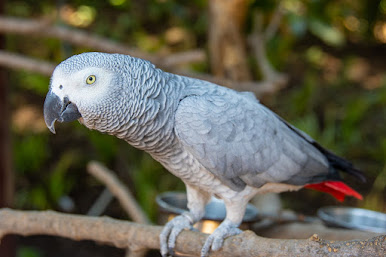
The smarter the bird, the more mental stimulation it needs in captivity, a study has found

African grey parrot Photo by Magda Ehlers from Pexels
Researchers have discovered that intelligent birds have unique welfare needs in captivity.

These findings may apply to other brainy captive creatures including great apes, elephants and whales, said the head of the research group, Dr. Georgia Mason, Director of the University of Guelph’s Campbell Centre for the Study of Animal Welfare.

“This study provides the first empirical evidence that intelligent animals can struggle in captivity,” said Dr Mason, a professor in the Department of Integrative Biology. "Our findings could help pet owners identify which species may be more challenging to cater for as pets, because of their welfare requirements” added one of the lead authors, Dr Emma Mellor from the University of Bristol.

The study, also conducted by other researchers at University of Bristol and Utrecht University in the Netherlands, revealed for the first time that this issue can in particular hinder large-brained parrots’ in confinement.

Published recently in Proceedings of the Royal Society B, the study highlights cognitive stimulation and foods that require more complicated physical handling as ways to improve care of birds.

The researchers examined two main data sources. One was an early 1990s survey on captive breeding success involving more than 30,000 birds in the United States. The team also ran an online survey involving almost 1,400 pet parrots in 50 species for stereotypic behavior: repetitive abnormal activity such as biting at cage bars, chewing or even pulling out feathers, and swaying, bouncing or route pacing in cages.

Hydrogel Tablet Can Purify a Liter of River Water in an Hour

A hydrogel tablet developed by engineers at The University of Texas at Austin can purify a liter of river water in an hour or less. Credit: The University of Texas at Austin.

As much as a third of the world’s population does not have access to clean drinking water, according to some estimates, and half of the population could live in water-stressed areas by 2025. Finding a solution to this problem could save and improve lives for millions of people, and it is a high priority among scientists and engineers around the globe.

Scientists and engineers at The University of Texas at Austin have created a hydrogel tablet that can rapidly purify contaminated water. One tablet can disinfect a liter of river water and make it suitable for drinking in an hour or less.

“Our multifunctional hydrogel can make a big difference in mitigating global water scarcity because it is easy to use, highly efficient and potentially scalable up to mass production,” said Guihua Yu, an associate professor in the Cockrell School of Engineering’s Walker Department of Mechanical Engineering and Texas Materials Institute.

Yu and his team recently published their findings in the journal Advanced Materials.

Today, the primary way to purify water is to boil or pasteurize it. But that takes energy, plus a lot of time and work. That isn’t practical for people in parts of the world without the resources for these processes.

The special hydrogels generate hydrogen peroxide to neutralize bacteria at an efficiency rate of more than 99.999%. The hydrogen peroxide works with activated carbon particles to attack essential cell components of bacteria and disrupt their metabolism.

Using the hydrogel tablet to purify water requires zero energy input
and doesn’t create harmful byproducts.
Credit: The University of Texas at Austin.
The process requires zero energy input and doesn’t create harmful byproducts. The hydrogels can easily be removed, and they don’t leave any residue.

In addition to purifying water on their own, the hydrogels could also improve a process that has been around for thousands of years — solar distillation, the use of sunlight to separate water from harmful contaminants via vaporization.

Solar distillation systems often run into issues of biofouling, the accumulation of microorganisms on equipment that causes it to malfunction. The bacteria-killing hydrogels can prevent this from happening.

“A highly vigilant graduate student, Youhong Guo, discovered these hydrogels unexpectedly while doing something else, that is purification of water with sunlight,” said Keith Johnston, a professor in the McKetta Department of Chemical Engineering who co-led the project.

The team is working to improve the hydrogels by increasing the different types of pathogens and viruses in water that they can neutralize. And the team is also in the process of commercializing several prototypes.

Scaling up the hydrogels would be straightforward, the researchers say. Materials for making them are inexpensive, and the synthesis processes are simple and remain that way at large scales. And they can easily control the shape and size of the hydrogels, making them flexible for different types of uses.

Youhong Guo, a graduate student in Yu’s lab, is the first author on the paper. Graduate students Christopher Dundas from chemical engineering and Xingyi Zhou from mechanical engineering were also part of the team. The research was supported by grants from the Energy Institute at UT Austin and the Dreyfus Foundation.

Source/Credit: University of Texas at Austin

tn100621_02

Cracking the code of cellular defense

Purdue University will serve as the main site of the new Emergent Mechanisms in Biology of Robustness, Integration and Organization (EMBRIO) Institute. The institute, which will use AI to expand biology and engineering, has received $12.5 million from the National Science Foundation over five years as part of the agency’s Biology Integration Institutes program.
(EMBRIO illustration by Second Bay Studios. Courtesy of Purdue University.)

Imagine the day when any tissue or organ can be repaired or the replacements personalized to the patient.

That’s one of the goals of work being done by David Umulis of Purdue University and a team of scientists using artificial intelligence in biology to see how cells defend themselves from chemical or mechanical attack and/or repair their damage with the help of biochemical and mechanical inputs and reactions.

If this is successful, Umulis says, scientists could have a new way to address human health and longevity.

“If you can touch a network and modify three or four locations at once, the capability to treat diseases or damage will improve as you are signaling all these different biological pathways simultaneously,” he says.

Unlocking new potentials

Umulis uses AI in several of his biomedical engineering projects, including quantifying images and simulating developing cells. He finds that it provides results better, earlier and faster, and can be inexpensive compared with many hours simulating cell features.

But he wants to innovate and push further. The new Emergent Mechanisms in Biology of Robustness, Integration & Organization (EMBRIO) Institute will use AI to expand biology and engineering through exploring how cell signals are integrated to fight off invaders or activated to repair wounds, which are both essential to survive.

Cheaper and better solar energy on the horizon

A new generation of cheap, sustainable and efficient solar cells is a step closer, thanks to scientists at The University of Queensland.

Researchers at UQ’s Australian Institute for Bioengineering and Nanotechnology (AIBN) modified a nanomaterial to make solar cells as efficient as silicon-based cells, but without their high cost and complex manufacturing.

Professor Joe Shapter said the finding addressed an urgent need for alternative environmentally friendly energy sources capable of providing efficient and reliable energy production.

“Silicon-based solar cells remain the dominant first-generation product making up 90 per cent of the market, but demand was high for cells that could be manufactured without their high prices and complexity,” Professor Shapter said.

“Among the next-generation technologies, perovskite solar cells (PSCs) have attracted enormous attention because of their high efficiency and ease of fabrication.

“The technology has undergone unprecedented rapid development in recent years.

“But the new generation of solar cells still have some drawbacks such as poor long-term stability, lead toxicity and high material costs.”

Tuesday, October 5, 2021

Dark Energy, A Mysterious Force

 For the past 31 years, the Hubble Space Telescope has continued its important mission of uncovering the mysteries of the universe. One of those mysteries that Hubble has helped us begin to understand is dark energy and dark matter.


Source/Credit: NASA/Goddard Space Flight Center.

sn100521_01

Scientists find oxygen levels explain ancient extinction slowdown

Brachiopod and crinoid fossils from the Late Ordovician,
about 445 million years ago.
(Image credit: Seth Finnegan)
Not long after the dawn of complex animal life, tens of millions of years before the first of the “Big Five” mass extinctions, a rash of die-offs struck the world’s oceans. Then, for reasons that scientists have debated for at least 40 years, extinctions slowed down.

A new Stanford University study shows rising oxygen levels may explain why global extinction rates slowed down throughout the Phanerozoic Eon, which began 541 million years ago. The results, published Oct. 4 in Proceedings of the National Academy of Sciences, point to 40 percent of present atmospheric oxygen levels as a key threshold beyond which viable ocean habitat expands and the global extinction rate sharply falls.

“There’s a whole set of high-magnitude extinctions earlier in the history of animal life, and then they taper off until there’s just these huge mass extinctions. And there’s never been an explanation for why we have all those high-magnitude extinctions early on,” said senior study author Erik Sperling, an assistant professor of geological sciences at Stanford’s School of Earth, Energy & Environmental Sciences (Stanford Earth).

The new study reveals that even five degrees of warming – extreme for our current climate but common in Earth’s deep past – would be more than enough to trigger mass die-offs early in the Phanerozoic. The research shows this is because, in a low oxygen world, marine animals were already on the razor’s edge of their ability to breathe and maintain their body temperatures. The finding has implications for understanding the fate of ocean creatures in today’s warming world.

Monday, October 4, 2021

Study Finds Growing Potential for Toxic Algal Blooms in the Alaskan Arctic

A water sampler known as a conductivity, temperature, depth (CTD) rosette is deployed from the U.S. Coast Guard icebreaker Healy during a 2019 expedition to the Alaskan Arctic Ocean to study the presence of harmful algae and the conditions that promote their growth and spread.
(Photo ©Woods Hole Oceanographic Institution)

Changes in the northern Alaskan Arctic ocean environment have reached a point at which a previously rare phenomenon—widespread blooms of toxic algae—could become more commonplace, potentially threatening a wide range of marine wildlife and the people who rely on local marine resources for food. That is the conclusion of a new study about harmful algal blooms (HABs) of the toxic algae Alexandrium catenella being published in the journal Proceedings of the National Academy of Science. Although microscopic algae in the ocean are most often beneficial and serve as the base of the marine food web, some species produce potent neurotoxins that can directly and indirectly affect humans and wildlife.

The study, led by scientists at the Woods Hole Oceanographic Institution (WHOI) in collaboration with colleagues from the National Oceanic and Atmospheric Administration (NOAA) and other researchers in the U.S, Japan, and China, looked at samples from seafloor sediments and surface waters collected during 2018 and 2019 in the region extending from the Northern Bering Sea to the Chukchi and Beaufort Seas north of Alaska. The sediment samples allowed the researchers to count and map Alexandrium cysts—a seed-like resting stage that lies dormant in the seafloor for much of the year, germinating or hatching only when conditions are suitable. The newly hatched cells swim to the surface and multiply using the sun’s energy, producing a “bloom” that can be dangerous due to the family of potent neurotoxins called saxitoxins that the adult cells produce.

Our DNA is becoming the world’s tiniest hard drive

Our genetic code is millions of times more efficient at storing data than existing solutions, which are costly and use immense amounts of energy and space. In fact, we could get rid of hard drives and store all the digital data on the planet within a couple hundred pounds of DNA.

Using DNA as a high-density data storage medium holds the potential to forge breakthroughs in biosensing and biorecording technology and next-generation digital storage, but researchers haven’t been able to overcome inefficiencies that would allow the technology to scale.

Now, researchers at Northwestern University propose a new method for recording information to DNA that takes minutes, rather than hours or days, to complete. The team used a novel enzymatic system to synthesize DNA that records rapidly changing environmental signals directly into DNA sequences, a method the paper’s senior author said could change the way scientists study and record neurons inside the brain.

The research, “Recording Temporal Signals with Minutes Resolution Using Enzymatic DNA Synthesis,” was published in the Journal of the American Chemical Society.

The paper’s senior author, Northwestern engineering professor Keith E.J. Tyo, said his lab was interested in leveraging DNA’s natural abilities to create a new solution for storing data.

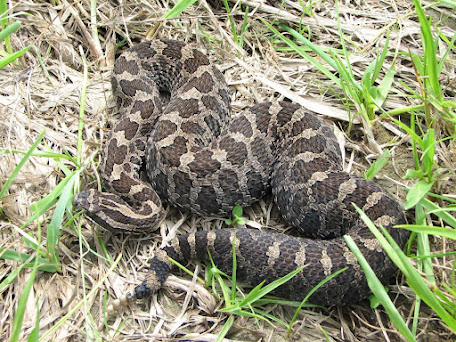
Threatened rattlesnakes’ inbreeding makes species more resistant to bad mutations


The Eastern massasauga rattlesnake was listed as threatened under the
Endangered Species Act in 2016 because of loss and fragmentation of its wetland habitat.
Photo by James Chiucchi
The first look at a threatened rattlesnake species’ recent genetic history suggests that inbreeding necessitated by limited habitat may not be as detrimental as theory would predict it to be.

In fact, scientists speculate that Eastern massasauga rattlesnakes may have pre-adapted to living in small, isolated populations – where the most dangerous genetic mutations that arose could be easily exposed and purged.

Researchers sequenced the genomes of 90 Eastern massasauga rattlesnakes, which were listed as threatened under the Endangered Species Act in 2016 because of loss and fragmentation of their wetland habitat. For comparison, the researchers also sequenced 10 genomes of a close relative, the Western massasauga rattlesnake, a common species with no limitations on breeding opportunities and large populations.

The Ohio State University team found that the most potentially damaging gene mutations were less abundant in the Eastern than the Western species. This finding suggests the breeding limitations of small, isolated populations might be accompanied by an evolutionary advantage of being able to elbow out genetic variants that get in the way of survival, said H. Lisle Gibbs, professor of evolution, ecology and organismal biology at Ohio State and senior author of the study.

Variant hunters: the story behind the race to sequence COVID-19 genetics


 Hear from some of the scientists behind the UK’s nationwide sequencing effort to track SARS-CoV-2. Sir Patrick Vallance (the government’s Chief Scientific Adviser) also describes how the expertise that came together during the pandemic is now recognized across the world – and why it’s crucially important to continue to sequence to be ready for future pandemics.

This pioneering work is being carried out by the COVID-19 Genomics UK (COG-UK) consortium, which comprises numerous academic institutions, four public health agencies and the Wellcome Sanger Institute, and is administered by the University of Cambridge. “Incredibly impressive, incredibly high quality and incredibly focused on the mission to make sure that as many people benefited from the science as possible,” Sir Patrick Vallance.

The variant hunters are helping us to understand how and why the COVID-19 virus is spreading, allowing us to fight back against the COVID-19 pandemic.

Source/Credit: University of Cambridge

scn100421_01

Renewable energy will increase security and lower geopolitical risk

The transition to renewable energy will make the U.S. energy supply significantly more secure not only by decreasing the mining and materials required to build fossil fuel systems, but also by avoiding the political risks that threaten fossil fuel supply chains, according to new research from Rice University’s Baker Institute for Public Policy.

The report, “More transitions, less risk: How renewable energy reduces risks from mining, trade and political dependence,” is authored by Jim Krane, the Wallace S. Wilson Fellow for Energy Studies at the Baker Institute, and graduate fellow Robert Idel. They explain that, contrary to popular discourse on the subject, a transition from coal to wind would dramatically decrease the need for mined materials.

“Since transition technologies, with their smaller trade and profit attributes, are supplanting the far larger fossil fuel industry, the rise in ‘energy security’ alarmism may stem from a wish to maintain the more profitable status quo,” the authors wrote.

Renewables will certainly reduce greenhouse gas emissions, but the authors argue analysts and policymakers have paid less attention to the transition’s other benefits. By moving away from the old energy system, the U.S. won’t necessarily have to dedicate so much of its expensive military resources to protecting oil-producing countries and shipments of fossil fuels. In contrast, renewable energy infrastructure requires only upfront mining and trade during construction.

Krane and Idel compare quantities of mined and traded materials required by renewable systems with those of fossil fuels. Their report also explores the risks an energy transition imposes upon the continuity of the U.S. energy supply.

Increasing carbon dioxide in the atmosphere teaches old oaks new tricks

Anna Gardner carrying out fieldwork in the forest canopy
 Mature oak trees will increase their rate of photosynthesis by up to a third in response to the raised CO2 levels expected to be the world average by about 2050, new research shows.

The results, published in Tree Physiology, are the first to emerge from a giant outdoor experiment, led by the University of Birmingham in which an old oak forest is bathed in elevated levels of CO2. Over the first three years of a ten-year project, the 175-year-old oaks clearly responded to the CO2 by consistently increasing their rate of photosynthesis.

Researchers are now measuring leaves, wood, roots, and soil to find out where the extra carbon captured ends up and for how long it stays locked up in the forest.

The increase in photosynthesis was greatest in strong sunlight. The overall balance of key nutrient elements carbon and nitrogen did not change in the leaves. Keeping the carbon to nitrogen ratio constant suggests that the old trees have found ways of redirecting their elements, or found ways of bringing more nitrogen in from the soil to balance the carbon they are gaining from the air.

The research was carried out at the Free-Air CO2 (FACE) facility of the Birmingham Institute of Forest Research (BIFoR) in close collaboration with colleagues from Western Sydney University who run a very similar experiment in old eucalyptus forest (EucFACE). BIFoR FACE and EucFACE are the world’s two largest experiments investigating the effect of global change on nature.

Birmingham researcher Anna Gardner, who carried out the measurements, said “I’m really excited to contribute the first published science results to BIFoR FACE, an experiment of global importance. It was hard work conducting measurements at the top of a 25 m oak day after day, but it was the only way to be sure how much extra the trees were photosynthesizing.”

Professor David Ellsworth, EucFACE lead scientist, said “Previous work at EucFACE measured photosynthesis increased by up to a fifth in increased carbon dioxide. So, we now know how old forest responds in the warm-temperate climate that we have here in Sydney, and the mild temperate climate of the northern middle latitudes where Birmingham sits. At EucFACE we found no additional growth in higher CO2, and it remains to be seen if that will be the case for BIFOR as well.”

Professor Rob MacKenzie, founding Director of BIFoR, said “It’s a delight to see the first piece of the carbon jigsaw for BIFoR FACE fall into place. We are sure now that the old trees are responding to future carbon dioxide levels. How the entire forest ecosystem responds is a much bigger question requiring many more detailed investigations. We are now pushing ahead with those investigations.”

Source/Credit: University of Birmingham

en100421_01

Featured Article

Ketamine high NOT related to treatment success for people with alcohol problems

Photo Credit:  Treedeo.St Studios Scientific Frontline: "At a Glance" Summary Main Discovery : The intensity of the acute psychede...

Top Viewed Articles