. Scientific Frontline

Monday, October 11, 2021

Primates’ ancestors may have left trees to survive asteroid

Photo by Francesco Ungaro from Pexels

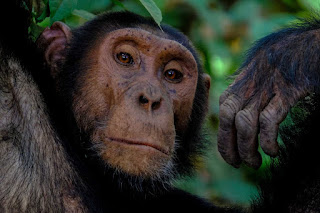
 When an asteroid struck 66 million years ago and wiped out dinosaurs not related to birds and three-quarters of life on Earth, early ancestors of primates and marsupials were among the only tree-dwelling (arboreal) mammals that survived, according to a new study.

Arboreal species were especially at risk of extinction due to global deforestation caused by wildfires from the asteroid’s impact.

In the study, computer models, fossil records and information from living mammals revealed that most of the surviving mammals did not rely on trees, though the few arboreal mammals that lived on – including human ancestors – may have been versatile enough to adapt to the loss of trees.

The study points to the influence of this extinction event, known as the Cretaceous-Paleogene (K-Pg) boundary, on shaping the early evolution and diversification of mammals.

“One possible explanation for how primates survived across the K-Pg boundary, in spite of being arboreal, might be due to some behavioral flexibility, which may have been a critical factor that let them survive,” said Jonathan Hughes, the paper’s co-first author and a doctoral student in the lab of Jeremy Searle, professor of ecology and evolutionary biology in the College of Agriculture and Life Sciences. Co-first author Jacob Berv, Ph.D. ’19, is currently a Life Sciences Fellow at the University of Michigan.

Mushroom consumption may lower risk of depression

Image: Pexel
Mushrooms have been making headlines due to their many health advantages. Not only do they lower one’s risk of cancer and premature death, but new research led by Penn State College of Medicine also reveals that these superfoods may benefit a person’s mental health.

Penn State researchers used data on diet and mental health collected from more than 24,000 U.S. adults between 2005 and 2016. They found that people who ate mushrooms had lower odds of having depression.

According to the researchers, mushrooms contain ergothioneine, an antioxidant that may protect against cell and tissue damage in the body. Studies have shown that antioxidants help prevent several mental illnesses, such as schizophrenia, bipolar disorder and depression.

“Mushrooms are the highest dietary source of the amino acid ergothioneine — an anti-inflammatory which cannot be synthesized by humans,” said lead researcher Djibril Ba, who recently graduated from the epidemiology doctoral program at the College of Medicine. “Having high levels of this may lower the risk of oxidative stress, which could also reduce the symptoms of depression.”

Serotonin stabilizes social memories

Who wouldn’t like to be better at remembering people you meet, even after a brief introduction?

New research by scientists affiliated with the Wu Tsai Neurosciences Institute at Stanford has shown this could be achieved through targeted stimulation of the brain’s serotonin system.

In a study published in Nature, the Stanford team was able to observe for the first time how the mouse brain forms a memory of a new acquaintance and demonstrated the ability to selectively dampen or enhance these social memories with targeted drugs.

Rob Malenka, MD.
Image credit: Stanford Medicine
“We identified neurons that appear to tell a mouse that it's interacting with a new animal with a different smell, a different looking face, distinct posture, etc, and generate a new memory trace for that individual,” said Robert Malenka, MD, the Nancy Friend Pritzker Professor of Psychiatry and Behavioral Sciences at Stanford Medicine. “By tuning that neural activity up and down, we were able to change how well animals remembered this new individual later on.”

“Like us, mice live in social groups, and need to be able to quickly remember if another animal is a family member, a former aggressor, a potential mate, and so on,” added Xiaoting Wu, PhD, a postdoctoral researcher in Malenka’s laboratory and the lead author of the new study. “This finding is really exciting because it represents the very earliest stage of social memory — an ability to remember new individuals that can then be built upon by future experiences.”

The research adds to a growing body of work by the Malenka lab showing how serotonin and other neuromodulatory chemicals control social cognition in the brain, and represents a promising step towards targeted treatments that could one day improve impaired social function in disorders such as autism, depression, and post-traumatic stress disorder (PTSD).

Saturday, October 9, 2021

Pandemic linked to rising rates of depressive and anxiety disorders

Cases of major depressive disorder and anxiety disorders have increased by more than 25 per cent worldwide, according to a world-first study of the impact of COVID-19 on mental health.

The research, led by researchers from The University of Queensland’s School of Public Health, Queensland Centre for Mental Health Research and Institute for Health Metrics and Evaluation (University of Washington) estimated people living in countries severely impacted by the COVID-19 pandemic have been most affected, especially women and younger people.

The study is the first to assess global impacts of the pandemic on major depressive and anxiety disorders, quantifying the prevalence and burden of the disorders by age, sex, and location in 204 countries and territories in 2020.

Study leader Dr Damian Santomauro said countries hit hardest by the pandemic in 2020 had the greatest rise in prevalence of the disorders.

“We estimated that cases of major depressive disorder and anxiety disorders increased by 28 per cent and 26 per cent, respectively in 2020, with women affected more than men, and younger people affected more than older age groups,” Dr Santomauro said.

“Countries with high COVID-19 infection rates and major reductions in the movement of people – a consequence of measures such as lockdowns and school closures – were found to have the greatest increases in prevalence of major depressive disorder and anxiety disorders.”

Anti-cancer drug derived from fungus shows promise in clinical trials

An image of the fungus Cordyceps sinensis. This fungus grows naturally on caterpillars at high altitudes in the Himalayas.

A new industry-academic partnership between the University of Oxford and biopharmaceutical company NuCana as found that chemotherapy drug NUC-7738, derived from a Himalayan fungus, has 40 times greater potency for killing cancer cells than its parent compound.

Oxford University researchers have worked in collaboration with industry leaders NuCana to assess a novel chemotherapy drug derived from a fungus. A study in Clinical Cancer Research has shown that the new drug NUC-7738, developed by NuCana, has a up to 40 times greater potency for killing cancer cells than its parent compound, with limited toxic side effects.

The naturally-occurring nucleoside analogue known as Cordycepin (a.k.a 3’-deoxyadenosine) is found in the Himalayan fungus Cordyceps sinensis and has been used in traditional Chinese medicine for hundreds of years to treat cancers and other inflammatory diseases. However, it breaks down quickly in the blood stream, so a minimal amount of cancer-destroying drug is delivered to the tumor. In order to improve its potency and clinically assess its applications as a cancer drug, biopharmaceutical company NuCana has developed Cordycepin into a clinical therapy, using their novel ProTide technology, to create a chemotherapy drug with dramatically improved efficacy.

Friday, October 8, 2021

Environmentally friendly method to extract and separate rare earth elements

A new method improves the extraction and separation of rare earth elements from unconventional sources, including industrial waste, such as the mine tailings pictured here, and electronic waste.  Image: Barsamuphe, Wikimedia Commons

A new method improves the extraction and separation of rare earth elements — a group of 17 chemical elements critical for technologies such as smart phones and electric car batteries — from unconventional sources. New research led by scientists at Penn State and the Lawrence Livermore National Laboratory (LLNL) demonstrates how a protein isolated from bacteria can provide a more environmentally friendly way to extract these metals and to separate them from other metals and from each other. The method could eventually be scaled up to help develop a domestic supply of rare earth metals from industrial waste and electronics due to be recycled.

“In order to meet the increasing demand for rare earth elements for use in emerging clean energy technologies, we need to address several challenges in the supply chain,” said Joseph Cotruvo Jr., assistant professor and Louis Martarano Career Development Professor of Chemistry at Penn State, a member of Penn State’s Center for Critical Minerals, and co-corresponding author of the study. “This includes improving the efficiency and alleviating the environmental burden of the extraction and separation processes for these metals. In this study, we demonstrate a promising new method using a natural protein that could be scaled up to extract and separate rare earth elements from low-grade sources, including industrial wastes.”

Material protects against both biological and chemical threats

Programmable crystalline sponge-textile composite for
elimination of biological and chemical threats

 A Northwestern University research team has developed a versatile composite fabric that can deactivate both biological threats, such as the novel coronavirus that causes COVID-19, and chemical threats, such as those used in chemical warfare. A material that is effective against both classes of threats is rare.

The material also is reusable. It can be restored to its original state after the fabric has been exposed to threats by a simple bleach treatment. The promising fabric could be used in face masks and other protective clothing.

“Having a bifunctional material that has the ability to deactivate both chemical and biological toxic agents is crucial since the complexity to integrate multiple materials to do the job is high,” said Northwestern’s Omar Farha, an expert in metal-organic frameworks, or MOFs, which is the basis for the technology.

Farha, a professor of chemistry in the Weinberg College of Arts and Sciences, is a co-corresponding author of the study. He is a member of Northwestern’s International Institute for Nanotechnology.

The MOF/fiber composite builds on an earlier study in which Farha’s team created a nanomaterial that deactivates toxic nerve agents. With some small manipulations, the researchers were able to also incorporate antiviral and antibacterial agents into the material.

Earth’s inner core may contain both soft and hard iron

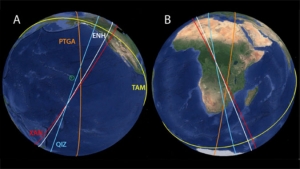
Earthquake locations (red) and seismic stations (yellow).
(Photo credit: Butler and Tsuboi, 2021.)

3,200 miles beneath Earth’s surface lies the inner core, a ball-shaped mass of mostly iron that is responsible for Earth’s magnetic field. According to NASA, this field acts like a protective shield around the planet, repelling and trapping charged particles from the Sun. In the 1950’s, researchers suggested the inner core was solid, in contrast to the liquid metal region surrounding it. New research led by Rhett Butler, a geophysicist at the University of Hawaiʻi at Mānoa School of Ocean and Earth Science and Technology (SOEST), suggests that Earth’s “solid” inner core is, in fact, endowed with a range of liquid, soft and hard structures, which vary across the top 150 miles of the inner core.

Earthquake waves provide clues

Seismic energy reflects in a circular pattern around top of inner core.
(Photo credit:Butler, Tsuboi, 2021.)
No human or machine has been to this region. The depth, pressure and temperature make inner Earth inaccessible. So Butler, a researcher at SOEST’s Hawaiʻi Institute of Geophysics and Planetology, and co-author Seiji Tsuboi, research scientist at the Japan Agency for Marine-Earth Science and Technology, relied on the only means available to probe the innermost Earth—earthquake waves.

“Illuminated by earthquakes in the crust and upper mantle, and observed by seismic observatories at Earth’s surface, seismology offers the only direct way to investigate the inner core and its processes,” said Butler.

As seismic waves move through various layers of Earth, their speed changes and they may reflect or refract depending on the minerals, temperature and density of that layer.

2,050-year-old Roman tomb offers insights on ancient concrete resilience

“Understanding the formation and processes of ancient materials can inform researchers of new ways to create durable, sustainable building materials for the future,” says Associate Professor Admir Masic. “The tomb of Caecilia Metella is one of the oldest structures still standing, offering insights that can inspire modern construction.” Seen here are the Tomb of Cecilia Metella and Castrum Caetani ruins in Rome.
Credits:Photo: Livioandronico2013/Wikimedia Commons

Concrete often begins to crack and crumble after a few decades of life — but curiously, that hasn’t been the case with many Roman structures. The structures are still standing, exhibiting remarkable durability despite conditions that would destroy modern concrete.

One particular structure is the large cylindrical tomb of first-century noblewoman Caecilia Metella. New research from MIT scientists and colleagues published in the Journal of the American Ceramic Society shows that the quality of the concrete of her tomb may exceed that of her male contemporaries’ monuments because of the volcanic aggregate the builders chose and the unusual chemical interactions with rain and groundwater that accumulate over two millennia.

Lead co-authors of the study, Admir Masic, associate professor of civil and environmental engineering at MIT, and Marie Jackson, research associate professor of geology and geophysics at the University of Utah, teamed up to understand the mineral composition of the ancient concrete structure.

“Understanding the formation and processes of ancient materials can inform researchers of new ways to create durable, sustainable building materials for the future,” says Masic. “The tomb of Caecilia Metella is one of the oldest structures still standing, offering insights that can inspire modern construction.”

Report calls for urgent action to address alarming lack of diversity in climate change decision making

Bristol prides itself on being a leading city in the UK and globally in its commitment to tackle climate change, but a new report has revealed extremely low levels of ethnically diverse and equal gender representation in the debate and decision-making process to make this transition just and fair.

The report, led by the University of Bristol, found that although the same number of white men and white women attended meetings, white men spoke two-thirds of the time – almost twice as much as their female counterparts. By contrast just five per cent of participants were men of color, who spoke only one per cent of the time. Women of color comprised 14 per cent of participants and they were found to speak just two per cent of the time.

Co-investigator Dr Alix Dietzel, who specializes in climate justice and climate policy and will be attending the 2021 United Nations Climate Change Conference, better known as COP26, said: “I was observing the first meeting of the study when I noticed men dominating the discussion. I spontaneously decided to count the number of times people spoke, organized by ethnicity and gender. The results were so stark I continued to do the same for the rest of the meetings we observed.”

The policy briefing recognizes Bristol as being among the first cities in the world to officially pledge to pursue a just transition to combat climate change with the launch of its One City Climate Strategy last year. A just transition to a post-carbon economy means one that is green, sustainable, and socially inclusive.

Extinction changes rules of body size evolution

A trilobite fossil from the Ordovician period, which lasted from about 485 to 443 million years ago. A new analysis of marine fossils from most of the past half-billion years shows the usual rules of body size evolution change during mass extinctions and their recoveries.
(Image credit: Smithsonian)

Scientists at Stanford University have discovered a surprising pattern in how life reemerges from cataclysm. Research published in Proceedings of the Royal Society B shows the usual rules of body size evolution change not only during mass extinction, but also during subsequent recovery.

Since the 1980s, evolutionary biologists have debated whether mass extinctions and the recoveries that follow them intensify the selection criteria of normal times – or fundamentally shift the set of traits that mark groups of species for destruction. The new study finds evidence for the latter in a sweeping analysis of marine fossils from most of the past half-billion years.

Whether and how evolutionary dynamics shift in the wake of global annihilation has “profound implications not only for understanding the origins of the modern biosphere but also for predicting the consequences of the current biodiversity crisis,” the authors write.

“Ultimately, we want to be able to look at the fossil record and use it to predict what will go extinct, and more importantly, what comes back,” said lead author Pedro Monarrez, a postdoctoral scholar in Stanford’s School of Earth, Energy & Environmental Sciences (Stanford Earth). “When we look closely at 485 million years of extinctions and recoveries in the world’s oceans, there does appear to be a pattern in what comes back based on body size in some groups.”

Thursday, October 7, 2021

Birds learn to avoid plants that host dangerous insects

Cinnabar larvae feeding on ragwort
Credit: Callum McLellan
Young birds that eat insects with conspicuous warning coloration to advertise their toxicity to would-be predators quickly learn to avoid other prey that carry the same markings. Developing on this understanding, a University of Bristol team have shown for the very first time that birds don’t just learn the colors of dangerous prey, they can also learn the appearance of the plants such insects live on.

To do this, the scientists exposed artificial cinnabar caterpillars, characterized by bright yellow and black stripes, and non-signaling fake caterpillar targets to wild avian predation by presenting them on ragwort and a non-toxic plant - bramble, which is not a natural host of the cinnabar. Both target types survived better on ragwort compared to bramble when experienced predators were abundant in the population.

They were also interested in whether birds use the bright yellow flowers of ragwort as a cue for

An adult cinnabar moth on a ragwort stem
Credit: Callum McLellan

avoidance. They tested this by removing spikes of flowers from the ragwort and pinning them onto bramble, then recording target survival on either plant. In this second experiment, only the non-signaling targets survived better on plants with ragwort flowers, compared to the same plant type without the flowers. The survival of the cinnabar-like target was equal across all plant treatments

Lead author Callum McLellan, a graduate student at the School of Biological Sciences, said “Cinnabar caterpillars have this really recognizable, stripy yellow and black appearance. They also only live and feed on ragwort, which itself has distinctive yellow flowers. We have shown that birds learn that the ragwort flowers are a cue for danger, so can avoid going anywhere near toxic prey. It’s more efficient to avoid the whole plant than make decisions about individual caterpillars.”

Co-author Prof Nick Scott-Samuel of the School of Psychological Science, said “Our findings suggest that insect herbivores that specialize on easily recognizable host plants gain enhanced protection from predation, independent of their warning signal alone.”

Ragwort Credit: Callum McLellan

Prof Innes Cuthill, who conceived the study, added “Interestingly, any camouflaged caterpillars living on the same plant also benefit from birds’ learnt wariness of ragwort, despite being perfectly good to eat.

“Our results provide the opening to a brand-new discussion on how toxicity initially evolved in insect prey, and the conditions under which warning coloration is, or is not, favored.”

Paper:
‘Birds learn to avoid aposematic prey by using the appearance of host plants’ in Current Biology by Callum F. McLellan, Nicholas E. Scott-Samueland Innes C. Cuthill

Source/Credit: University of Bristol

en100721_03

The Climate-Driven Mass Extinction No One Had Seen


Fossils of the key groups used to unveil the Eocene-Oligocene extinction in Africa with primates on the left, the carnivorous hyaenodont, upper right, rodent, lower right. These fossils are from the Fayum Depression in Egypt. (Credit: Matt Borths)

Sixty-three percent. That’s the proportion of mammal species that vanished from Africa and the Arabian Peninsula around 30 million years ago, after Earth’s climate shifted from swampy to icy. But we are only finding out about it now.

Compiling decades of work, a new study published this week in the journal Communications Biology reports on a previously undocumented extinction event that followed the transition between the geological periods called the Eocene and Oligocene.

That time period was marked by dramatic climate change. In a reverse image of what is happening today, the Earth grew cooler, ice sheets expanded, sea levels dropped, forests started changing to grasslands, and carbon dioxide became scarce. Nearly two-thirds of the species known in Europe and Asia at that time went extinct.

Crayfish and carp among invasive species pushing lakes towards ecosystem collapse

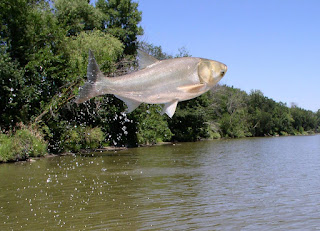
Asian silver carp
Human activity and climate change are causing invasive non-native species to spread rapidly across the globe. Researchers have found that certain invasive species can push lake ecosystems beyond a critical ‘tipping point’, causing a sudden shift from healthy to degraded conditions that is difficult to reverse.

Invasive fish such as Asian silver carp Hypophthalmichthys molitrix, and crustaceans such as American signal crayfish Pacifastacus leniusculus, were found to significantly reduce the abundance of other important organisms in lakes and degrade water quality. The findings, published today in the journal Global Change Biology, also provide guidance on the best ways to manage waterbodies.

Shallow lakes naturally exist in one of two alternative stable states: either healthy - with clear water with an abundance of vegetation, or degraded - with cloudy water dominated by algae. When a lake is in the latter state, algae use up all the nutrients in the water and block sunlight, preventing the growth of aquatic vegetation that would aid ecosystem recovery.

Deteriorated, algae-dominated freshwater ecosystems also threaten the health and water security of human populations. Blooms of cyanobacteria, known as ‘blue-green algae’ can produce toxins that contaminate food webs and poison water supplies.

Zeolites’ isotopes defy nature

Ancient zeolites in Iceland. Credit: Claire Nelson
Zeolites could be considered as nature’s workhorse.

Filled with microscopic holes and channels, these ultraporous minerals can soak up environmental contaminants, filter drinking water, manage nuclear waste and even absorb carbon dioxide (CO2).

Now, in the first study of its kind, Northwestern University researchers have analyzed ancient zeolite specimens collected from the edges of East Iceland to discover that zeolites separate calcium isotopes in a wholly unexpected way.

“Calcium occurs as multiple isotopes having different masses,” said Claire Nelson, the paper’s first author. “Most minerals preferentially incorporate lighter calcium isotopes. What we found is that some zeolites prefer lighter isotopes to an extreme degree, while other zeolites prefer heavier isotopes, a rare and striking result.”

This finding could help quantify temperatures in both modern and ancient geologic systems, as well as inform efforts to mitigate human-caused climate change by carbon capture sequestration.

The study was published in the journal Communications Earth and Environment, a new open access journal established by Nature Portfolio.

“We discovered something completely unexpected and new,” said Andrew Jacobson, senior author of the study. “It could have wide ranging implications in the geosciences and across fields, especially considering that zeolites have countless applications in industry, medicine and environmental remediation.”

Featured Article

Ketamine high NOT related to treatment success for people with alcohol problems

Photo Credit:  Treedeo.St Studios Scientific Frontline: "At a Glance" Summary Main Discovery : The intensity of the acute psychede...

Top Viewed Articles