. Scientific Frontline

Tuesday, June 21, 2022

Children who had bronchitis linked to adult lung problems

Bronchitis in early childhood has been found to increase the risk of lung diseases in middle age according to research from the Allergy and Lung Health Unit at the University of Melbourne.

Researchers found that Australian children who had bronchitis at least once before the age of seven were more likely to have lung problems in later life.

They also established that the lung diseases the children suffered from by the time they reached the age of 53 were usually asthma and pneumonia, rather than chronic bronchitis or chronic obstructive pulmonary disease.

Lead author of a paper published today in the journal, BMJ Open Respiratory Research, Dr Jennifer Perret, said the findings come from one of the world’s oldest surveys, the Tasmanian Longitudinal Health Study, which followed 8,583 people who were born in Tasmania in 1961 and started school in 1968.

“This is the first very long-term prospective study that has examined the relationship between childhood bronchitis severity with adult lung health outcomes. We have seen already that children with protracted bacterial bronchitis are at increased risk of serious chronic infective lung disease after two to five years, so studies like ours are documenting the potential for symptomatic children to develop lung conditions, such as asthma and lung function changes, up to mid-adult life,” she said.

Robotic lightning bugs take flight


Fireflies that light up dusky backyards on warm summer evenings use their luminescence for communication — to attract a mate, ward off predators, or lure prey.

These glimmering bugs also sparked the inspiration of scientists at MIT. Taking a cue from nature, they built electroluminescent soft artificial muscles for flying, insect-scale robots. The tiny artificial muscles that control the robots’ wings emit colored light during flight.

This electroluminescence could enable the robots to communicate with each other. If sent on a search-and-rescue mission into a collapsed building, for instance, a robot that finds survivors could use lights to signal others and call for help.

The ability to emit light also brings these microscale robots, which weigh barely more than a paper clip, one step closer to flying on their own outside the lab. These robots are so lightweight that they can’t carry sensors, so researchers must track them using bulky infrared cameras that don’t work well outdoors. Now, they’ve shown that they can track the robots precisely using the light they emit and just three smartphone cameras.

“If you think of large-scale robots, they can communicate using a lot of different tools — Bluetooth, wireless, all those sorts of things. But for a tiny, power-constrained robot, we are forced to think about new modes of communication. This is a major step toward flying these robots in outdoor environments where we don’t have a well-tuned, state-of-the-art motion tracking system,” says Kevin Chen, who is the D. Reid Weedon, Jr. Assistant Professor in the Department of Electrical Engineering and Computer Science (EECS), the head of the Soft and Micro Robotics Laboratory in the Research Laboratory of Electronics (RLE), and the senior author of the paper.

Nanoparticles control light like road signs direct traffic

The particles control the flow of light like road signs control traffic on a busy road by manipulating the direction in which light can, or can't, travel.
Image Credit: Jamie Kidston / ANU

Physicists at The Australian National University (ANU) have developed tiny translucent slides capable of producing two very different images depending on the direction in which light travels through them.

As light passes through the slide, an image of Australia can be seen, but when you flip the slide and look again, an image of the Sydney Opera House is visible. The pair of images created is just one example of an untapped number of possibilities.

The ability to produce two distinctly different images is possible thanks to the ANU scientists' ability to control the direction in which light can and can't travel at the nanoscale. The development could pave the way for new light-based devices that could lead to faster, cheaper and more reliable Internet. It could also serve as the foundation for many of the technologies of tomorrow.

Developed in collaboration with colleagues from China, Germany and Singapore, the new technology uses nanoparticles, so small that about 12,000 of them can fit within a cross-section of a human hair. These tiny particles are arranged into unique patterns on the slides.

"The particles control the flow of light like road signs control traffic on a busy road by manipulating the direction in which light can, or can't, travel," project leader Dr Sergey Kruk said.

"Some particles allow light to flow from left to right only, others from right to left or the pathway might be blocked in either direction."

Monday, June 20, 2022

A rare discovery of long-term memory in wild frog-eating bats

A frog-eating bat approaches the ringtone and prepares to snatch up a baitfish snack.
Credit: Andrew Quitmeyer

New research has found that Frog-eating bats trained by researchers to associate a phone ringtone with a tasty treat were able to remember what they learned for up to four years in the wild, new research has found.

The study acquainted 49 bats with a series of ringtones that attracted their attention, and trained them to associate flying toward just one of the tones with a reward: a baitfish snack.

Between one and four years later, eight of those bats were recaptured and exposed again to the food-related ringtone. All of them flew toward the sound, and six flew all the way to the speaker and grabbed the food reward, meaning they expected to find food. Control bats without previous training on the sounds were comparatively unmoved by the exposure to the unfamiliar tones.

“I was surprised – I went into this thinking that at least a year would be a reasonable time for them to remember, given all the other things they need to know and given that long-term memory does have real costs. Four years strikes me as a long time to hold on to a sound that you might never hear again,” said lead author May Dixon, a postdoctoral scholar in evolution, ecology and organismal biology at The Ohio State University.

Dixon led this study at the Smithsonian Tropical Research Institute in Panama while she was a graduate student at the University of Texas at Austin.

Blood Pressure E-Tattoo Promises Continuous, Mobile Monitoring

Credit: University of Texas at Austin

Blood pressure is one of the most important indicators of heart health, but it’s tough to frequently and reliably measure outside of a clinical setting. For decades, cuff-based devices that constrict around the arm to give a reading have been the gold standard. But now, researchers at The University of Texas at Austin and Texas A&M University have developed an electronic tattoo that can be worn comfortably on the wrist for hours and deliver continuous blood pressure measurements at an accuracy level exceeding nearly all available options on the market today.

“Blood pressure is the most important vital sign you can measure, but the methods to do it outside of the clinic passively, without a cuff, are very limited,” said Deji Akinwande, a professor in the Department of Electrical and Computer Engineering at UT Austin and one of the co-leaders of the project, which is documented in a new paper published today in Nature Nanotechnology.

High blood pressure can lead to serious heart conditions if left untreated. It can be hard to capture with a traditional blood pressure check because that only measures a moment in time, a single data point.

“Taking infrequent blood pressure measurements has many limitations, and it does not provide insight into exactly how our body is functioning,” said Roozbeh Jafari, a professor of biomedical engineering, computer science and electrical engineering at Texas A&M and the other co-leader of the project.

The continuous monitoring of the e-tattoo allows for blood pressure measurements in all kinds of situations: at times of high stress, while sleeping, exercising, etc. It can deliver thousands of measurements, more than any device thus far.

Study Uncovers New Treatment Approaches for Liver Cancer Patients

Ekaterina Koltsova, MD, PhD
Preliminary Studies Suggest That Targeting a Newly Identified Immune Checkpoint Pathway Could Lead to Better Understanding of Hepatocellular Carcinoma and Paves the Way for New Immune-Based Therapies

Experts from Cedars-Sinai Cancer have analyzed patient samples, along with studies conducted in animal models, to identify a novel immune checkpoint pathway to treat hepatocellular carcinoma, the most common form of liver cancer. This big data analysis, coupled with existing immune boosting therapies, provides a new frontier for treatment strategies.

The findings—centered on the discovery of a novel role for the IL-27 signaling pathway in liver cancer—were published today in the peer-reviewed journal Cancer Discovery.


Previous research suggests the IL-27 pathway may play an important role in the immune response of various inflammatory diseases. However, this is the first-time scientists have identified this new mechanism in liver cancer.

“We found that disrupting the IL-27 pathway in mice prevented liver tumors from growing,” said Ekaterina Koltsova, MD, PhD, the

corresponding and senior author of the study, a faculty member of Cedars-Sinai Cancer and the departments of Medicine and Biomedical Sciences. “This exciting discovery supports the idea of therapeutic antibodies or other molecules to block the IL-27 pathway, and in turn, activate an anti-cancer immune response in liver cancer.”

The aim, Koltsova says, is that activating the immune response will enable a liver cancer patient's immune system to kill the cancerous cells.

New model offers potential solutions for next-generation battery challenges

A new mathematical model has brought together the physics and chemistry of highly promising lithium-metal batteries, providing researchers with plausible, fresh solutions to a problem known to cause degradation and failure.

A new study by Stanford University researchers lights a path forward for building better, safer lithium-metal batteries.

Close cousins of the rechargeable lithium-ion cells widely used in portable electronics and electric cars; lithium-metal batteries hold tremendous promise as next-generation energy storage devices. Compared to lithium-ion devices, lithium-metal batteries hold more energy, charge up faster, and weigh considerably less.

To date, though, the commercial use of rechargeable lithium-metal batteries has been limited. A chief reason is the formation of “dendrites” – thin, metallic, tree-like structures that grow as lithium metal accumulates on electrodes inside the battery. These dendrites degrade battery performance and ultimately lead to failure which, in some instances, can even dangerously ignite fires.

The new study approached this dendrite problem from a theoretical perspective. As described in the paper, published in the Journal of The Electrochemical Society, Stanford researchers developed a mathematical model that brings together the physics and chemistry involved in dendrite formation.

This model offered the insight that swapping in new electrolytes – the medium through which lithium ions travel between the two electrodes inside a battery – with certain properties could slow or even outright stop dendrite growth.

New report finds smoking is a cause of depression and schizophrenia

Credit: Uki Eiri from Pixabay
Smoking increases the risk of developing schizophrenia by between 53% and 127% and of developing depression by 54% to 132%, a report by academics from the University of Bristol published today has shown. More research is needed to identify why this is the case, and more evidence is needed for other mental health conditions such as anxiety or bipolar disorder.

The evidence presented today at the Royal College of Psychiatrists International Congress has been shared with the Government which is currently developing a new Tobacco Control Plan for publication later this year.

The Congress will also be given new data on the numbers of smokers with mental health conditions. Rates of smoking are much higher among people with mental health conditions than those without, and among England’s 6 million smokers there are an estimated:

  • 230k smokers with severe mental illness (e.g., schizophrenia and bi-polar disorder)
  • 1.6 million with depression and anxiety

These analyses are timely as the Government is currently considering recommendations by the Khan Review for the forthcoming Tobacco Control Plan to deliver its Smokefree 2030 ambition. The independent review by Javed Khan was commissioned by the Secretary of State to help the Government to identify the most impactful interventions to reduce the uptake of smoking, and support people to stop smoking, for good. One of Khan’s 15 recommendations was that action is needed to tackle the issue of smoking and mental health.

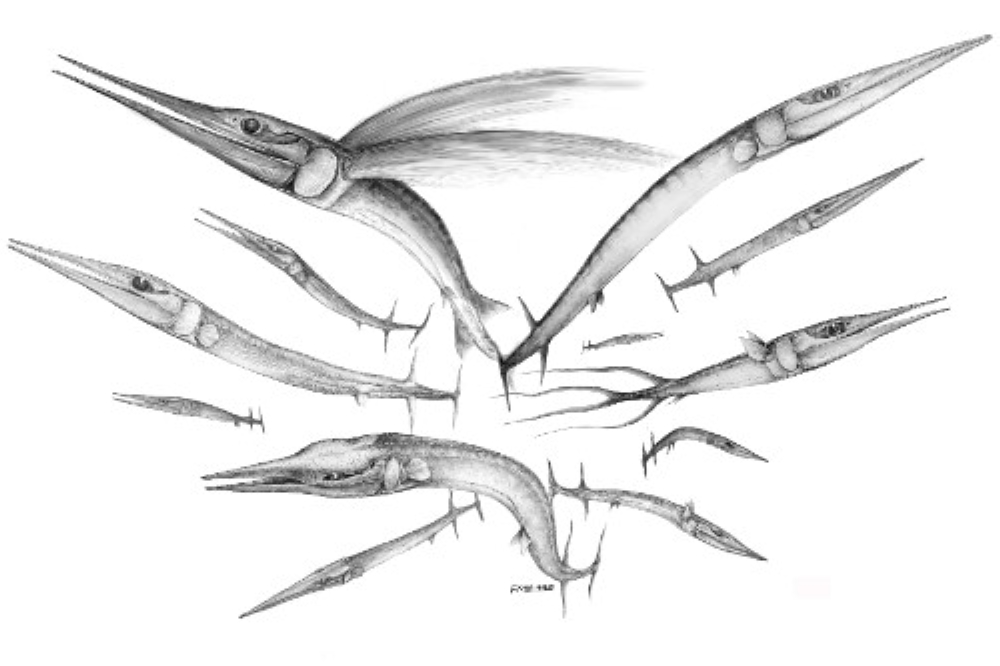
Triassic revolution: animals grew back faster and smarter after mass extinction

The diversification of the saurichthyiform fishes (‘lizard fish’) in the Middle Triassic of South China (eastern paleo-Tethys), reflecting the establishment of a complexly tiered marine ecosystem (or marine fish communities) with intensive predator-prey interactions along the food chains.
Credit: Drawing by Feixiang Wu

Paleontologists in the UK and China have shown that the natural world bounced back vigorously following the End-Permian Extinction.

In a review, published today in the journal Frontiers in Earth Science, scientists reveal that predators became meaner and prey animals adapted rapidly to find new ways to survive. On land, the ancestors of mammals and birds became warm-blooded and could move around faster.

At the end of the Permian period, 252 million years ago, there was a devastating mass extinction, when nearly all of life died out, and this was followed by one of the most extraordinary times in the history of life. The Triassic period, from 252–201 million years ago, marks a dramatic re-birth of life on land and in the oceans, and was a time of massively rising energy levels.

“Everything was speeding up,” said Professor Michael Benton of the University of Bristol School of Earth Sciences, the lead author of the new study.

“Today, there is a huge difference between birds and mammals on the one hand, and reptiles on the other. Reptiles are cold-blooded, meaning they do not generate much body heat themselves and, although they can nip about quite quickly, they have no stamina, and they cannot live in the cold, said Prof Benton.

Deadly snakes could save your life

Eastern Brown Snake
Source: University of Queensland

Some of the world’s deadliest snakes could soon be saving lives, with research from The University of Queensland showing venom could be used to stop uncontrolled bleeding.

The biomaterials research team from UQ’s Australian Institute for Bioengineering and Nanotechnology (AIBN), led by Postdoctoral Research Fellow Amanda Kijas, has found protein in the venom of two snakes – Australia’s eastern brown and scaled viper ­– could be used as an accelerant in the body’s natural blood-clotting process.

The team is working on a gel that could be sold in pharmacies, added to first aid kits, and used by paramedics or military personnel in combat zones, to stop bleeding while a patient is taken to hospital.

The venom gel remains a liquid when stored in a cool place but solidifies at body temperature to seal the wound.

“As many as 40 per cent of trauma-related deaths are the result of uncontrolled bleeding, and this figure is much higher when it comes to military personnel with serious bleeding in a combat zone,” Dr Kijas said.

Gene discovery indicates motor neuron diseases caused by abnormal lipid processing in cells

A new genetic discovery adds weight to a theory that motor neuron degenerative diseases are caused by abnormal lipid (fat) processing pathways inside brain cells. This theory will help pave the way for new diagnostic approaches and treatments for this group of conditions. The discovery will provide answers for certain families who have previously had no diagnosis.

Motor neuron degenerative diseases (MNDs) are a large family of neurological disorders. Currently, there are no treatments available to prevent onset or progression of the condition. MNDs are caused by changes in one of numerous different genes. Despite the number of genes known to cause MNDs, many patients remain without a much-needed genetic diagnosis.

The team behind the current work developed a hypothesis to explain a common cause of MNDs stemming from their discovery of 15 genes responsible for MNDs. The genes they identified are all involved in processing lipids - in particular cholesterol – inside brain cells. Their new hypothesis, published in the journal Brain, describes the specific lipid pathways that the team believe are important in the development of MNDs.

Now, the team has identified a further new gene – named TMEM63C – which causes a degenerative disease that affects the upper motor neuron cells in the nervous system. Also published in Brain, their latest discovery is important as the protein encoded by TMEM63C is located in the region of the cell where the lipid processing pathways they identified operate. This further bolster the hypothesis that MNDs are caused by abnormal processing of lipids including cholesterol.

“This new gene finding is consistent with our hypothesis that the correct maintenance of specific lipid processing pathways is crucial for the way brain cells function, and that abnormalities in these pathways are a common linking theme in motor neuron degenerative diseases,” said study co-author Professor Andrew Crosby from the University of Exeter. “It also enables new diagnoses and answers to be readily provided for families affected by some forms of MND”

New imaging technique to find out what happens in the brains of dogs and cats

In a preliminary experiment, Parkkonen held a quantum optical MEG sensor with his hand on his family cat’s, Roosa’s, head while she listened to simple sound sequences.
Credit: Professor Lauri Parkkonen / Aalto University

For years, Professor Lauri Parkkonen's team at Aalto University has been developing quantum optical sensors for measuring the brain's magnetic fields using a technique known as magnetoencephalography (MEG). In traditional MEG, the superconducting sensors operate at very low temperatures and need centimeters of thermal insulation, but the quantum optical sensors work at room temperature, so they can be placed directly on the surface of the head. This allows more accurate measurements of the brain’s magnetic fields.

Parkkonen and his team plan to use the new method to build on their earlier work measuring brain activity in cats and dogs. Now they plan to characterize the complexity of the temporal structures in sensory stimuli that cat and dog brains can track. Similar experiments in humans have found that our brain produces specific responses to deviations in complex structures only when we attend to the stimuli and become aware of the deviations. Once the technique is perfected, Parkkonen and his team plan to use it to make similar measurements in human babies.

The experiments will begin this autumn – though Parkkonen has already done some preliminary tests with his family cat, Roosa – and the project is expected to continue until 2026. The researchers hope that their findings will provide an unprecedented window onto the cognition of cats and dogs, and this could also help bridge the gap between our understanding of human brains and the brains of other mammals.

Friday, June 17, 2022

Rethinking the rabies vaccine

Scientists from La Jolla Institute for Immunology and the Institut Pasteur have shed light on the structure of the rabies virus glycoprotein. 
Credit: Heather Callaway, Ph.D., LJI

Rabies virus kills a shocking 59,000 people each year, many of them children. Some victims, especially kids, don’t realize they’ve been exposed until it is too late. For others, the intense rabies treatment regimen is out of the question: treatment is not widely available and the average $3,800 expense poses unthinkable economic burden for most people around the world.

Rabies vaccines, rather than treatments, are much more affordable and easier to administer. But those vaccines also come with a massive downside:

“Rabies vaccines don’t provide lifelong protection. "You have to get your pets boosted every year to three years,” says LJI Professor Erica Ollmann Saphire, Ph.D. “Right now, rabies vaccines for humans and domestic animals are made from killed virus. But this inactivation process can cause the molecules to become misshapen—so these vaccines aren’t showing the right form to the immune system. If we made a better shaped, better structured vaccine, would immunity last longer?”

Saphire and her team, in collaboration with a team led by Institut Pasteur Professor Hervé Bourhy, DVM, PhD., may have discovered the path to better vaccine design. In a new study, published in Science Advances, the researchers share one of the first high-resolution looks at the rabies virus glycoprotein in its vulnerable “trimeric” form.

Rice lab’s quantum simulator delivers new insight

Rice physicists used ultracold atoms and a 1D channel of light to simulate electrons in 1D wires and study how two of their intrinsic properties — spin and charge — travel at different speeds. They used a laser beam (top left) to produce collective waves that rippled left to right along the wire over time (top to bottom), transporting either spin or charge. A spin wave is illustrated. Spins must point up (blue) or down (red), and atoms with opposite spin naturally arrange in an alternating up-down, up-down pattern (top row). The wave transports spin by sequentially exchanging adjacent up/down spins (shaded ovals). Researchers measured the speed of both spin waves and charge waves (not shown), demonstrating the two traveled at different speeds.
Illustration by Ella Maru Studio, provided courtesy of R. Hulet/Rice University

A quantum simulator at Rice University is giving physicists a clear look at spin-charge separation, the quantum world’s version of the magician’s illusion of sawing a person in half.

Published this week in Science, the research has implications for quantum computing and electronics with atom-scale wires.

Electrons are minuscule, subatomic particles that cannot be divided. Despite this, quantum mechanics dictates that two of their attributes — spin and charge — travel at different speeds in one-dimensional wires.

Rice physicists Randy Hulet, Ruwan Senaratne and Danyel Cavazos built an ultracold venue where they could repeatedly view and photograph a pristine version of this quantum spectacle, and they collaborated with theorists from Rice, China, Australia and Italy on the published results.

Chemical pollution threatens biodiversity

Chemicals threaten biodiversity - not only because they can directly poison animals and plants, but because they affect the living conditions and functions of living things.
Credit: Gabriel Sigmund & Aaron Kintz

Pollution of the environment with chemicals threatens biodiversity. The complexity of this pollution has so far been insufficiently recorded by decision-makers - this is what international researchers around Gabriel Sigmund from the University of Vienna and Ksenia Groh from the Eawag water research institute (Dübendorf, Switzerland) are writing in the current issue of the journal Science. They appeal to decision-makers and researchers to consider more chemicals than previously planned. Your contribution will appear shortly before the international negotiations on a new biodiversity agreement, the "post-2020 Global Biodiversity Framework". These take place from the 21st. June in Nairobi (Kenya).

"Design to the agreement mentions chemical pollution, but it only takes nutrients, pesticides and plastic waste into account and falls short of it," explains environmental scientist Gabriel Sigmund. "Many highly problematic chemicals that pollute the environment and thus threaten the diversity of animal and plant species are simply overlooked," added ecotoxicologist Ksenia Groh. This does not do justice to the immense variety of man-made chemicals. So far not considered in the draft agreement, but from the perspective of the researchers toxic metals, industrial chemicals, chemicals from consumer goods, pharmaceuticals and the often-unknown conversion products of these chemicals are problematic.

Featured Article

What Is: Abyssopelagic Zone

A master of abyssopelagic survival, the anglerfish overcomes absolute darkness and sparse food supplies with a specialized, light-producing ...

Top Viewed Articles