. Scientific Frontline

Sunday, January 9, 2022

Circumbinary Planet Discovered by TESS Validates New Detection Technique

The newly discovered planet, TIC 172900988b, is roughly the radius of Jupiter, and several times more massive, but it orbits its two stars in less than one year. This world is hot and unlike anything in our Solar System. 
Credit: PSI/Pamela L. Gay.

A new technique developed in part by Planetary Science Institute Senior Scientist Nader Haghighipour has allowed astronomers to quickly detect a transiting circumbinary planet orbiting around two suns, according to a new Astronomical Journal paper on which Haghighipour is an author.

Circumbinary planets are planetary bodies that rotate around two stars. Although for years, they were merely a matter of science fiction, thanks to the successful operation of NASA’s Kepler and Transiting Exoplanet Survey Satellite (TESS) telescopes, an all-sky survey mission designed to discover thousands of exoplanets around nearby bright stars, a team of astronomers, including Haghighipour, have detected 14 such bodies.

“Detecting circumbinary planets is much more complicated than detecting planets orbiting single stars. The most promising technique for detecting circumbinary planets is transit photometry, which measures drops in starlight caused by those planets whose orbits are oriented in space such that they periodically pass between their stars and the telescope. In this technique, the measurements of the decrease in the intensity of the light of a star is used to infer the existence of a planet,” Haghighipour said. “To determine the orbit of the planet, precisely, at least three transit events are required. This becomes complicated when a planet orbits a double-star system because transits will not happen with the same interval over the same star. The planet may transit one star and then transit the other before transiting the first star again, and so on.”

Friday, January 7, 2022

Anxiety and PTSD linked to increased myelin in brain

A series of fMRI scans of the brain of a military veteran with PTSD, showing gray matter regions with increased myelin. 
Credit: UCSF image by Linda Chao

A recent study links anxiety behavior in rats, as well as post traumatic stress disorder (PTSD) in military veterans, to increased myelin — a substance that expedites communication between neurons — in areas of the brain associated with emotions and memory.

The results, reported by scientists at the University of California, Berkeley, and UC San Francisco (UCSF), provide a possible explanation for why some people are resilient and others vulnerable to traumatic stress, and for the varied symptoms — avoidance behavior, anxiety and fear, for example — triggered by the memory of such stress.

If, as the researchers suspect, extreme trauma causes the increased myelination, the findings could lead to treatments — drugs or behavioral interventions — that prevent or reverse the myelin production and lessen the aftereffects of extreme trauma.

Myelin is a layer of fatty substances and proteins that wraps around the axons of neurons — essentially, the insulation around the brain’s wiring — to facilitate long-distance transmission of signals and, thus, communication between distant areas of the brain. The inner regions of the brain look white — in fact, they are referred to as “white matter” — because of the myelin encasing the many large bundles of axons there.

Dog brains can distinguish between languages

Credit: Photo: Eniko Kubinyi
"Some years ago I moved from Mexico to Hungary to join the Neuroethology of Communication Lab at the Department of Ethology, Eötvös Loránd University for my postdoctoral research. My dog, Kun-kun, came with me. Before, I had only talked to him in Spanish. So I was wondering whether Kun-kun noticed that people in Budapest spoke a different language, Hungarian.” — says Laura V. Cuaya, first author of the study. “We know that people, even preverbal human infants, notice the difference. But maybe dogs do not bother. After all, we never draw our dogs' attention to how a specific language sounds. We designed a brain imaging study to find this out.

Kun-kun and 17 other dogs were trained to lay motionless in a brain scanner, where we played them speech excerpts of The Little Prince in Spanish and Hungarian. All dogs had heard only one of the two languages from their owners, so this way we could compare a highly familiar language to a completely unfamiliar one. We also played dogs scrambled versions of these excerpts, which sound completely unnatural, to test whether they detect the difference between speech and non-speech at all.”

When comparing brain responses to speech and non-speech, researchers found distinct activity patterns in dogs’ primary auditory cortex. This distinction was there independently from whether the stimuli originated from the familiar or the unfamiliar language. There was, however, no evidence that dog brains would have a neural preference for speech over non-speech.

"Dog brains, like human brains, can distinguish between speech and non-speech.

New way to alter DNA, affect health circumvents gut bacteria

John Denu
Our gut microbiome helps us out every day by processing the fiber we can’t digest. The bacteria ferment the fiber into key chemicals known as short-chain fatty acids, or SCFAs, that are essential for human health. SCFAs fight inflammation, help kill dangerous bacteria, protect the lining of the gut, and can even help prevent cancer.

In a new study, the John Denu lab at the University of Wisconsin–Madison’s Wisconsin Institute for Discovery has learned that the fatty acids butyrate and propionate also activate p300, a crucial human enzyme that promotes the unspooling of DNA. This unwound DNA allows more genes to become active and expressed, which ultimately affects human health.

Previous research had suggested that SCFAs might instead contribute to this process by inhibiting a different set of enzymes.

This new understanding opens the possibility of activating p300 in a diet-dependent way or even independently of the microbiome. Knowing how to target p300 is vital because it is implicated in a wide variety of physiological processes and diseases, such as propionic acidemia, autism spectrum disorder, and Alzheimer’s disease.

Sydney Thomas
“Knowing that butyrate and propionate directly interact with this protein opens up a lot of new areas of research that we didn’t even think to look at before, because we thought that it was happening the opposite way than it actually is,” says Sydney Thomas, a Denu lab graduate student and co-author on the paper.

Thomas and Denu, a professor of biomolecular chemistry, published their findings in the journal eLife.

Earlier work in mice had shown that SCFAs are a crucial link between the microbiome and epigenetic states — the modifications to DNA that affect how active any given gene is. These epigenetic modifications allow different cells to use the same DNA instructions to perform different tasks and can affect health.

Cystic Fibrosis Drugs Can Be ‘Life-Changing’ For Patients

Small molecule drugs (outlined in green) nestle in a cavity in the protein that malfunctions in cystic fibrosis, stabilizing the protein and correcting its flaws.
Credit: K. Fiedorczuk et al./ Cell 2022

Just over a decade ago, in one of the great advances in modern medicine, researchers at Aurora Biosciences and then Vertex Pharmaceuticals found what they described at the time as needles in a haystack – small molecule drugs that can treat cystic fibrosis, the lung-damaging genetic disease.

Vertex’s first drug, ivacaftor, was approved in 2012, and others followed, dramatically increasing survival age and quality of life for cystic fibrosis patients. The drugs improve lung function, allowing patients to breathe better. Scientists knew that the drugs somehow adjusted or corrected the faulty protein responsible for the disease, but how they work has remained unknown.

Now, in new work that reveals the structure of the mutated protein and how so-called corrector drugs interact with it, Howard Hughes Medical Institute Investigator Jue Chen’s team at the Rockefeller University has discovered how the molecules operate. They bind to and stabilize the defective protein during its biogenesis, giving it a better chance to successfully reach the cell surface, her team reports January 6, 2022, in the journal Cell.

Why people deceive themselves

A team of philosophy from the Ruhr University Bochum (RUB) and the University of Antwerp analyzed the role of self-deception in everyday life and the strategies people use to fool themselves. In the journal Philosophical Psychology, Dr. Francesco Marchi and Prof. Dr. Albert Newen's four strategies to stabilize and shield the positive self-image. According to their theory, self-deception helps people to maintain motivation in difficult situations. The article is on 6. January 2022.

Four strategies of self-deception

“All people are deceiving themselves, and not so rare ”, says Albert Newen of the RUB Institute for Philosophy II. “For example, if a father is convinced, that his son is a good student and then brings bad grades home, maybe he'll say first, that the subject is not so important or that the teacher has not explained the material well. “The researchers describe this strategy of self-deception as a reorganization of beliefs. In their article, they describe three other strategies that people often use and that start earlier so as not to allow unpleasant facts to be applied to one.

This includes selecting facts through targeted action: people avoid places or people who could bring problematic facts to them, such as the parents' day. Another strategy is to reject facts by expressing doubts about the credibility of the source. As long as the father only indirectly hears about his son's school problems and does not see the grades, he can ignore the problems. Newen and Marchi describe the last strategy as the generation of facts from an ambiguous situation: “If, for example, the friendly math teacher makes it easy to understand, that the son cannot cope and the father would have expected a clear announcement in the event of difficulties, he may interpret the great friendliness and cautious description as a positive assessment of his son's abilities ”, Francesco Marchi explains the example.

Research suggests foliar fungicides help increase soybean yield in some regions

While previous studies have shown little economic benefit associated with using foliar fungicides in soybean as a preventive measure, new research aided by a Penn State plant pathologist suggests otherwise, especially in southern regions.

The findings will help growers in the U.S. understand how foliar fungicides — applied to leaves — fit into overall soybean production practices, noted Paul Esker, associate professor of epidemiology and field crop pathology in the College of Agricultural Sciences, who collaborated with Denis Shah, associate scientist in the Department of Plant Pathology, Kansas State University.

Soybean is one of the major crops produced in the U.S., planted on an estimated 87.6 million acres in 2020. Esker explained that success in growing soybean depends on multiple management decisions, including choice of cultivar, sowing date, seeding rate, nutrient fertilization, irrigation, drainage, crop rotation and tillage.

Foliar fungicides — used to prevent fungal plant diseases such as frogeye leaf spot and brown spot — are another management consideration. These diseases can flourish when temperatures are warm with humid conditions, such as those that occur in regions known for producing soybean. These fungal diseases have the potential to impact crop health and yield.

Previous field trials have demonstrated that when there is little or no disease present, there is no economic benefit to using foliar fungicides, Shah and Esker explained. Despite that information, the use of foliar fungicides in U.S. soybean production almost tripled from 2005 to 2015.

Tackling the Plastics Problem

Despite the society-changing improvements that plastic materials have brought to humanity, there’s no question that they also present us with new challenges regarding what to do with the large amounts of plastic waste we generate, from the oil-based chemicals used to create products to the microplastics found everywhere after plastics breakdown in the environment.

Finding a solution to plastics pollution that will work in the lab and in the real world will take a diverse team of innovative individuals with expertise that transcends the incredible talent found at the University of Delaware. That’s why researchers from UD’s College of Engineering and Biden School of Public Policy and Administration are joining forces with experts at the University of Kansas and Pittsburg State University.

“The practices by which society works now are really not sustainable,” said Raul Lobo, Claire D. LeClaire Professor of Chemical Engineering and associate department chair in UD’s Department of Chemical and Biomolecular Engineering, who is leading the research effort for UD. “We need materials that minimize our dependency on fossil fuels and that allow consumers to recycle plastic products efficiently and with ease.To this end, the UD-KU team will develop new molecules that can be used to make a new generation of environmentally friendly plastics.”

The National Science Foundation’s Experimental Program to Stimulate Competitive Research has awarded the group $4 million in funding to do just that. About $1.4 million of that funding will go to UD to support this vast research effort to develop processes to transform “biomass,” such as agricultural byproducts, into commercially viable plastics materials and to chemically deconstruct such plastics effectively and efficiently so that they can be recycled and reused.

Thursday, January 6, 2022

Southern California mountain lions show first reproductive effects of inbreeding

The mountain lion known as P-81, pictured here, is among the first in the Santa Monica Mountains with a tail defect.
Credit: National Park Service

Southern California cougars often make the news with their litters of oh-so-cute kittens, but a UCLA-led study suggests that these mountain lions may soon find it much harder to reproduce due to a lack of genetic diversity.

Scientists tracking two local mountain lion populations, one in the Santa Monica Mountains and another in the Santa Anas, have identified the first reproductive signs of inbreeding among these groups, which are cut off from other cougar populations — and therefore breeding options — by busy freeways.

The animals averaged a whopping 93% abnormal sperm rate, while some also displayed physical signs of inbreeding, like deformed tails or testicular defects. Researchers have long had genetic evidence of inbreeding, but the malformed sperm is the first evidence that inbreeding is manifesting in the reproductive system.

“This is a serious problem for an animal that’s already endangered locally,” said the study’s lead author, Audra Huffmeyer, a UCLA postdoctoral researcher who studies fertility in large cat species and is a National Geographic Explorer. “It’s quite severe.”

Astronomers capture red supergiant’s death throes

Artistic illustrations of a red supergiant exploding.
Credit: W.M. Keck Observatory/Adam Makarenko.

For the first time ever, astronomers have imaged in real time the dramatic end to a red supergiant’s life — watching the massive star’s rapid self-destruction and final death throes before collapsing into a type II supernova.

Led by researchers at Northwestern University and the University of California, Berkeley (UC Berkeley), the team observed the red supergiant during its last 130 days leading up to its deadly detonation.

The discovery defies previous ideas of how red supergiant stars evolve right before exploding. Earlier observations showed that red supergiants were relatively quiescent before their deaths — with no evidence of violent eruptions or luminous emissions. The new observations, however, detected bright radiation from a red supergiant in the final year before exploding. This suggests at least some of these stars must undergo significant changes in their internal structure, which then result in the tumultuous ejection of gas moments before they collapse.

“This is a breakthrough in our understanding of what massive stars do moments before they die,” said Wynn Jacobson-Galán, the study’s lead author. “Direct detection of pre-supernova activity in a red supergiant star has never been observed before in an ordinary type II supernova. For the first time, we watched a red supergiant star explode.”

Animal vaccines with self-spreading viruses

How a self-spreading vaccine could work in a bat population. Bats directly injected with a self-spreading vaccine passively spread the lab-modified viral vaccine to other bats they encounter over time (T1->T2->T3…) gradually building up population-wide immunity.  In this example bats are used, but any mammal species that lives in groups could theoretically be targeted to rapidly vaccinate whole populations.

Credit: Derek Caetano-Anolles

Vaccines for animals based on viruses that spread on their own are being developed in Europe and the U.S

Since the first lab-modified virus capable of replication was generated in 1974, an evidence-based consensus has emerged that many changes introduced into viral genomes are likely to prove unstable if released into the environment. On this basis, many virologists would question the release of genetically modified viruses that retain the capacity to spread between individual vertebrate hosts. Researchers from Germany, South Africa, the United Kingdom and the United States now point out in a policy piece that despite these concerns, self-spreading vaccines for animals are being researched in Europe and the US. They are intended to limit the spread of animal diseases or disease spillover to humans.

The Largest Suite of Cosmic Simulations for AI Training

The CAMELS project (Cosmology and Astrophysics with MachinE Learning Simulations) combines over 4,000 cosmological simulations, millions of galaxies, and 350 terabytes of data to decipher secrets of the universe.

Totaling 4,233 universe simulations, millions of galaxies and 350 terabytes of data, a new release from the CAMELS project is a treasure trove for cosmologists. CAMELS — which stands for Cosmology and Astrophysics with MachinE Learning Simulations — aims to use those simulations to train artificial intelligence models to decipher the universe’s properties.

Scientists are already using the data, which is free to download, to power new research, says project co-leader Francisco Villaescusa-Navarro, a research scientist with the Simons Foundation’s CMB (Cosmic Microwave Background) Analysis and Simulation group.

Villaescusa-Navarro leads the project with associate research scientists at the Flatiron Institute’s Center for Computational Astrophysics (CCA) Shy Genel and Daniel Anglés-Alcázar, who is also a UConn Associate Professor of Physics.

“Machine learning is revolutionizing many areas of science, but it requires a huge amount of data to exploit,” says Anglés-Alcázar. “The CAMELS public data release, with thousands of simulated universes covering a broad range of plausible physics, will provide the galaxy formation and cosmology communities with a unique opportunity to explore the potential of new machine-learning algorithms to solve a variety of problems.”

New year's mission to start new phase of exoplanet research

Source: University of Birmingham
A mission to one of the coldest and most remote places on earth will enable a new phase in the search for distant planetary systems.

University of Birmingham PhD researcher Georgina Dransfield has travelled to the Franco-Italian Concordia Research Station in Antarctica, to oversee the installation of a new state-of-the-art camera at the ASTEP (Antarctic Search for Transiting ExoPlanets) telescope.

The new instrument will enable scientists to see a much wider range of planets orbiting suns outside the Solar system, broadening our search for planets capable of hosting life.

The ASTEP telescope detects signals from distant planetary systems using the ‘transit’ method, measuring the slight dips in brightness that occur when a planet passes between Earth and its host star.

Purchased with support from the Science and Technology Facilities Council and from the European Research Council, the telescope’s new camera is sensitive to the reddest wavelengths in the spectrum. This means it can spot the smallest stars in our galaxy, which are colder, fainter and therefore redder.

“It is easier to detect smaller planets orbiting these small stars, so we have a good chance of being able to detect planets of a similar size and temperature to the Earth, thanks to this new camera,” explained Georgina.

The camera also has a ‘blue’ channel, so can see in two colors at once. This will enable astronomers to distinguish planetary signals from parasitic signals produced by other astrophysical phenomena, enabling new planets to be confirmed more rapidly and efficiently.

Ocean plastic is creating new communities of life on the high seas

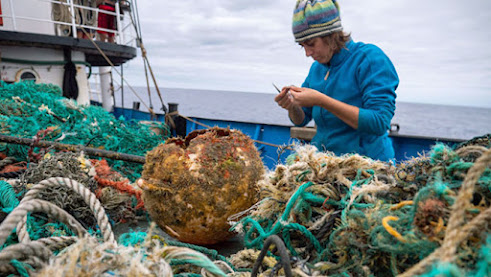
Anika Albrecht of Ocean Voyages Institute collecting plastic.
Photo credit: Ocean Voyages Institute

Coastal plants and animals have found a new way to survive in the open ocean—by colonizing plastic pollution. A commentary published in Nature Communications reported coastal species growing on trash hundreds of miles out to sea in the North Pacific Subtropical Gyre, more commonly known as the “Great Pacific Garbage Patch.”

The authors, including two oceanographers from the University of Hawaiʻi at Mānoa School of Ocean and Earth Science and Technology (SOEST), call these communities neopelagic. “Neo” means new, and “pelagic” refers to the open ocean, as opposed to the coast.

For marine scientists, the very existence of this “new open ocean” community is a paradigm shift. Plastic is providing new habitat in the open ocean. And somehow, coastal rafters are finding food.

Now, scientists have to wrestle with how these coastal rafters could shake up the environment. The open ocean has plenty of its own native species, which also colonize floating debris. The arrival of new coastal neighbors could disrupt ocean ecosystems that have remained undisturbed for millennia. Vast colonies of coastal species floating in the open ocean for years at a time could act as a new reservoir, giving coastal rafters more opportunities to invade new coastlines.

Neuromuscular junction, how’s that function?

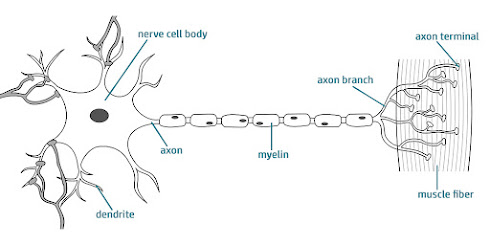
Illustration of a neuromuscular junction. Credit: Wikimedia Commons

The neuromuscular junction—where nerves and muscle fibers meet—is an essential synapse for muscle contraction and movement. Improper function of these junctions can lead to the development of progressive neuromuscular diseases, some of which have no effective treatment (like Lou Gehrig’s disease). Now, NIBIB-funded researchers have found a way to model the human neuromuscular junction by growing these synapses in a lab, which could accelerate novel treatments for neuromuscular diseases.

“Traditionally, studies of the neuromuscular junction rely on small animal models, but the human synapse has key differences, ultimately limiting the utility of animal studies,” said David Rampulla, Ph.D., director of the division of Discovery Science & Technology at NIBIB. “Here, the study authors have developed a method to evaluate the neuromuscular junction using human 3D tissue models, which enables a more accurate representation of human disease.”

The neuromuscular junction is essentially comprised of two different types of cells: skeletal muscle cells and a type of nerve cell called motor neurons. Motor neurons are covered with ion channels, which open in response to electrical signals from the brain. Once these ion channels are open, a series of cascading reactions allows the signal to reach the skeletal muscle cells, which ultimately results in muscle contraction. Therefore, in order to generate a 3D model of the human neuromuscular junction, the researchers had to acquire and grow both these types of cells. They accomplished this by either using a muscle biopsy from a donor, from which muscle cells were isolated and neuron cells were genetically derived, or by using human stem cells which were genetically modified to make both cell types.

Featured Article

What Is: Psychopathy | Part three of the "Dark Tetrad"

Scientific Frontline: Extended "At a Glance" Summary : Psychopathy The Core Concept : Psychopathy is a profound personality disord...

Top Viewed Articles